How to Build a New Hire Kit for Healthcare Teams

How to Build a New Hire Kit for Healthcare Teams

How to Build a New Hire Kit for Healthcare Teams

Company Culture

Company Culture

Company Culture

How to Build a New Hire Kit for Healthcare Teams

How to Build a New Hire Kit for Healthcare Teams

How to Build a New Hire Kit for Healthcare Teams

How do you build a new hire kit for healthcare teams? We answer that question and more in this blog.

How do you build a new hire kit for healthcare teams? We answer that question and more in this blog.

How do you build a new hire kit for healthcare teams? We answer that question and more in this blog.

Last Update:

LastUpdate:

Last Update:

•

•

6

6

min read

min read

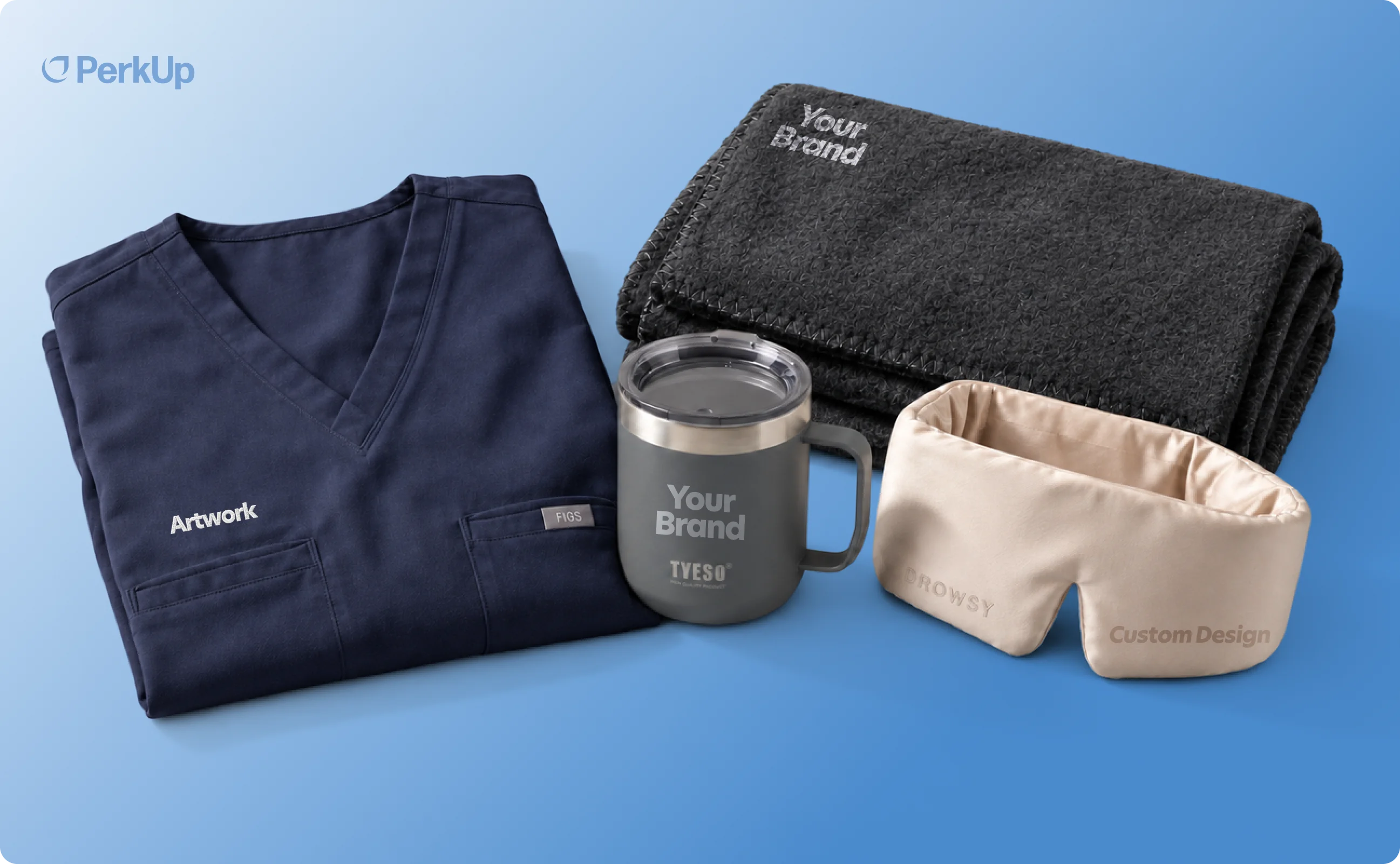
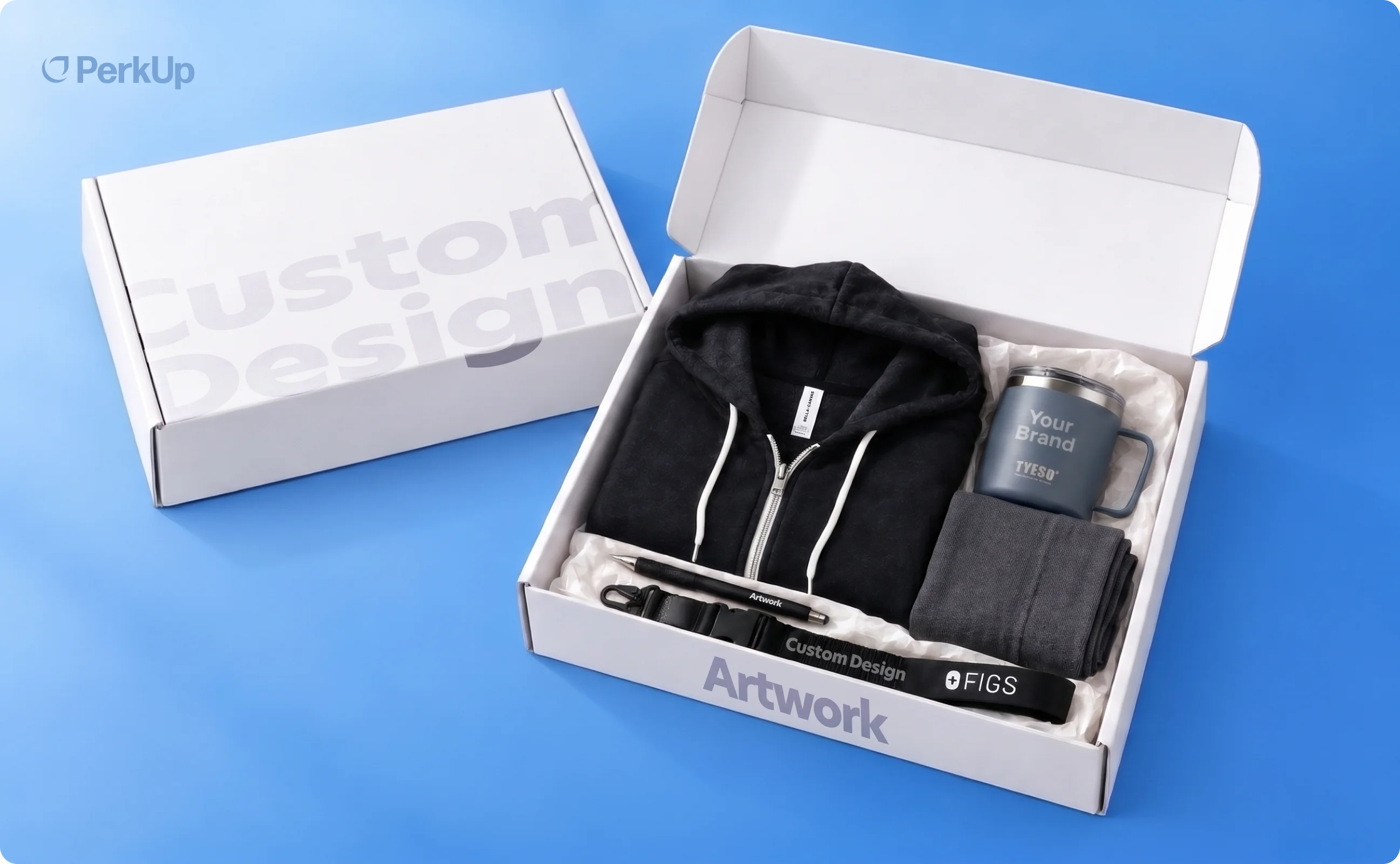
Scrubs, a FIGS lanyard, and a tumber.
In this Post

A nurse’s first day starts before she ever sees a patient. Badge photo. Locker assignment. Forms. A quick tour of the unit. A dozen new names she probably won’t remember by lunch. Then, ideally, there’s a swag kit waiting for her.

The last detail, the swag kit, is one of the few things from that first morning they actually get to take with them. The badge photo, forms, and orientation all blur together pretty quickly. The swag kit is what sticks around.

That matters in healthcare, where a lot of new hires don’t even reach their second year. To give you a concrete figure, according to the 2026 NSI National Health Care Retention & RN Staffing Report, 29.5% of new hospital hires leave within their first year. Those exits account for 35.6% of all hospital separations, and replacing one bedside RN costs an average of $60,090.

Despite that, though, the hiring doesn’t stop. The US Bureau of Labor Statistics projects about 1.9 million healthcare openings every year through 2034. That’s a lot of first days to plan for, and a lot of swag kits that need to feel worth keeping.

So, in this guide, we cover the swag categories and sample swag ideas you can put in a healthcare new hire swag kit, the reasons why you should have one, and some advice to get it right.


Why do new hire kits matter more in healthcare?
Before we dive into the swag side of things, let’s first discuss why it’s important to have onboarding kits for healthcare new hires. 

  • Most turnover happens in year one - The NSI report found that 29.5% of new hospital hires leave within twelve months, and those exits make up 35.6% of all hospital separations. If you want to improve the experience early, the first week gives you one of the clearest places to start.

  • Most healthcare hires don’t have a desk - Nurses, doctors, techs, and other frontline employees spend their day moving around hospitals. Send something they can take home, keep in a locker, or use during a shift. 

  • Apparel matters at work - Healthcare employees wear a uniform every day, so apparel can become part of the job. That said, you can include a good scrub top, jacket, or layer in your new hire swag kit.

  • Hiring happens in cohorts - Your hospital might bring in a large group of new grads in September, then add smaller groups of experienced hires throughout the year. You need a kit program that can handle both without rebuilding the process every time headcount changes.

  • Most companies, including hospitals, still have room to improve onboarding - Gallup found that only 12% of employees strongly agree that their employer does a great job onboarding. You don’t need an elaborate program to stand out. You need the basics to feel organized, useful, and ready when the new hire arrives.



How do you know if an item belongs in a healthcare new hire swag kit?

A healthcare kit has less room for filler than a typical office welcome kit because every item has to earn its spot. Run anything you’re considering through these five checks. If it fails two, cut it.

  1. Can they use it during a shift or right after one?

Ask yourself, what does your healthcare team do during the actual workday? Nurses spend twelve hours moving between patient rooms, hallways, break rooms, and the commute home. A tumbler, badge reel, tote, compression socks, or recovery item fits into that routine immediately. A desk accessory probably doesn’t. If someone has to invent a use for it, it won’t last long.

  1. Can it handle hospital life?

Healthcare puts more wear on swag than an office does. It gets tossed into lockers, carried in crowded bags, cleaned constantly, and used through long shifts. This, then, makes it important for you to check the fabric weight, lid, zipper, coating, stitching, and wash instructions before you order. A cheap tumbler that leaks or a sweatshirt that pills after three washes makes the whole kit feel cheaper than what you spent on it.

  1. Would they choose it without your logo?

This catches most bad swag fast. Ask whether your new hire would spend their own money on the exact swag item you’re planning to include. Brand, material, fit, and function all matter here. Start with something worth owning, then add branding that doesn’t make it harder to use outside work.

  1. Does it require a size?

Sized apparel changes the way you have to run your onboarding swag program. You can’t safely guess how many XS, M, XL, or 3XL hires you’ll need six months from now and expect the mix to stay right. Let new hires choose their size once you know who they are, or use On Demand for apparel while you keep size-free items ready in bulk. That also gives you a better shot at offering a real size range instead of buying heavily in the middle and hoping it works.

  1. Does it cross into the clinical equipment category?

Keep the welcome swag kit out of anything that affects patient care unless your clinical, infection control, or procurement teams approve it. Stethoscopes, penlights, scissors, and similar tools may look like great healthcare swag, but hospitals often have standards around materials, cleaning, safety, and approved vendors. Let the onboarding kit handle welcome and everyday use. Let clinical equipment follow the hospital’s normal procurement process.


How do you build a healthcare new hire kit in 5 steps?

The easiest way to make this repeatable is to build the process around the hire, not around each individual order. Set the budget once, separate what you can stock from what needs a choice, then tie the send to the start date.

  1. Set a per-hire budget before you choose the swag - Most health systems have budgets of somewhere between $40 and $120 per new hire. Decide whether every role gets the same amount or whether harder-to-fill positions get a higher tier. 

  2. Split the swag kit into fixed items and chosen items - Keep size-free basics like the badge reel, drinkware, and insert card in bulk, where you can order ahead and keep inventory ready. Let new hires choose anything that depends on fit, size, or preference through a swag store. That way, you get the savings of bulk without guessing how many medium hoodies you’ll need six months from now.

  3. Let the new hire enter their own size and shipping details - Send the redemption or store link with the offer letter, preboarding email, or another message they already expect to receive. The new hire enters the address and chooses the right size directly. HR doesn’t have to chase managers for updates, and managers don’t have to relay personal shipping information back.

  4. Tie the send to the actual start date - Pull start dates from your HRIS instead of maintaining a second calendar just for swag. A swag vendor’s integrations, including BambooHR, Rippling, and ADP, can help keep your recipient list tied to the same system your team already uses for onboarding. That matters when start dates move, offers fall through, or several cohorts start in the same month.

  5. Ship to their home before day one - Aim for the new hire kit to arrive two or three days before your new employee starts. By doing so, they can open it on their own time, wash or try on apparel, and bring anything useful with them on the first shift. It also keeps HR from storing kits at the nurses’ station.

The onboarding kit handles one part of the first-day experience. For the rest of the onboarding sequence around it, our employee onboarding best practices guide covers what to plan before, during, and after that first week.


What should go in a healthcare new hire swag kit?

With all of the two checklists we have above, now it’s time to discuss the swag. The thing you need to remember here is that a good healthcare kit should match the role and the way your team hires. A hospital bringing in 80 new grads at once needs a different setup from a People Ops team trying to recruit three experienced ICU nurses.

So, we created these three kit samples that cover the most common healthcare hiring situations. If you want a wider pool of swag ideas to choose from, our 15 healthcare swag ideas for nurses, doctors, and healthcare workers have more options with specs and pricing.

The Day One Kit (around $65)

Best for: New grad cohorts, bedside nurses, and medical assistants, as well as hospitals hiring at enough volume that the kit needs to work for almost everyone.

Why this mix works: The lanyard and stylus can be put to use during the first shift. The tumbler and socks make twelve-hour days a little easier. Then the hoodie gives the kit one item with enough value to stick around after orientation ends.

Where to adjust the budget: The hoodie accounts for more than half of the spend. Remove it, and the kit drops to about $36.48, which makes a big difference when you’re onboarding hundreds of people. You can also keep the size-free items stocked in bulk and handle apparel separately once each hire submits a size.


The Recovery Kit ($44.34 base, $107.03 with the sleep mask)

Best for: Night-shift nurses, rotating schedules, residents with long shifts

Why this mix works: This one is for when your healthcare team goes home after a long shift at the hospital. The earplugs and the sleep mask make sense for someone trying to sleep at 9 a.m., while the blanket, socks, and smaller wellness items give the kit a clear recovery angle.

Where to adjust the budget: The base version stays around $44 without the Drowsy mask. Add the mask for smaller night-shift groups, residents, or specialty teams where you have more budget per hire. This also works well as a 60- or 90-day follow-up instead of putting the full spend into day one.


The Flagship Kit (around $142)

Best for: Hard-to-fill specialties, experienced hires, and smaller clinical teams

Why this mix works: The FIGS scrub top and pants carry most of the value, so the kit feels substantial without needing ten smaller items. The neck fan brings it back to the reality of clinical work, especially for teams spending long stretches in PPE. The badge holder gives the kit one immediate day-one use.

Where to adjust the budget: Keep the FIGS top and pants if you need to cut corners. It already gives the kit a clear flagship item, so you can remove one or two of the smaller wellness products without making the kit feel incomplete. If you have more room, put it into better decoration, packaging, or a personal welcome card before adding another swag item.


How PerkUp Runs Healthcare Onboarding Kits

Healthcare onboarding rarely happens on one clean schedule. Start dates move. Someone joins late. Someone else needs a different hoodie size. PerkUp gives HR and People Ops one setup that can keep up with all of that without rebuilding the kit every time. Here’s how that works:

Before day one: Once you connect your HRIS, the new hire’s start date can automatically trigger the send. PerkUp has more than 200 integrations, including BambooHR, Rippling, Paylocity, and ADP, so your HR team can use the employee record it already maintains instead of updating a separate swag list.

New hire kits can be assembled from a mix of bulk stock you already own and On Demand swag produced per order, so you're not guessing six months of scrub sizes upfront. On the other hand, your new hire can also get a link to your branded swag store, where they enter their own shipping details and pick anything that needs a size from a collection you’ve already approved. 

After day one: You can keep using the same employee data for the next send. Automated milestone gifting can cover birthdays and work anniversaries. Gift cards give you another option for travelers, per diem staff, or anyone you need to reach quickly. When recruiting season starts, event swag can be used in the same program for career fairs and nursing events.

FIGS is already in PerkUp’s catalog as well. PerkUp carries 47 FIGS products, including scrub tops and pants, underscrubs, lab coats, On-Shift jackets and vests, compression socks, lanyards, and scrub caps. FIGS is built specifically for healthcare professionals, which is why it works so well here. The brand already has recognition with nurses and clinicians, and the products are designed around the way they actually work, from long shifts to constant movement. That means you can build FIGS into the same healthcare kit as badge holders, drinkware, and other onboarding swag without bringing in another vendor. Maternity and cargo styles are included too, so you can offer a much better range of fits instead of trying to make a few standard sizes work for everyone.

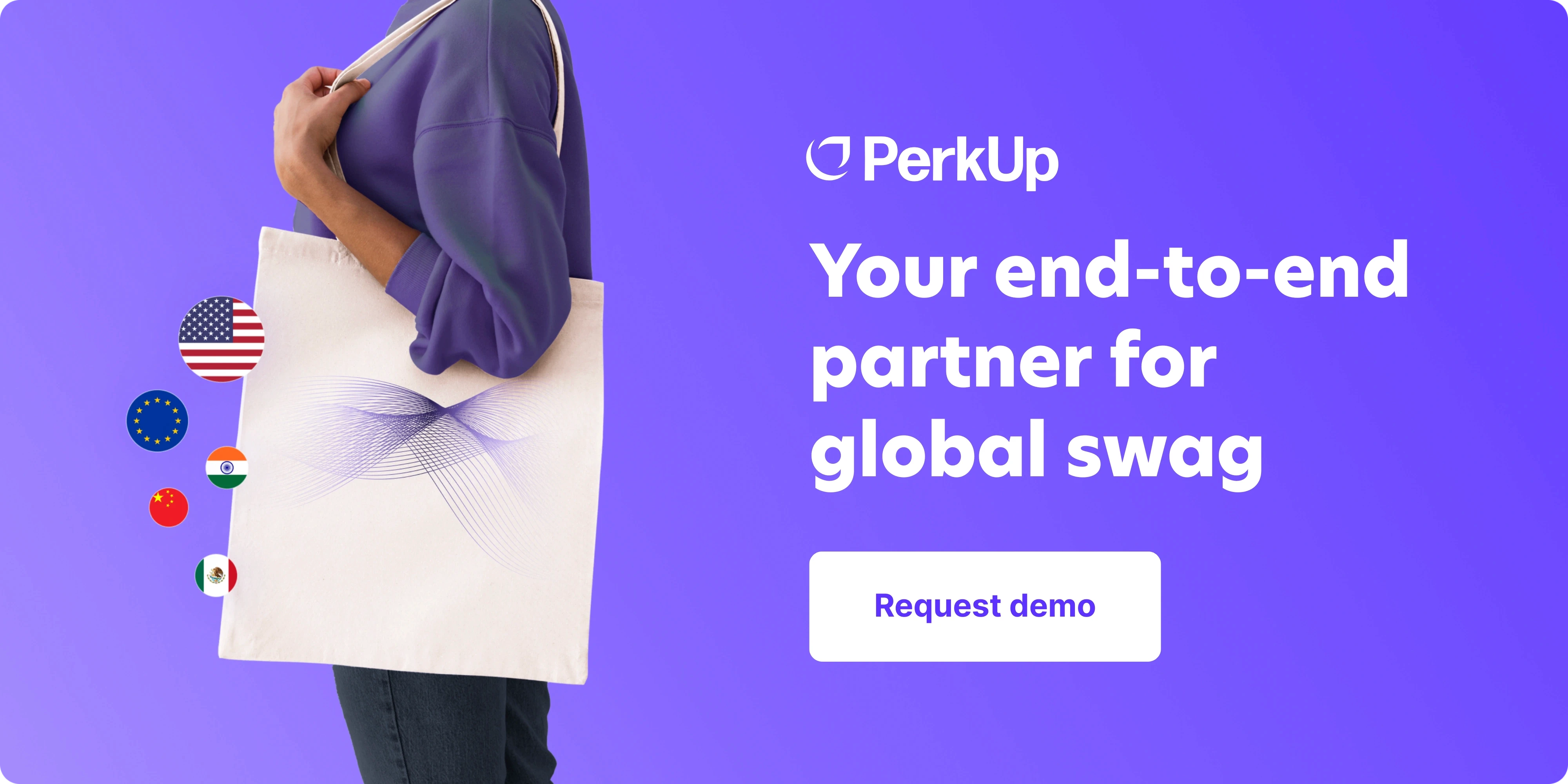
The creative side stays connected too! PerkUp’s in-house designers can handle artwork and packaging when your internal brand team doesn’t have room for another project, while custom sourcing gives you options beyond the standard catalog. For health systems with employees in more than one country, PerkUp ships to 100+ countries and uses warehouses and suppliers in the US, Canada, Mexico, the UK, Europe, India, China, Hong Kong, Australia, and Dubai. More orders can ship from inside your recipient’s region, and duties are prepaid wherever possible. 

PerkUp also supports programs that have sustainability requirements built into procurement. The platform is a Pledge 1% member and Stripe Climate partner, and regional fulfillment can reduce how far each order needs to travel.

Companies that trusted PerkUp with their healthcare swag

SurgiCor

SurgiCor built its onboarding kit around a laptop backpack, then added smaller everyday swag around it. That makes sense for a surgical organization where employees may move between locations and carry their work setup with them. The backpack gives the kit one substantial item people can keep using, while the rest supports the first-day experience without overcrowding it.

AEG Vision

AEG Vision took a more standardized approach. Each new hire received the same curated kit, which gave a network of clinic locations one consistent onboarding experience. That’s much easier to manage than letting every site choose its own swag, budget, and process. A new hire gets the same welcome whether they start at one clinic or another.

If you’re still comparing ways to run the program, our guide to the best swag platforms for healthcare teams compares five options across fulfillment, budgets, and catalog fit.


Key Takeaway

A healthcare new hire swag kit’s job is to show up before the first shift with things the new hire will actually use. The easiest way to make that repeatable is to decide the budget upfront, let your new hires enter their own sizes and shipping details, and tie the send to the start date in your HRIS. Keep the predictable, size-free items in bulk. Handle sized apparel and late additions separately with On Demand so you’re not guessing six months of inventory. 

And if you need this to be handled without stress or manual processes, then book a demo with PerkUp to see how the platform can help you with your new healthcare employees’ onboarding and other swag campaigns.


Frequently Asked Questions

How much should a healthcare new hire kit cost per employee?

Most healthcare teams budget somewhere between $40 and $120 per hire. The number usually comes down to apparel. Add a hoodie, scrub layer, or another higher-value item, and you’ll move toward the top of the range. Keep the kit to a badge holder, drinkware, socks, and a welcome card, and you can stay much closer to the bottom. PerkUp offers all of these swag items, whether they be name brands or white-label.

Can you use bulk and On Demand swag in the same onboarding program?

Yes, and that usually makes more sense than forcing everything into one fulfillment method. Keep predictable, size-free items like badge holders, drinkware, and bags in bulk inventory. Use On Demand swag for sized apparel, late hires, and anything you don’t want to forecast months ahead. Swag kits themselves run through bulk, so On Demand items ship separately rather than getting packed into the same kit. That still lets HR manage both from the same PerkUp account.

Does PerkUp connect to our HRIS?

Yes! PerkUp has more than 200 integrations, including BambooHR, Rippling, Paylocity, and ADP. Once connected, you can use the employee record your HR team already maintains to trigger onboarding sends instead of updating another spreadsheet or calendar whenever someone starts.

How do you send swag to clinical staff who don’t have a work email yet?

Use a shareable redemption or swag store link. You can send it through the personal email address you already use during preboarding. The new hire enters their own shipping address, chooses their size, and completes the order without needing a PerkUp account or an active company inbox. That makes it especially useful in the days before someone officially starts.

How long does it take to set up a healthcare new hire kit program?

Give yourself a few weeks if you’re starting from scratch, especially if you need design approvals, apparel sizing, or a custom kit. The fastest way to get moving is to start with a small group of core items and build from there. PerkUp’s customer success managers can help with your setup, while its in-house design team handles artwork and proofs. Once you have the program in place, your new hires can keep moving through the same process without HR rebuilding the send every time.

A nurse’s first day starts before she ever sees a patient. Badge photo. Locker assignment. Forms. A quick tour of the unit. A dozen new names she probably won’t remember by lunch. Then, ideally, there’s a swag kit waiting for her.

The last detail, the swag kit, is one of the few things from that first morning they actually get to take with them. The badge photo, forms, and orientation all blur together pretty quickly. The swag kit is what sticks around.

That matters in healthcare, where a lot of new hires don’t even reach their second year. To give you a concrete figure, according to the 2026 NSI National Health Care Retention & RN Staffing Report, 29.5% of new hospital hires leave within their first year. Those exits account for 35.6% of all hospital separations, and replacing one bedside RN costs an average of $60,090.

Despite that, though, the hiring doesn’t stop. The US Bureau of Labor Statistics projects about 1.9 million healthcare openings every year through 2034. That’s a lot of first days to plan for, and a lot of swag kits that need to feel worth keeping.

So, in this guide, we cover the swag categories and sample swag ideas you can put in a healthcare new hire swag kit, the reasons why you should have one, and some advice to get it right.


Why do new hire kits matter more in healthcare?

Before we dive into the swag side of things, let’s first discuss why it’s important to have onboarding kits for healthcare new hires. 

  • Most turnover happens in year one - The NSI report found that 29.5% of new hospital hires leave within twelve months, and those exits make up 35.6% of all hospital separations. If you want to improve the experience early, the first week gives you one of the clearest places to start.

  • Most healthcare hires don’t have a desk - Nurses, doctors, techs, and other frontline employees spend their day moving around hospitals. Send something they can take home, keep in a locker, or use during a shift. 

  • Apparel matters at work - Healthcare employees wear a uniform every day, so apparel can become part of the job. That said, you can include a good scrub top, jacket, or layer in your new hire swag kit.

  • Hiring happens in cohorts - Your hospital might bring in a large group of new grads in September, then add smaller groups of experienced hires throughout the year. You need a kit program that can handle both without rebuilding the process every time headcount changes.

  • Most companies, including hospitals, still have room to improve onboarding - Gallup found that only 12% of employees strongly agree that their employer does a great job onboarding. You don’t need an elaborate program to stand out. You need the basics to feel organized, useful, and ready when the new hire arrives.


How do you know if an item belongs in a healthcare new hire swag kit?

A healthcare kit has less room for filler than a typical office welcome kit because every item has to earn its spot. Run anything you’re considering through these five checks. If it fails two, cut it.

  1. Can they use it during a shift or right after one?

Ask yourself, what does your healthcare team do during the actual workday? Nurses spend twelve hours moving between patient rooms, hallways, break rooms, and the commute home. A tumbler, badge reel, tote, compression socks, or recovery item fits into that routine immediately. A desk accessory probably doesn’t. If someone has to invent a use for it, it won’t last long.

  1. Can it handle hospital life?

Healthcare puts more wear on swag than an office does. It gets tossed into lockers, carried in crowded bags, cleaned constantly, and used through long shifts. This, then, makes it important for you to check the fabric weight, lid, zipper, coating, stitching, and wash instructions before you order. A cheap tumbler that leaks or a sweatshirt that pills after three washes makes the whole kit feel cheaper than what you spent on it.

  1. Would they choose it without your logo?

This catches most bad swag fast. Ask whether your new hire would spend their own money on the exact swag item you’re planning to include. Brand, material, fit, and function all matter here. Start with something worth owning, then add branding that doesn’t make it harder to use outside work.

  1. Does it require a size?

Sized apparel changes the way you have to run your onboarding swag program. You can’t safely guess how many XS, M, XL, or 3XL hires you’ll need six months from now and expect the mix to stay right. Let new hires choose their size once you know who they are, or use On Demand for apparel while you keep size-free items ready in bulk. That also gives you a better shot at offering a real size range instead of buying heavily in the middle and hoping it works.

  1. Does it cross into the clinical equipment category?

Keep the welcome swag kit out of anything that affects patient care unless your clinical, infection control, or procurement teams approve it. Stethoscopes, penlights, scissors, and similar tools may look like great healthcare swag, but hospitals often have standards around materials, cleaning, safety, and approved vendors. Let the onboarding kit handle welcome and everyday use. Let clinical equipment follow the hospital’s normal procurement process.


How do you build a healthcare new hire kit in 5 steps?

The easiest way to make this repeatable is to build the process around the hire, not around each individual order. Set the budget once, separate what you can stock from what needs a choice, then tie the send to the start date.

  1. Set a per-hire budget before you choose the swag - Most health systems have budgets of somewhere between $40 and $120 per new hire. Decide whether every role gets the same amount or whether harder-to-fill positions get a higher tier. 

  2. Split the swag kit into fixed items and chosen items - Keep size-free basics like the badge reel, drinkware, and insert card in bulk, where you can order ahead and keep inventory ready. Let new hires choose anything that depends on fit, size, or preference through a swag store. That way, you get the savings of bulk without guessing how many medium hoodies you’ll need six months from now.

  3. Let the new hire enter their own size and shipping details - Send the redemption or store link with the offer letter, preboarding email, or another message they already expect to receive. The new hire enters the address and chooses the right size directly. HR doesn’t have to chase managers for updates, and managers don’t have to relay personal shipping information back.

  4. Tie the send to the actual start date - Pull start dates from your HRIS instead of maintaining a second calendar just for swag. A swag vendor’s integrations, including BambooHR, Rippling, and ADP, can help keep your recipient list tied to the same system your team already uses for onboarding. That matters when start dates move, offers fall through, or several cohorts start in the same month.

  5. Ship to their home before day one - Aim for the new hire kit to arrive two or three days before your new employee starts. By doing so, they can open it on their own time, wash or try on apparel, and bring anything useful with them on the first shift. It also keeps HR from storing kits at the nurses’ station.

The onboarding kit handles one part of the first-day experience. For the rest of the onboarding sequence around it, our employee onboarding best practices guide covers what to plan before, during, and after that first week.


What should go in a healthcare new hire swag kit?

With all of the two checklists we have above, now it’s time to discuss the swag. The thing you need to remember here is that a good healthcare kit should match the role and the way your team hires. A hospital bringing in 80 new grads at once needs a different setup from a People Ops team trying to recruit three experienced ICU nurses.

So, we created these three kit samples that cover the most common healthcare hiring situations. If you want a wider pool of swag ideas to choose from, our 15 healthcare swag ideas for nurses, doctors, and healthcare workers have more options with specs and pricing.

The Day One Kit (around $65)

Best for: New grad cohorts, bedside nurses, and medical assistants, as well as hospitals hiring at enough volume that the kit needs to work for almost everyone.

Why this mix works: The lanyard and stylus can be put to use during the first shift. The tumbler and socks make twelve-hour days a little easier. Then the hoodie gives the kit one item with enough value to stick around after orientation ends.

Where to adjust the budget: The hoodie accounts for more than half of the spend. Remove it, and the kit drops to about $36.48, which makes a big difference when you’re onboarding hundreds of people. You can also keep the size-free items stocked in bulk and handle apparel separately once each hire submits a size.


The Recovery Kit ($44.34 base, $107.03 with the sleep mask)

Best for: Night-shift nurses, rotating schedules, residents with long shifts

Why this mix works: This one is for when your healthcare team goes home after a long shift at the hospital. The earplugs and the sleep mask make sense for someone trying to sleep at 9 a.m., while the blanket, socks, and smaller wellness items give the kit a clear recovery angle.

Where to adjust the budget: The base version stays around $44 without the Drowsy mask. Add the mask for smaller night-shift groups, residents, or specialty teams where you have more budget per hire. This also works well as a 60- or 90-day follow-up instead of putting the full spend into day one.


The Flagship Kit (around $142)

Best for: Hard-to-fill specialties, experienced hires, and smaller clinical teams

Why this mix works: The FIGS scrub top and pants carry most of the value, so the kit feels substantial without needing ten smaller items. The neck fan brings it back to the reality of clinical work, especially for teams spending long stretches in PPE. The badge holder gives the kit one immediate day-one use.

Where to adjust the budget: Keep the FIGS top and pants if you need to cut corners. It already gives the kit a clear flagship item, so you can remove one or two of the smaller wellness products without making the kit feel incomplete. If you have more room, put it into better decoration, packaging, or a personal welcome card before adding another swag item.


How PerkUp Runs Healthcare Onboarding Kits
Healthcare onboarding rarely happens on one clean schedule. Start dates move. Someone joins late. Someone else needs a different hoodie size. PerkUp gives HR and People Ops one setup that can keep up with all of that without rebuilding the kit every time. Here’s how that works:

Before day one: Once you connect your HRIS, the new hire’s start date can automatically trigger the send. PerkUp has more than 200 integrations, including BambooHR, Rippling, Paylocity, and ADP, so your HR team can use the employee record it already maintains instead of updating a separate swag list.

New hire kits can be assembled from a mix of bulk stock you already own and On Demand swag produced per order, so you're not guessing six months of scrub sizes upfront. On the other hand, your new hire can also get a link to your branded swag store, where they enter their own shipping details and pick anything that needs a size from a collection you’ve already approved. 

After day one: You can keep using the same employee data for the next send. Automated milestone gifting can cover birthdays and work anniversaries. Gift cards give you another option for travelers, per diem staff, or anyone you need to reach quickly. When recruiting season starts, event swag can be used in the same program for career fairs and nursing events.

FIGS is already in PerkUp’s catalog as well. PerkUp carries 47 FIGS products, including scrub tops and pants, underscrubs, lab coats, On-Shift jackets and vests, compression socks, lanyards, and scrub caps. FIGS is built specifically for healthcare professionals, which is why it works so well here. The brand already has recognition with nurses and clinicians, and the products are designed around the way they actually work, from long shifts to constant movement. That means you can build FIGS into the same healthcare kit as badge holders, drinkware, and other onboarding swag without bringing in another vendor. Maternity and cargo styles are included too, so you can offer a much better range of fits instead of trying to make a few standard sizes work for everyone.

The creative side stays connected too! PerkUp’s in-house designers can handle artwork and packaging when your internal brand team doesn’t have room for another project, while custom sourcing gives you options beyond the standard catalog. For health systems with employees in more than one country, PerkUp ships to 100+ countries and uses warehouses and suppliers in the US, Canada, Mexico, the UK, Europe, India, China, Hong Kong, Australia, and Dubai. More orders can ship from inside your recipient’s region, and duties are prepaid wherever possible. 

PerkUp also supports programs that have sustainability requirements built into procurement. The platform is a Pledge 1% member and Stripe Climate partner, and regional fulfillment can reduce how far each order needs to travel.

Companies that trusted PerkUp with their healthcare swag

SurgiCor

SurgiCor built its onboarding kit around a laptop backpack, then added smaller everyday swag around it. That makes sense for a surgical organization where employees may move between locations and carry their work setup with them. The backpack gives the kit one substantial item people can keep using, while the rest supports the first-day experience without overcrowding it.

AEG Vision

AEG Vision took a more standardized approach. Each new hire received the same curated kit, which gave a network of clinic locations one consistent onboarding experience. That’s much easier to manage than letting every site choose its own swag, budget, and process. A new hire gets the same welcome whether they start at one clinic or another.

If you’re still comparing ways to run the program, our guide to the best swag platforms for healthcare teams compares five options across fulfillment, budgets, and catalog fit.


Key Takeaway

A healthcare new hire swag kit’s job is to show up before the first shift with things the new hire will actually use. The easiest way to make that repeatable is to decide the budget upfront, let your new hires enter their own sizes and shipping details, and tie the send to the start date in your HRIS. Keep the predictable, size-free items in bulk. Handle sized apparel and late additions separately with On Demand so you’re not guessing six months of inventory. 

And if you need this to be handled without stress or manual processes, then book a demo with PerkUp to see how the platform can help you with your new healthcare employees’ onboarding and other swag campaigns.


Frequently Asked Questions

How much should a healthcare new hire kit cost per employee?

Most healthcare teams budget somewhere between $40 and $120 per hire. The number usually comes down to apparel. Add a hoodie, scrub layer, or another higher-value item, and you’ll move toward the top of the range. Keep the kit to a badge holder, drinkware, socks, and a welcome card, and you can stay much closer to the bottom. PerkUp offers all of these swag items, whether they be name brands or white-label.

Can you use bulk and On Demand swag in the same onboarding program?

Yes, and that usually makes more sense than forcing everything into one fulfillment method. Keep predictable, size-free items like badge holders, drinkware, and bags in bulk inventory. Use On Demand swag for sized apparel, late hires, and anything you don’t want to forecast months ahead. Swag kits themselves run through bulk, so On Demand items ship separately rather than getting packed into the same kit. That still lets HR manage both from the same PerkUp account.

Does PerkUp connect to our HRIS?

Yes! PerkUp has more than 200 integrations, including BambooHR, Rippling, Paylocity, and ADP. Once connected, you can use the employee record your HR team already maintains to trigger onboarding sends instead of updating another spreadsheet or calendar whenever someone starts.

How do you send swag to clinical staff who don’t have a work email yet?

Use a shareable redemption or swag store link. You can send it through the personal email address you already use during preboarding. The new hire enters their own shipping address, chooses their size, and completes the order without needing a PerkUp account or an active company inbox. That makes it especially useful in the days before someone officially starts.

How long does it take to set up a healthcare new hire kit program?

Give yourself a few weeks if you’re starting from scratch, especially if you need design approvals, apparel sizing, or a custom kit. The fastest way to get moving is to start with a small group of core items and build from there. PerkUp’s customer success managers can help with your setup, while its in-house design team handles artwork and proofs. Once you have the program in place, your new hires can keep moving through the same process without HR rebuilding the send every time.
import { useEffect } from "react"


export default function CarouselFixer() {

useEffect(() => {

// Wait for CMS content to render

const init = () => {

// Find all horizontally scrollable containers inside CMS content

const contents = document.querySelectorAll(".framer-text, [class*='content'], [class*='Content']")


contents.forEach((content) => {

const scrollEls = content.querySelectorAll("ul, ol, div")

scrollEls.forEach((el) => {

const htmlEl = el as HTMLElement

const style = window.getComputedStyle(htmlEl)


// Target only elements that overflow horizontally (the carousel)

if (

style.overflowX === "scroll" ||

style.overflowX === "auto" ||

htmlEl.scrollWidth > htmlEl.clientWidth

) {

attachScrollBehavior(htmlEl)

}

})

})

}


const attachScrollBehavior = (el: HTMLElement) => {

// Prevent double-attaching

if (el.dataset.scrollFixed) return

el.dataset.scrollFixed = "true"


el.style.cursor = "grab"

el.style.userSelect = "none"

el.style.webkitOverflowScrolling = "touch"

el.style.scrollbarWidth = "none"


let startX = 0

let scrollStart = 0

let isDown = false

let dragged = false


const onMouseDown = (e: MouseEvent) => {

isDown = true

dragged = false

startX = e.clientX

scrollStart = el.scrollLeft

el.style.cursor = "grabbing"

}


const onMouseMove = (e: MouseEvent) => {

if (!isDown) return

const dx = e.clientX - startX

if (Math.abs(dx) > 5) dragged = true

el.scrollLeft = scrollStart - dx

}


const onMouseUp = () => {

isDown = false

el.style.cursor = "grab"

}


const onClickCapture = (e: MouseEvent) => {

if (dragged) {

e.preventDefault()

e.stopImmediatePropagation()

dragged = false

}

}


const onWheel = (e: WheelEvent) => {

if (Math.abs(e.deltaX) > 0) {

e.preventDefault()

el.scrollLeft += e.deltaX

}

}


el.addEventListener("mousedown", onMouseDown)

el.addEventListener("mousemove", onMouseMove)

el.addEventListener("mouseup", onMouseUp)

el.addEventListener("mouseleave", onMouseUp)

el.addEventListener("click", onClickCapture, true)

el.addEventListener("wheel", onWheel, { passive: false })

}


// Try immediately, then retry after delays to catch late CMS renders

init()

setTimeout(init, 500)

setTimeout(init, 1500)

}, [])


// Renders nothing — invisible helper

return null

}

Start sending premium swag and gifts globally

Simplify and enhance your company and event swag and gifting experience for better retention, engagement, and productivity.

Start sending premium swag and gifts globally

Simplify and enhance your company and event swag and gifting experience for better retention, engagement, and productivity.

Start sending premium swag and gifts globally

Simplify and enhance your company and event swag and gifting experience for better retention, engagement, and productivity.