
A sales kickoff can look simple from the outside. After all, all you need to do is get everyone from sales in a room, talk through the new year’s goals, introduce the strategy, hand out some swag, and send everyone home. But then you start planning it, and now you’re coordinating speakers, travel, training, team activities, messaging, gifts, and about 40 other details while trying to make sure the whole thing actually helps your sales team sell better. And you haven’t even picked the venue yet, which can affect everything from the budget and travel plans to the agenda and what you need to bring with you!
With those things to consider, it can get quite chaotic. So, in this guide, we’ll walk you through how to plan a sales kickoff that will ensure your meeting is successful and without all the stress.
What is a sales kickoff?
Before anything else, let’s define what a sales kickoff is. A sales kickoff meeting (typically abbreviated as SKO) is where your revenue or sales team gets aligned on the year ahead: the number, the story, and the product roadmap.
Most companies hold their sales kickoff in the third or fourth week of January, with some pushing it into the first week of February. That timing makes sense, especially since it’s a ‘kickoff’ and happens right after the holidays. However, that also means sales kickoff planning can turn into a scramble if not timed right.
Where sales kickoffs happen varies a lot, too. Some companies might book a hotel conference room near the office and keep it simple. Others turn it into a full offsite at a resort, a lodge, or a retreat center and build team activities around it. That choice shapes your travel budget, your agenda, and the swag items that actually make sense to hand out.
With all of that said, at the end of the day, sales kickoff meetings work as a training session and a strategy reset at the beginning of the year, making it an important event you have to nail. It’s especially important when there’s a lot for sales teams to keep up with. For instance, according to a Gartner survey, sales organizations completed an average of four transformations in the past 12 months. That’s a lot! It means your team is absorbing a lot of change, and a sales kickoff meeting is your chance to bring it all together.

The Sales Kickoff Planning Timeline
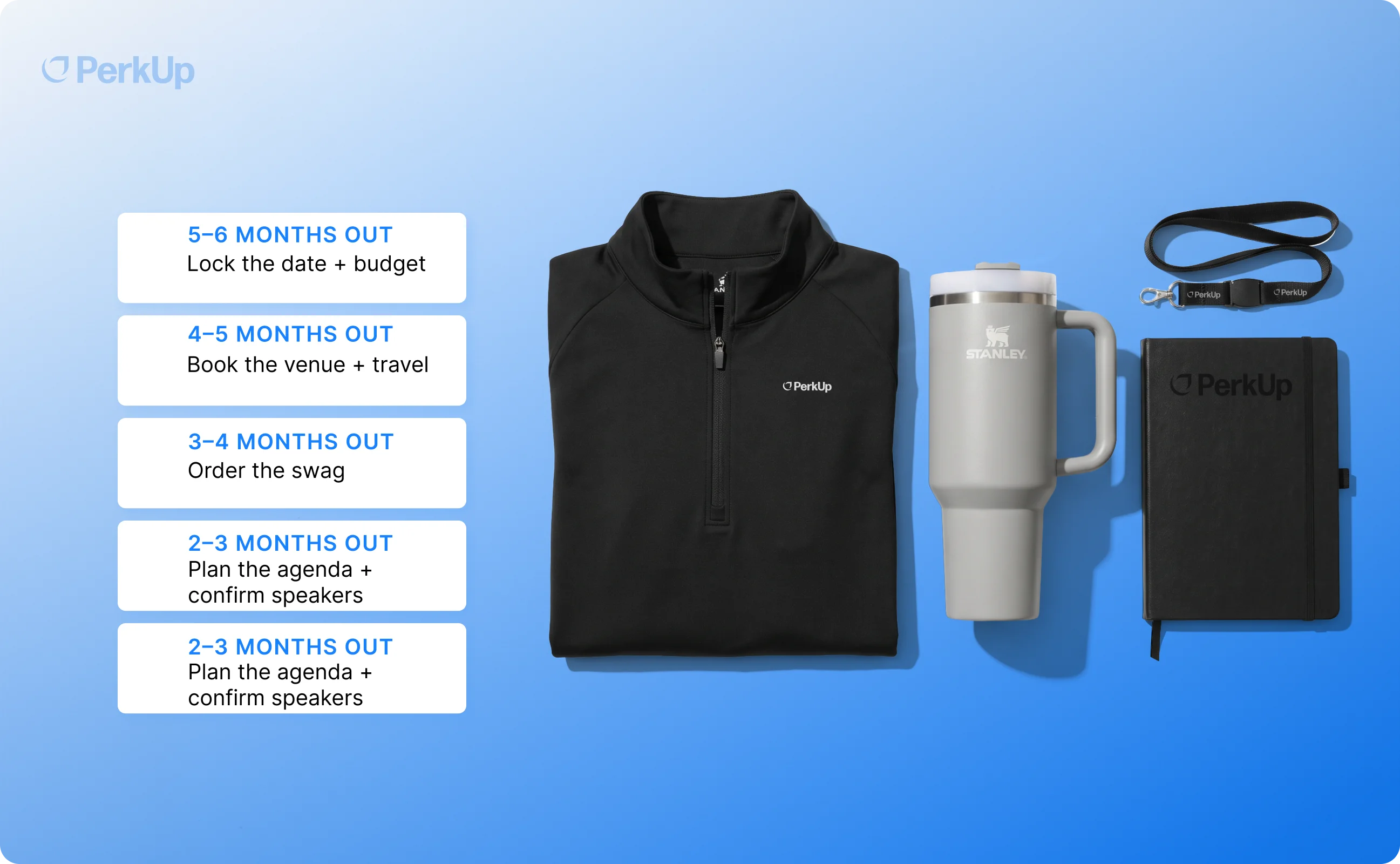
If your sales kickoff is in a different location or region than your headquarters or office, give yourself four to six months. If it’s virtual, then it can usually come together in eight to ten weeks. And though that may sound like a lot of time, sales kickoff planning coincides with holiday swag planning, which can make everything feel more rushed and booked. A little more time helps in this case.
Counting back from a late-January kickoff, here’s where each phase of planning is on the calendar. If your kickoff falls earlier or later, just shift the dates.
Months 5 to 6 (July to August): Lock the date and budget
Get approval on the budget, dates, and format before you start booking anything. Everything else depends on these three, so it’s better to know who needs to sign off now than halfway through your planning.
Months 4 to 5 (August to September): Book the venue and travel
Start by deciding what kind of venue makes sense for your kickoff. A hotel conference room near the office, a resort offsite, or your own space will all come with different costs and planning needs. Once you know what you're looking for, book the venue, reserve hotel rooms, and start planning travel for anyone flying in. If you’re comparing venues, you can check some corporate retreat venue sourcing platforms that can help you out.
Months 3 to 4 (September to October): Order the swag
Yes, you need to order the swag before the agenda is finished. That’s because custom swag items (like apparel, drinkware, and kits) take time, typically five to six weeks. That said, give yourself some breathing room so you’re not rushing. And remember, this coincides with the holidays, so you’d better start early. Aim to have your approvals done by mid-September if you can. Things can get hectic after that, and an approval in October leaves you very little room. Our CSMs at PerkUp see many clients lock in their sales kickoff swag around this window for January events.
Months 2 to 3 (October to November): Plan the agenda and confirm speakers
Start putting the schedule together and confirm your speakers. If you’re bringing someone in from outside the company, book them early. Their calendars fill up fast.
Month 1 (December): Finish the content
Get the presentations in, run through the sessions, and make sure everyone knows what they’re responsible for. At this point, you should be making final changes rather than adding a bunch of new sessions.











How do you build a sales kickoff agenda?
The easiest way to build a sales kickoff agenda is to start with what you want your sales reps to do differently when they get back to work, then build the sessions around that. If a session doesn’t help get them there, cut it or send it out ahead of time. A sales kickoff agenda can get crowded quickly when every team wants a spot on the schedule.
Here’s how you can build a sales kickoff agenda:
Pick one thing you want to change: Maybe it’s a new pricing approach, a new customer segment, or a new pitch. Pick one. Trying to launch six new things at once makes the whole event harder to follow for your attendees.
Decide how you want to use the time: A good starting point is 30% company context, 40% practice, 20% time together, and 10% recognition. You can adjust the mix, but make sure to decide it ahead of time.
Put one person in charge of each session: Don’t leave a session with “Sales” or “Marketing” as the owner. Give it to one person and give them a deadline, so you don’t have to rush anything.
Save the stuff people can read for later: Product details, compensation information, and tool walkthroughs can usually be shared ahead of time. Use the time together for things that actually benefit from having everyone in the same room.
Give people real breaks: Your reps are traveling, catching up on deals, and probably running on less sleep than usual. Back-to-back sessions might look efficient on paper, but people stop paying attention pretty quickly when they’re tired. Make sure to slot in breaks!
Things to consider when creating your sales kickoff agenda
Your venue also affects what you can actually do during the kickoff. A hotel with three breakout rooms gives you space to split reps by segment for practice sessions. A lodge with one large room and plenty of outdoor space might work better for team activities than small-group roleplay. Check the room setup before you build the agenda, so you know what you can actually fit in.
Practice should get the biggest share of the agenda. Salesforce found that the average seller spends 40% of their time selling, while Gen Z reps say a lack of manager time is the biggest obstacle to effective enablement. Two days with managers in the same room is hard to come by, so ensure to use that time for reps.
Get marketing and customer support involved, too! Sales teams that build enablement content with other departments are 2.4 times more likely to achieve strong commercial growth, according to Gartner research.
What a two-day agenda actually covers
If you’re wondering what this would look like in practice, we’ve got a sample sales kickoff agenda here for you:
Day one is about the bigger picture - Start with the number and what’s changed in the market: where you succeeded, what moved, and what the plan is based on. Keep the CEO’s part short and specific. Then move into product, with one rule that every product session should end with something a rep could actually say to a customer. Finish the day with customer stories, ideally with an actual customer if you can get one.
Day two is about practice - Get reps into small groups to work through discovery calls, objections, and pricing conversations. Have managers coach them in the room instead of spending the whole time presenting. Then split into smaller groups by segment or region.
The last block is about what happens next - Recognize the people who had a strong year, then cover the certification deadline, where everyone can find the materials, and the one thing every rep needs to do by Friday.
A virtual sales kickoff can follow the same structure on a shorter schedule. Keep the sessions tighter, use breakout rooms for practice, and move recognition earlier while people still have the attention span for it.

The 10-Point Sales Kickoff Checklist
Use this as the final check to ensure that you have everything covered before your sales kickoff meeting.
Budget approved, and decision-maker confirmed - Make sure the budget covers the venue, travel, food, speakers, and swag. More importantly, know exactly who needs to approve each one so nothing has to wait for a sign-off.
Date that works for everyone - Check holidays and major events in every region before you finalize it. A January date that works in Chicago might be a problem for someone in India or Australia.
Venue and equipment are ready - Confirm the room setup, breakout spaces, screens, microphones, Wi-Fi, and anything else your sessions need. If you’re recording, test that setup before the event. If you're heading somewhere remote, check the Wi-Fi and power early, too. A resort or retreat center might look great in the photos, but that doesn't tell you whether the internet can handle 80 people on video at the same time.
Travel and hotels are booked - Make sure everyone knows where they’re staying and how they’re getting there. If people are traveling internationally, check visa requirements early.
The agenda is in everyone’s hands - Send the sales kickoff agenda at least three weeks before the event so reps can plan around it and come prepared for the sessions that matter to them.
Speakers know what they’re doing - Confirm every speaker and share who will be in the room, what you want them to cover, and how much time they have.
Sessions have been practiced - Run through the presentations, test the technology, and make sure everyone knows when to stop. A rehearsal will catch problems that are easy to miss when you're looking at a finished deck.
Swag is ordered, and delivery is sorted - Separate the people attending in person from everyone joining remotely. If you're shipping to remote employees, make sure you have the right addresses and tracking.
You know how you’ll measure your sales kickoff success rate - Decide what success looks like before the event starts. That could be session feedback, certification results, a new pipeline, or something else tied to what you wanted the sales kickoff to accomplish.
The follow-up is already planned - Decide what happens once everyone goes home. Send the recordings and materials, schedule any coaching sessions, and give reps a clear next step. The sales kickoff meeting shouldn't end when the last session does.
How to Plan Your Sales Kickoff Swag
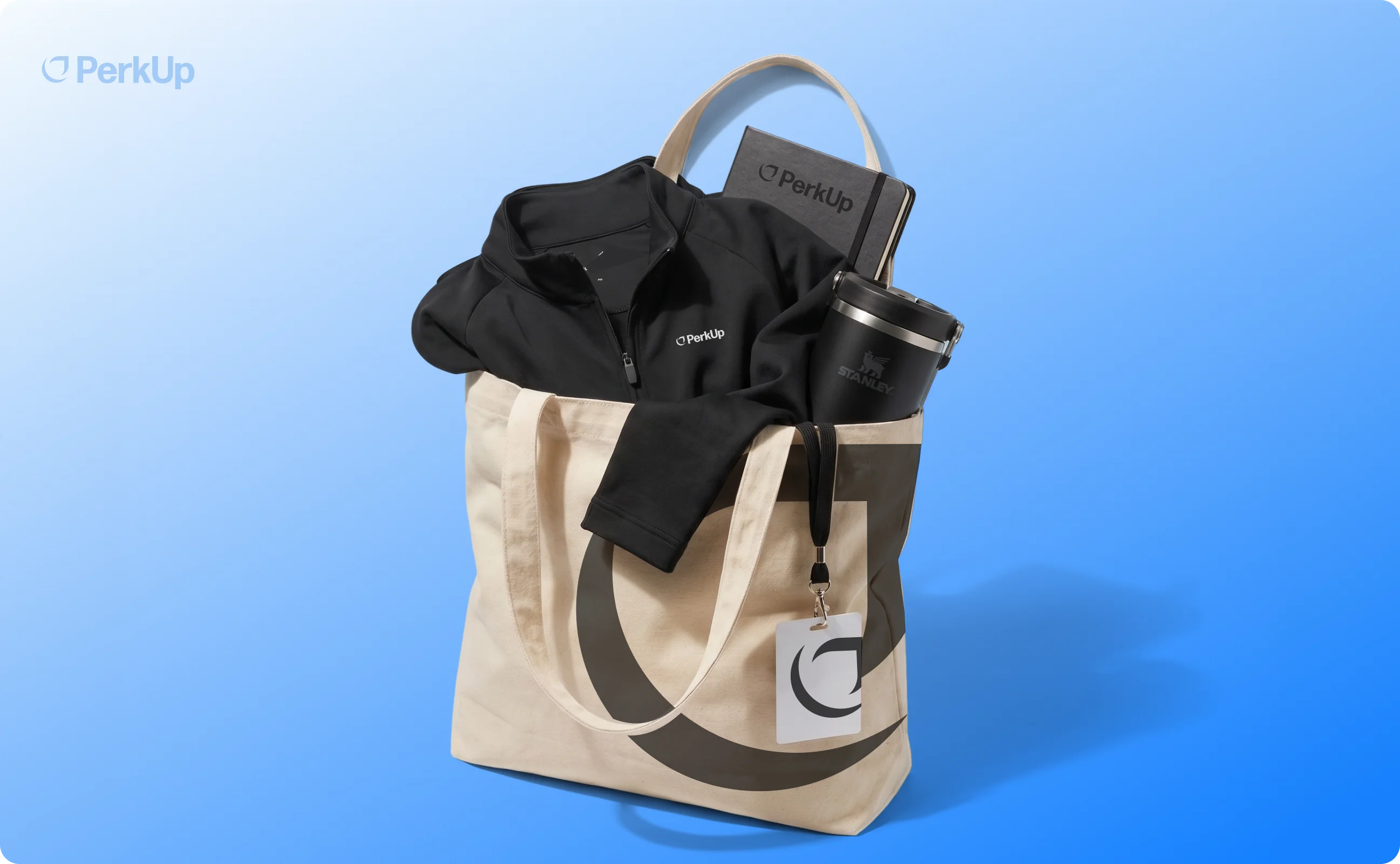
Your reps will probably forget half the slides by February. The swag has a better chance of sticking around. That’s why a good sales kickoff swag is important. Aside from being a physical reminder of the event, it’s also something physical that your remote employees can have.
That said, here are a few things worth thinking about when you’re planning sales kickoff swag:
Carry the theme into the swag: Match the swag to your venue, too. Your sales kickoff theme should carry through to what you give people. A beach resort makes sunglasses and sunscreen an easy choice. A mountain lodge points you toward beanies and insulated drinkware. If you're staying at a hotel near the office and most people are driving home, you have more room for bulkier items.
Give remote employees the same experience: Someone joining from another time zone should still get something to open and use alongside the rest of your team. Ship their swag ahead of time so it arrives around the event, such that they won’t feel left out.
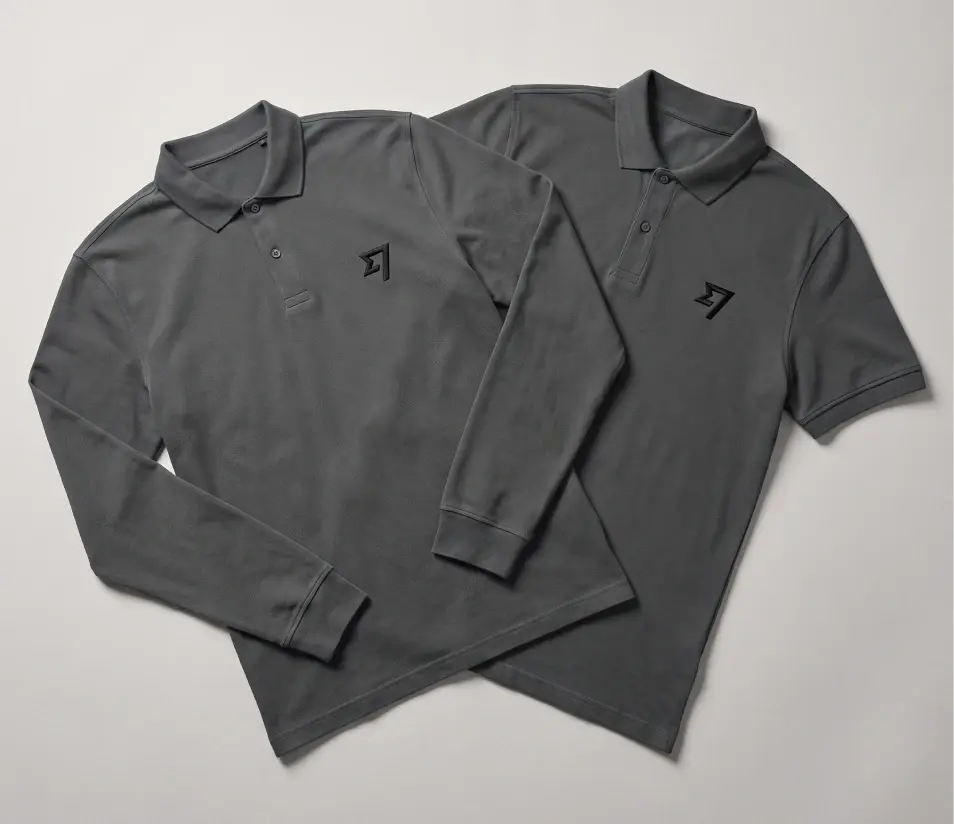
Choose swag items people will keep using: This can be anything from premium apparel to high-quality drinkware. Anything well-made and practical gives you more value from the same kickoff budget.
Most sales kickoffs hand out swag on site: Reps might grab their swag at registration, find it waiting at their seat, or pick it up at the hotel when they check in. That makes a tote or bag a useful starting point for the whole kit. Everyone has somewhere to put their swag, plus anything else they pick up during the event.
The brands you choose matter here: Sales reps are around customers all year, so a recognizable brand can make a huge difference if they’re wearing the apparel or not. Workwear brands can be a harder sell for the same reason. What works on a job site doesn't always make sense for a rep heading into a client meeting.
How much to budget for sales kickoff swag?
Around $50 can get you one strong item, usually apparel or a tumbler. At $150, you have more room to build a small kit with a few higher-quality pieces.
What we’ve seen across our client accounts is pretty straightforward. Teams coming off a strong year tend to spend more on kickoff swag, while tighter budgets usually mean sticking with one good item.
Keep the trip home in mind, too. Most sales kickoff meetings involve some amount of travel, so a huge swag item that barely fits in a suitcase probably isn’t the best use of the budget. Smaller, useful items are easier to take home and more likely to get used.
Should you pick bulk or On Demand for sales kickoff swag?
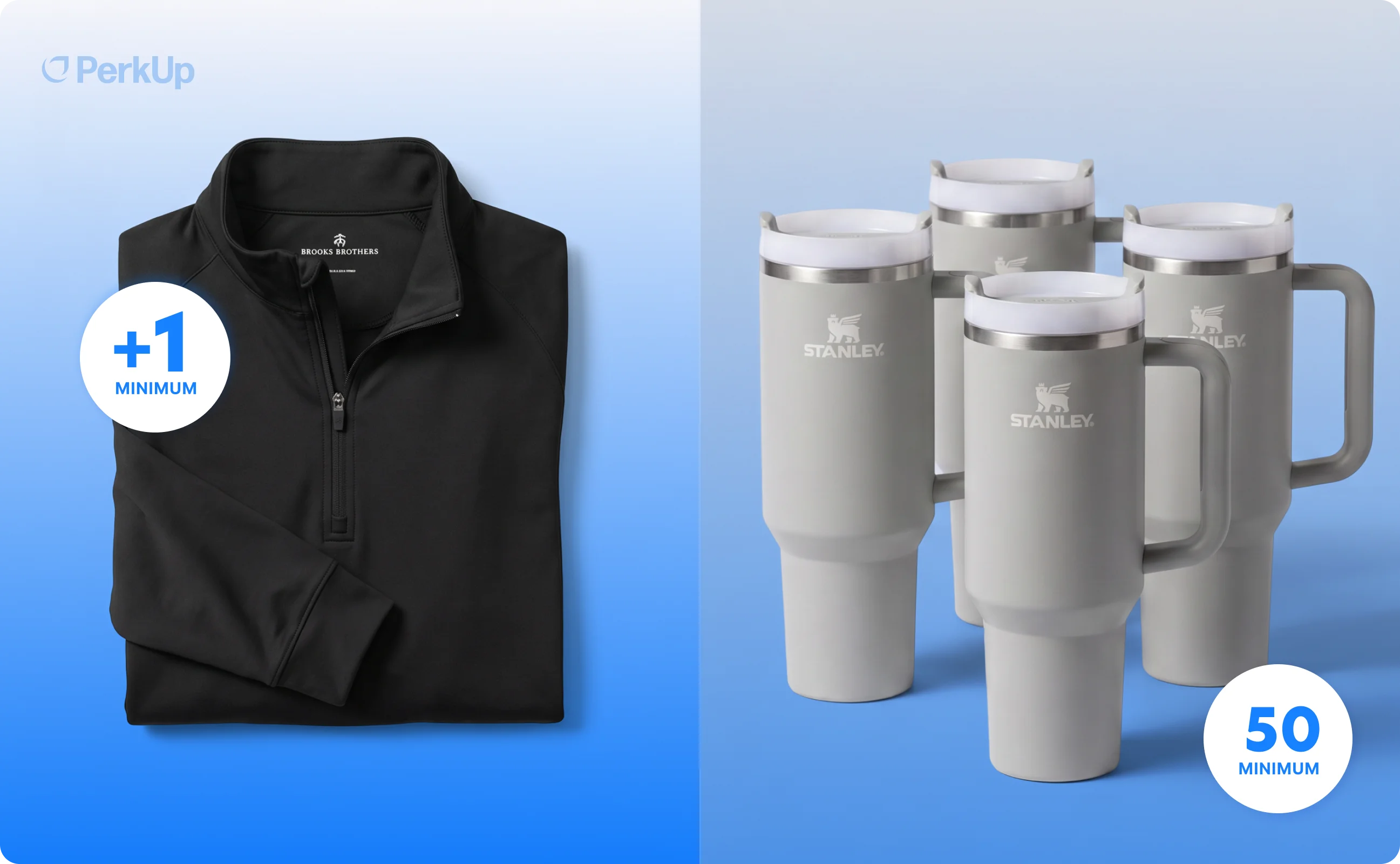
Bulk works well when your headcount is set and/or when you want to build kits. Give yourself at least five weeks: around three weeks for production, one for kitting, and one for approvals. Larger orders can take longer, and international sourcing can add more time, so leave some room if your team is spread across regions.
On Demand takes about three weeks and has a 1-unit minimum. That’s useful when your list is still changing, or a few last-minute additions need to be covered.
For more sales kickoff ideas, check out our swag ideas for in-person events or offsite swag ideas if your kickoff doubles as a retreat.

How do you get swag to an international sales kickoff?
If your kickoff is in Mexico City, Lisbon, Toronto, or somewhere in the Caribbean, shipping swag there comes with a few extra things to figure out. Customs, import paperwork, and venue policies can turn a simple delivery into a much bigger problem.
Luckily, you have three main options for shipping your swag to an international sales kickoff location. Here’s what each one looks like:
Ship from your home country to the venue
This is usually the first option teams consider. A US vendor sends everything in one shipment to the hotel, and it seems straightforward. That is, until the shipment reaches the border.
Customs may ask who is importing the goods. That can mean your company needs to be registered in the destination country. Most companies planning an international kickoff don't have that setup. Asking the hotel to handle the import doesn't always work either, since many hotels won't take responsibility for importing goods. If the shipment gets held at customs, you can also end up paying storage fees while you sort out the paperwork.
So, if you're shipping this way, confirm two things with the venue before anything is shipped out: whether they accept packages and what they charge to receive and store them. If you want to skip the hassle, working with swag platforms like PerkUp, which has warehouses in different regions, can help you handle it efficiently.
Pack it in suitcases
For smaller amounts of simple swag, this can work. Bring everything to the office, split it between checked bags, and have your employees take it with them.
The problem starts when you're carrying items that customs may want you to declare. Ten new power banks in one person's luggage, for example, can raise questions. If something goes wrong, the employee carrying the bag is the one dealing with it. Only do this option if you’re certain that the swag you’re carrying won’t get flagged by customs.
Produce or fulfill in the destination country
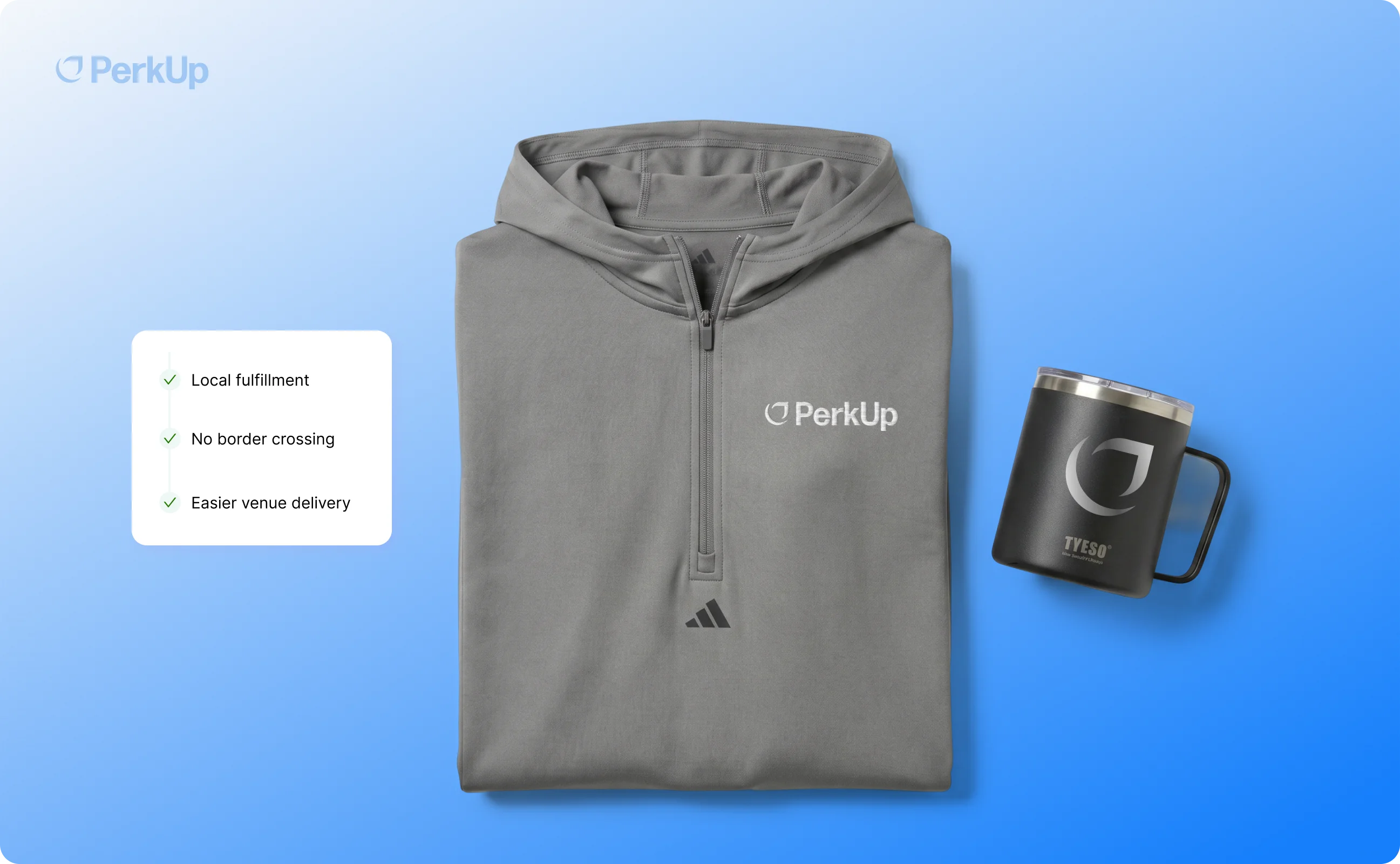
This is usually the easiest option when you're planning for your international sales kickoff. Your swag gets produced or stored in the country where the kickoff is happening, then delivered locally.
That means:
No importer of record issue - Nothing crosses a border, so your company doesn't need to handle an import into a country where it’s not registered.
No hotel dependency - The venue receives a normal local delivery instead of getting pulled into the customs process.
Run Your Sales Kickoff Swag Through PerkUp
Sales kickoff swag gets complicated when part of your team is in the room, and the rest is somewhere else. You’re shipping kits to the venue, sending boxes to remote reps, tracking deliveries, and trying to make sure nobody gets left out.
PerkUp gives you one place to manage all of it. You can run event swag, bulk orders, On Demand swag, a branded swag store, swag kits, and gift cards in just one platform. For instance, you can easily send 200 kits straight to the venue, whether that's a hotel, a resort, or a conference center, ship individual swag items to reps who couldn’t make it, then keep the store open for anyone who needs something later.
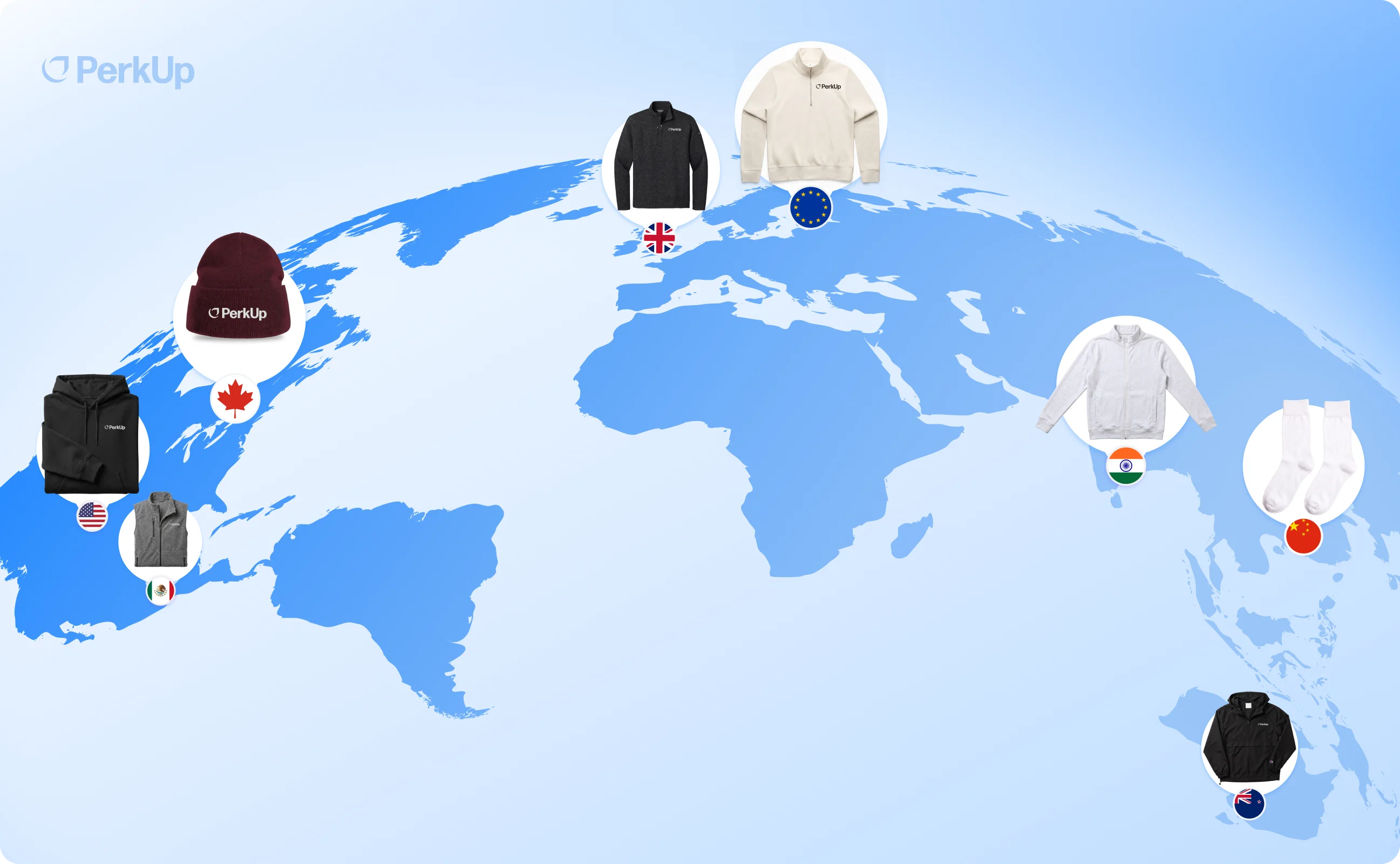
The platform’s global warehouse and supplier network covers the US, Canada, Mexico, the UK, Europe, India, China, Hong Kong, and Australia, too, so you can send swag to more than 65 countries. That means your reps in different cities can receive their swag locally instead of having every swag item shipped internationally. Duties are handled upfront wherever possible, too, and reimbursed when you or your recipient had to pay something yourself.
With PerkUp, you can also keep track of the event from one place with the platform’s event management. There, you can see production timelines, delivery windows, and shipping status so you know what has arrived and what’s still on the way. Every account also includes in-house designers, so you have help if the kickoff theme or artwork changes along the way.
Aside from these features that you can use for your sales kickoff, PerkUp also has 200+ integrations that you can use for automated milestone gifting. That means, you don’t have to use another platform for your onboarding, birthday, or work anniversary swag sends.
If you’re wondering how companies used PerkUp for their sales kickoff swag, TigerConnect is one good example.
TigerConnect
For their 2026 kickoff, Ascend, TigerConnect sent embroidered quarter-zips to reps across four US locations plus Mexico City. It’s a good example of how swag can carry the kickoff theme beyond the event itself, with something reps can keep wearing throughout the year.
Wrapping Up
When it comes to sales kickoff planning, make sure to start earlier than you think you need to, especially when swag is involved. Build the agenda around what you want reps doing when they get back to work, and split your shipping list as soon as you know who’s traveling.
Your kickoff sets the tone for the year ahead. Give yourself enough time to get the details right instead of trying to pull everything together in December.
Planning swag for your company’s sales kickoff? Schedule a demo with PerkUp, and we’ll help you work backward from the event date so production, kitting, and shipping all have enough time.

Sales Kickoff FAQs
Should sales kickoff swag be bulk or On Demand?
Bulk works well when you know your headcount and want to build kits. It also gives you a lower cost per item. Plan for roughly five weeks: three for production, one for kitting, and one for approvals. Larger orders and international sourcing can take longer. On Demand takes about three weeks and has a 1-unit minimum, so it’s useful for late additions or people who join after you place the main order. A lot of teams use both. PerkUp offers both of these.
How do you get kickoff swag to international recipients on time?
Ship from the region closest to your recipient. PerkUp fulfills through regional warehouses, so a kit going to someone in a different location can arrive as a local delivery instead of making its way through international customs. Duties are handled upfront in most cases, and PerkUp reimburses unexpected charges when they come up.
How do you track swag inventory and fulfillment for an event?
Keep an eye on three things: how much inventory you have, where it needs to go, and what has already been delivered. PerkUp’s dashboard lets you track event inventory and shipments in one place, so you can see what’s still being produced, what has reached the venue, and what’s on its way to your employees’ homes.
How far ahead should you order custom sales kickoff swag?
Give yourself at least five weeks for bulk swag with decoration. Custom packaging and extra logo placements can add more time because they need additional proofing. Apparel with embroidery or screen printing can also take longer. For a January kickoff, many teams place their orders in September or October. If you’re already inside the three-week mark, On Demand is the safer option. You can save the custom work for next year.
What should you look for in a swag platform for events?
Start with international shipping coverage, especially if your sales team is spread across countries. Then look at whether the platform supports both On Demand and bulk orders, gives you visibility into inventory and shipments, and has the security certifications your company needs. PerkUp has all of these and more, so you can plan your sales kickoff swag and other recurring swag campaigns.