The Ultimate Guide to Shipping Swag to China and Hong Kong in 2026

The Ultimate Guide to Shipping Swag to China and Hong Kong in 2026

The Ultimate Guide to Shipping Swag to China and Hong Kong in 2026

Featured

Featured

Featured

The Ultimate Guide to Shipping Swag to China and Hong Kong in 2026

The Ultimate Guide to Shipping Swag to China and Hong Kong in 2026

The Ultimate Guide to Shipping Swag to China and Hong Kong in 2026

Mainland China and Hong Kong run on different customs rules. Here's how to get swag to both without losing orders at the border.

Mainland China and Hong Kong run on different customs rules. Here's how to get swag to both without losing orders at the border.

Mainland China and Hong Kong run on different customs rules. Here's how to get swag to both without losing orders at the border.

Last Update:

LastUpdate:

Last Update:

7

7

min read

min read

A jacket and a branded PerkUp mug on top of a silhouette of a map of China.
In this Post

By the end of 2025, China had 725 million employed people, with a growing share of them working for companies headquartered somewhere else, like the US. Hong Kong adds another 3.7 million to that figure, despite its small area size.

That said, there are differences when it comes to these two countries’ customs and rules. The answer actually goes back to 1997, when Hong Kong returned to Chinese sovereignty and became a Special Administrative Region under the “one country, two systems” arrangement. It is part of China, but Article 116 of the Basic Law, Hong Kong's constitutional document, makes it a separate customs territory with its own tariffs, currency, and trade policy. 

Because of that, in this guide, we’ll cover what you need to know about shipping swag to China and Hong Kong in 2026, including how duty and tax work in each country, which items get stopped and why, what your recipients actually want to receive, and how PerkUp clients like Wise, Sitemate, and Alianza successfully send swag in these countries.


Interesting Facts about China and Hong Kong
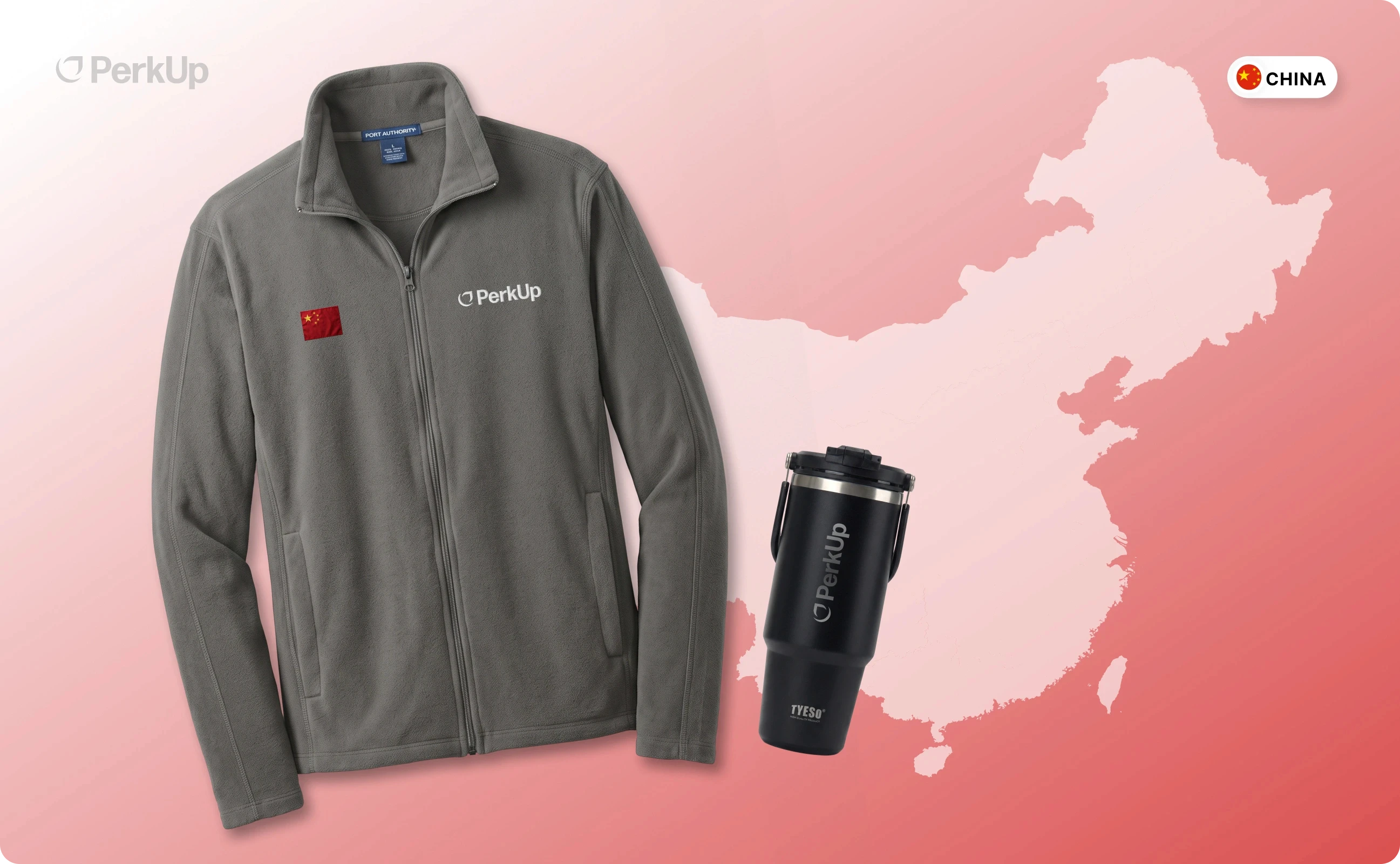
Before we dive into the specifics of customs and rules, here are some facts about China and Hong Kong worth knowing:

China

  • China's postal and express network moved 199 billion parcels in 2025, according to the State Post Bureau. Doorstep delivery is taken seriously in China, which means your recipients have high expectations about tracking and timing.

  • The Spring Festival travel rush, or chunyun, is the largest annual human migration on the planet. The Spring Festival travel rush, or chunyun, is the largest annual human migration on the planet. In 2026, it ran from February 2 to March 13 and set a record with 9.41 billion inter-regional trips, per the Ministry of Transport. This is something that you should always account for because factories, couriers, and warehouses all face higher demand and potential delays during this period.

  • China runs two week-long national shutdowns a year. Per the State Council, 2026 has the Mid-Autumn Festival from September 25 to 27 and the National Day Golden Week from October 1 to 7, with September 20 and October 10 as adjusted working days.

  • Mid-Autumn Festival is the dominant corporate gifting moment, and mooncake boxes are the standard staff gift. Companies send them to employees, clients, and partners the way US firms send holiday gift baskets in December.

  • Since June 28, 2025, the Civil Aviation Administration of China has banned power banks without a visible CCC mark, with unclear CCC marks, or from recalled batches on all domestic flights. Most power banks built for export carry CE or FCC marks instead, so they fail the test.

Hong Kong


Why is shipping swag to mainland China harder than it looks?

It’s harder to ship to China because the mainland requires a locally registered entity to act as the consignee on every commercial import declaration. This means that your US, UK, or Australian company can’t simply pay the duty and send swag kits in its own name. Simply put, for Mainland China, you ship domestically from inside China. Importing isn’t an option at all.

The logic will feel familiar if you have read our guide to sending swag to India. In many ways, China and India have similarities wherein there’s a strict market, and you have to produce locally and completely skip the border. The difference is that India will at least let you attempt the import. In China, the consignee requirement ends your attempt before you even try.

On the other hand, Hong Kong has none of that friction.


How do duties and taxes work on swag shipped to China?

There are two ways swag can enter China: as a personal parcel or a commercial import. The first has a hard value cap that rules out anything beyond a single gift. The second is where every real company swag program ends up, and that's where the customs paperwork, duties, and import requirements come in.

Personal parcels under the value cap
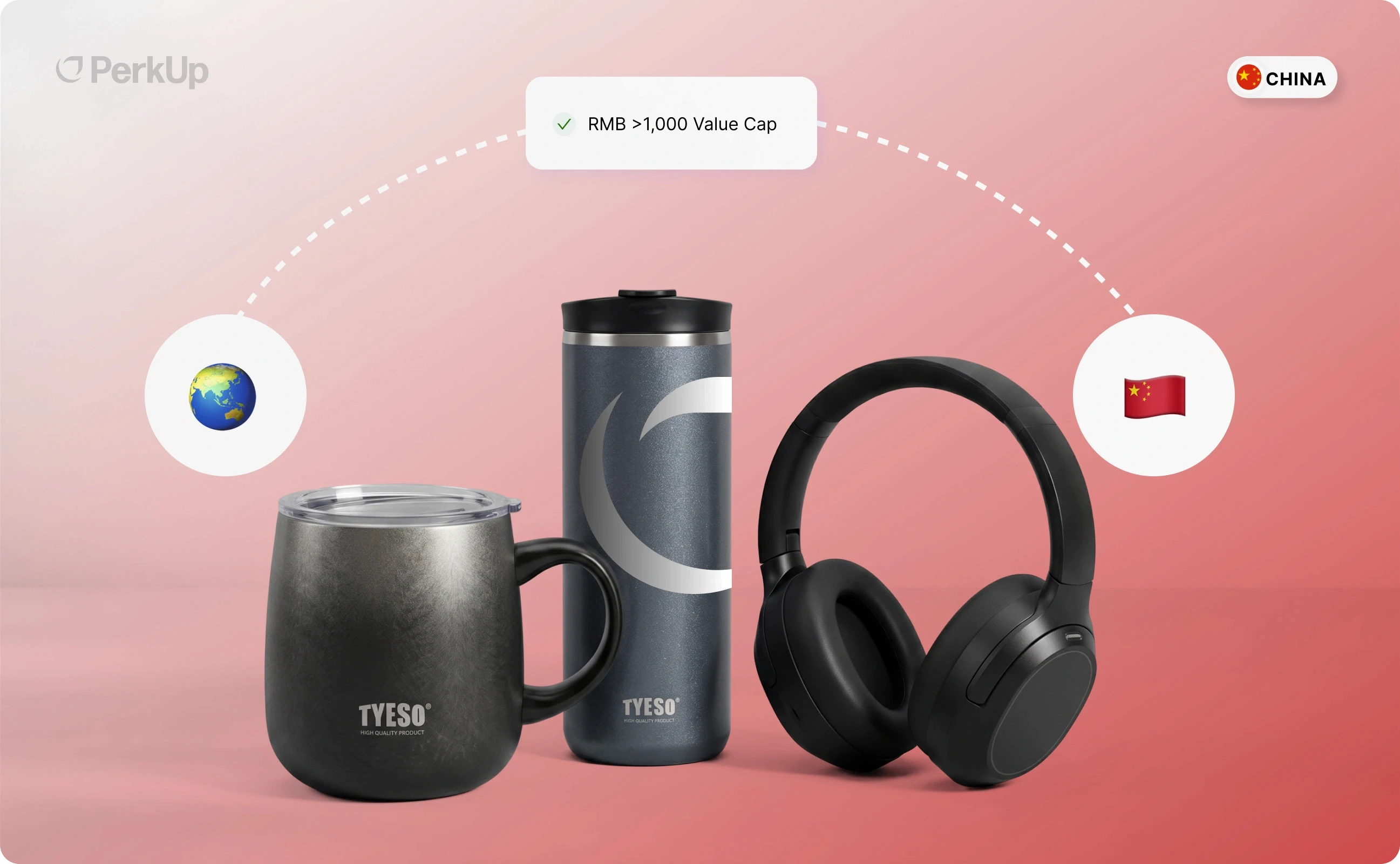
China Customs caps personal postal articles at RMB 1,000 per shipment from most countries and RMB 800 per shipment from Hong Kong, Macao, and Taiwan. Now, if you go over the cap, the parcel may be returned to the sender or handled under commercial goods rules.

Commercial imports above the value cap
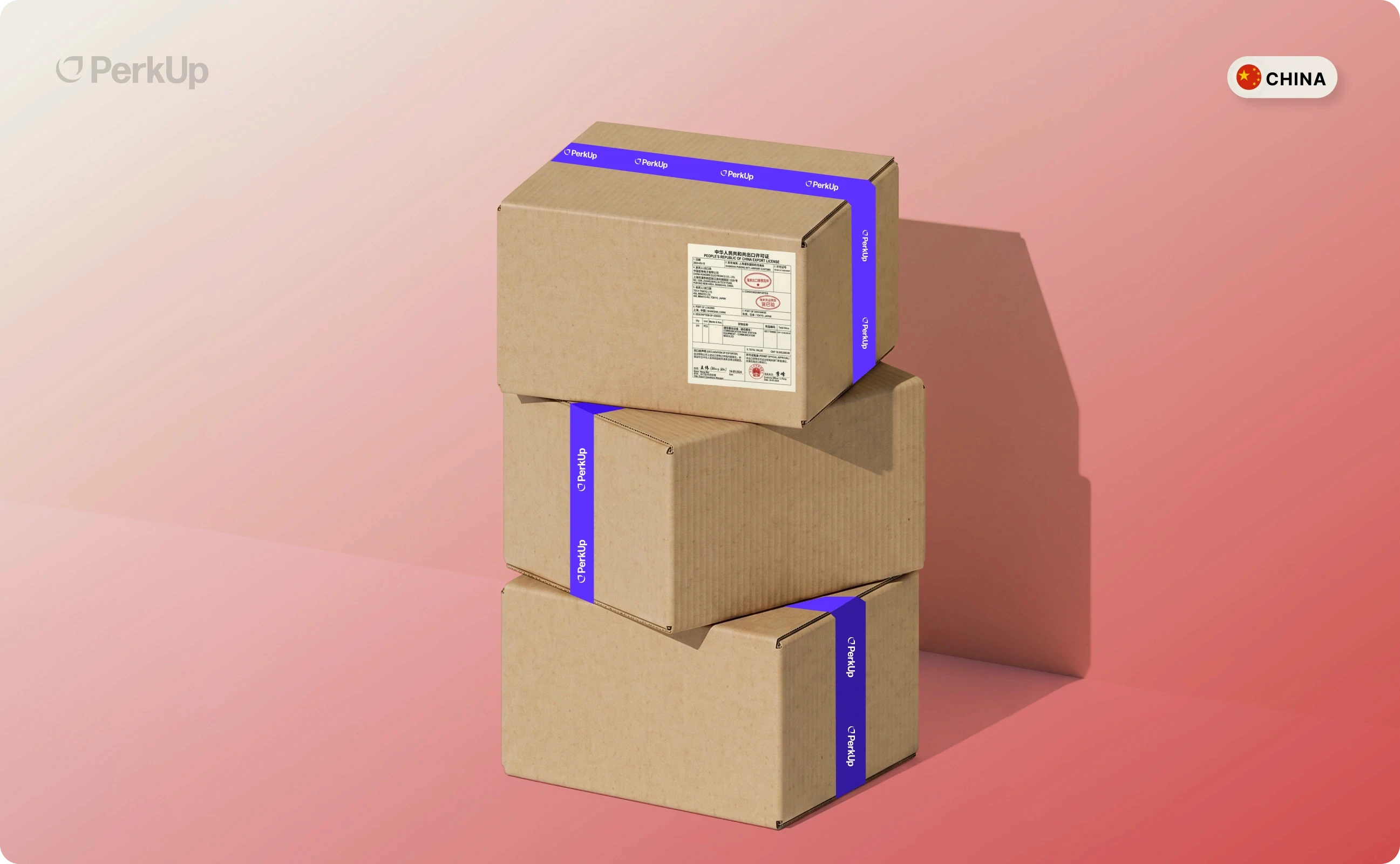
Commercial declarations need a China-registered consignee holding a customs registration code. Duty is assessed on the CIF value (the cost of the swag plus insurance and freight), and as the US International Trade Administration explains, import VAT is calculated after the tariff has been added, so you end up paying tax on the duty itself.


Do you need a customs registration code to ship swag into China?

If your company is listed as the consignee on a commercial import, then the answer is yes. China's General Administration of Customs requires a customs registration code for commercial declarations, which is issued to entities registered in mainland China. There’s no non-resident importer route.

In practice, most companies sending swag into China don't handle this themselves. They either work with a swag platform partner that already has a registered mainland entity or avoid the import process entirely by producing and warehousing swag inside China. The second option is usually faster and cheaper, and it also removes one of the biggest potential sources of delay.


China Import Restrictions and What They Mean for Swag

  1. Power banks and anything with a lithium cell - The CAAC rule we mentioned above rules out most export-market power banks, and lithium cells make air freight harder in general. If you want to add a tech accessory, pick something that doesn't need charging.

  2. World map graphics - Products with maps can require a map review number from the Ministry of Natural Resources, and customs does enforce it. Take, for example, in October 2025, Qingdao customs seized 60,000 maps over labeling errors and missing territorial features. A stylized world map on the back of a tee is a common swag idea and a very easy way to create a customs problem.

  3. Printed inserts and welcome cards - China prohibits printed matter deemed detrimental to its political, economic, cultural, or moral interests. A plain welcome note is fine, but anything that gets into borders, territory, or regional politics is a big no.

  4. Sample and leftover apparel - Used and secondhand garments are prohibited imports. So, don’t even try to send over items from last year’s programs.

  5. Undervalued declarations - Customs doesn't just take the value on your invoice at face value. That said, make sure to declare a pallet of branded swag properly to avoid any revaluation or penalty.

On the other hand, Hong Kong doesn't apply these restrictions to general swag categories in the same way, which is another reason the two markets need separate planning.


What swag items land well with recipients in China and Hong Kong?

The swag categories we mention here will work well with both China and Hong Kong recipients. However, there are still some differences when it comes to climate, which you should account for.

A refillable bottle or tumbler that suits a coffee habit

China's coffee consumption more than doubled in five years, reaching 16 cups per person in 2024, on top of an existing tea-drinking culture. That’s why a good insulated bottle or tumbler fits how a lot of professionals in China already move through the day. 

A compact umbrella that survives the rainy season

Hong Kong averages 103 rain days a year, according to the Hong Kong Observatory. And it’s not just a drizzle, too! Typically, between May and September, a sudden downpour is to be expected. A sturdy branded umbrella or a lightweight, packable rain shell is one of the swag items that your recipients in China will genuinely be happy to have.

Apparel for the climate your recipients actually live in

Hong Kong and southern mainland China are hot and humid from late spring through summer, so breathable tees and polos make more sense. Northern China is a different story, though, because in Beijing, the temperature drops below freezing in winter while Shanghai sits just above it, according to CEIC data. If your team is in both places, split your apparel collection.


Why route Southeast Asia swag through Hong Kong?

Hong Kong and Southeast Asia are often planned together because a warehouse in this region can serve multiple markets without splitting inventory by country.

  • A Hong Kong warehouse covers multiple markets - PerkUp's Hong Kong warehouse can act as a regional warehousing point for Singapore, Thailand, Bali, and other nearby countries, so you can hold inventory in one place instead of maintaining separate stock in every country.

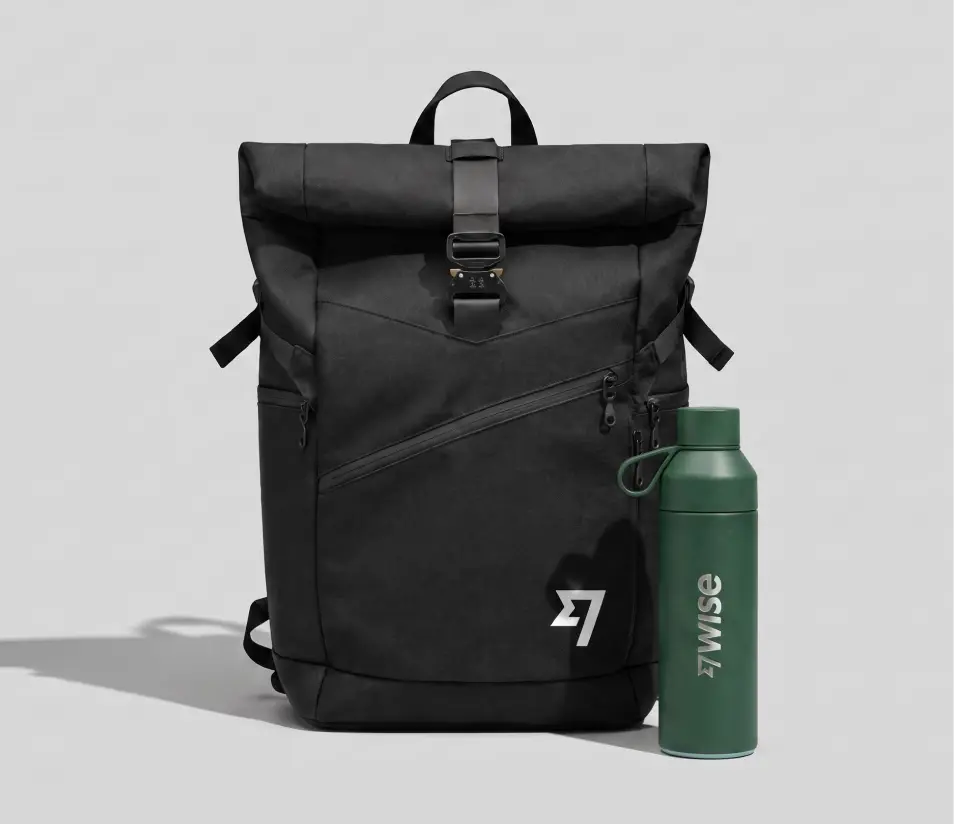
  • Shorter routes mean fewer shipping headaches - Keeping your swag inventory in Hong Kong is easier if you have recipients in Southeast Asia. The shorter route cuts transit time and cost. Wise, for example, ships branded backpacks from Hong Kong to Singapore rather than flying them in from Europe.

Do note, however, that Mainland China is the exception. Hong Kong to Shenzhen may look like a short trip on a map, but it still crosses a customs border. Mainland recipients are better served through mainland production and fulfillment, so plan a separate swag program for China.


Dos and Don'ts for Shipping Swag to China and Hong Kong

Here are some of the tips to follow and mistakes to avoid when you’re shipping swag to China and Hong Kong.

Do

  1. Produce and warehouse inside mainland China. This removes the need for your company to act as the consignee and cuts out much of the duty, VAT, and inspection risk that comes with cross-border imports.

  2. Use Hong Kong as your APAC warehouse and fulfillment hub. With no tariffs or VAT and a strong air cargo infrastructure, a Hong Kong warehouse is a practical location for shipping to Singapore, Thailand, Bali, and other nearby countries.

  3. File your Hong Kong declaration within 14 days. Duty-free doesn’t mean paperwork-free. The filing is straightforward, and the late penalty is easy to avoid if you or your swag platform partner builds it into the process.

  4. Clear your swag design before production. Maps, borders, and territorial references can create problems at customs, so review those designs before anything goes into production.

  5. Plan around Golden Week and Spring Festival. Add extra time on both sides of these holidays. Production, warehouses, and couriers all slow down during these busy times.

Don't

  1. Don't assume you can import commercially without a local entity. Mainland China doesn’t have a non-resident importer route, so you'll need a local partner to send swag there.

  2. Don't split a bulk order into individual parcels to avoid the value cap. Customs can spot this pattern, and trying to work around the rules can create bigger problems for you.

  3. Don't treat Hong Kong inventory as mainland inventory. As we’ve already mentioned, Hong Kong and China are separate customs territories with separate rules. Moving swag from one to the other still means crossing a border.

  4. Don't default to popular US brands. They may be familiar names in the US, but the sourcing and price premium don't always make sense for teams in this region.

  5. Don't use one heavy design for both markets. A fleece that works in Beijing in January won't get much use in Hong Kong in July. If your team spans different climates, split the apparel assortment.


How PerkUp Handles Swag for China and Hong Kong Teams

Basically, PerkUp treats China and Hong Kong as two separate markets with two separate rules, because customs does too.

Produce and warehouse inside mainland China

Instead of trying to import everything, PerkUp produces and warehouses swag inside China. That covers different swag categories, from apparel and drinkware to bags and stationery. What’s more is that PerkUp can do custom sourcing especially well in China. What this means is that the platform works directly with manufacturers and factories in China, so it can produce anything you want. For example, you can create a notebook or tote bag specifically around your brand, match your swag to your Pantone colors, and customize the details of your swag items. And before your swag is shipped out, a third-party QA team checks everything to make sure the quality matches what you approved. Thanks to this, your recipients get a domestic delivery without customs forms or import duties.

Use Hong Kong as a regional hub

PerkUp's Hong Kong warehouse covers Hong Kong recipients directly and ships swag items into Southeast Asian countries. That means you can hold inventory in one place and serve multiple markets.

Cover customs fees when cross-border shipping is unavoidable

When swag does need to cross a border, PerkUp ships with customs fees covered or DDP, so duties and taxes are handled before the swag reaches the recipient. If a shipment is hit with unexpected customs charges, PerkUp reimburses them in full.


Companies That Ship Swag to China and Hong Kong with PerkUp

If you want to know how PerkUp helps companies with their China and Hong Kong swag programs, here are a few examples:

Wise

Wise needed branded backpacks and drinkware for its recipients in Hong Kong and Singapore, but shipping them from Europe added unnecessary cost and transit time. That’s why its inventory was kept in Hong Kong and shipped regionally. 

Sitemate

Sitemate runs a new hire kit program with roughly 300 kits going to employees across Hong Kong, the US, Europe, and Australia. Production and fulfillment are split by region, so each recipient gets their swag kit through the closest available route. The contents remain consistent, while the fulfillment path changes based on the employee's location.

Alianza

Alianza uses PerkUp's Hong Kong warehouse to support recipients across APAC alongside its programs in other regions. Instead of managing separate vendors and inventory for every market, the Alianza team can manage its global swag programs from one dashboard.


Takeaways on Shipping Swag to China and Hong Kong

The main takeaway from this guide is simple: Hong Kong is relatively straightforward, while mainland China needs more planning. Produce and warehouse locally where possible, review swag designs before anything goes into production, plan around Golden Week and Spring Festival, and keep problem items like lithium batteries and unapproved map designs out of your swag programs.

If you're planning an APAC swag program this quarter, book a quick demo with PerkUp, and we'll help you figure out what can ship, what needs to change, and what the program will actually cost before you place the order.

And if China and Hong Kong are only part of your global program, check out our guides to shipping swag to the UK and Canada for more on handling international fulfillment.


FAQs About Shipping Swag to China and Hong Kong

Can PerkUp ship swag to recipients in mainland China?

Definitely! PerkUp produces and warehouses swag inside mainland China, so your recipients there will receive domestic deliveries. This is the standard approach for the market

Does PerkUp produce swag locally in China?

Absolutely. PerkUp uses a mix of local production and imports depending on the market and product. In mainland China, local production covers common items like apparel, drinkware, bags, and stationery while avoiding the complications of importing.

Can PerkUp ship swag to Hong Kong?

Yes, PerkUp's Hong Kong facility serves local recipients and also acts as a regional hub for Southeast Asia. With no tariff on general goods, Hong Kong is one of the simpler markets to fulfill into.

How does PerkUp handle customs and duties for China and Hong Kong shipments?

The easiest way to avoid customs issues is not to cross a border in the first place. PerkUp fulfills from regional inventory whenever possible. When cross-border shipping is necessary, customs fees are covered or handled through DDP, and unexpected customs charges are reimbursed in full.

How long does it take to get swag to teams in China and Hong Kong?

Bulk swag takes about five weeks before shipping: three weeks for production, one week for kitting, and one week for approval. On Demand takes roughly three weeks. Build in extra time around Golden Week and Spring Festival, when production, warehouses, and freight can slow down. 

By the end of 2025, China had 725 million employed people, with a growing share of them working for companies headquartered somewhere else, like the US. Hong Kong adds another 3.7 million to that figure, despite its small area size.

That said, there are differences when it comes to these two countries’ customs and rules. The answer actually goes back to 1997, when Hong Kong returned to Chinese sovereignty and became a Special Administrative Region under the “one country, two systems” arrangement. It is part of China, but Article 116 of the Basic Law, Hong Kong's constitutional document, makes it a separate customs territory with its own tariffs, currency, and trade policy. 

Because of that, in this guide, we’ll cover what you need to know about shipping swag to China and Hong Kong in 2026, including how duty and tax work in each country, which items get stopped and why, what your recipients actually want to receive, and how PerkUp clients like Wise, Sitemate, and Alianza successfully send swag in these countries.


Interesting Facts about China and Hong Kong

Before we dive into the specifics of customs and rules, here are some facts about China and Hong Kong worth knowing:

China

  • China's postal and express network moved 199 billion parcels in 2025, according to the State Post Bureau. Doorstep delivery is taken seriously in China, which means your recipients have high expectations about tracking and timing.

  • The Spring Festival travel rush, or chunyun, is the largest annual human migration on the planet. The Spring Festival travel rush, or chunyun, is the largest annual human migration on the planet. In 2026, it ran from February 2 to March 13 and set a record with 9.41 billion inter-regional trips, per the Ministry of Transport. This is something that you should always account for because factories, couriers, and warehouses all face higher demand and potential delays during this period.

  • China runs two week-long national shutdowns a year. Per the State Council, 2026 has the Mid-Autumn Festival from September 25 to 27 and the National Day Golden Week from October 1 to 7, with September 20 and October 10 as adjusted working days.

  • Mid-Autumn Festival is the dominant corporate gifting moment, and mooncake boxes are the standard staff gift. Companies send them to employees, clients, and partners the way US firms send holiday gift baskets in December.

  • Since June 28, 2025, the Civil Aviation Administration of China has banned power banks without a visible CCC mark, with unclear CCC marks, or from recalled batches on all domestic flights. Most power banks built for export carry CE or FCC marks instead, so they fail the test.

Hong Kong


Why is shipping swag to mainland China harder than it looks?

It’s harder to ship to China because the mainland requires a locally registered entity to act as the consignee on every commercial import declaration. This means that your US, UK, or Australian company can’t simply pay the duty and send swag kits in its own name. Simply put, for Mainland China, you ship domestically from inside China. Importing isn’t an option at all.

The logic will feel familiar if you have read our guide to sending swag to India. In many ways, China and India have similarities wherein there’s a strict market, and you have to produce locally and completely skip the border. The difference is that India will at least let you attempt the import. In China, the consignee requirement ends your attempt before you even try.

On the other hand, Hong Kong has none of that friction.


How do duties and taxes work on swag shipped to China?

There are two ways swag can enter China: as a personal parcel or a commercial import. The first has a hard value cap that rules out anything beyond a single gift. The second is where every real company swag program ends up, and that's where the customs paperwork, duties, and import requirements come in.

Personal parcels under the value cap

China Customs caps personal postal articles at RMB 1,000 per shipment from most countries and RMB 800 per shipment from Hong Kong, Macao, and Taiwan. Now, if you go over the cap, the parcel may be returned to the sender or handled under commercial goods rules.

Commercial imports above the value cap

Commercial declarations need a China-registered consignee holding a customs registration code. Duty is assessed on the CIF value (the cost of the swag plus insurance and freight), and as the US International Trade Administration explains, import VAT is calculated after the tariff has been added, so you end up paying tax on the duty itself.


Do you need a customs registration code to ship swag into China?

If your company is listed as the consignee on a commercial import, then the answer is yes. China's General Administration of Customs requires a customs registration code for commercial declarations, which is issued to entities registered in mainland China. There’s no non-resident importer route.

In practice, most companies sending swag into China don't handle this themselves. They either work with a swag platform partner that already has a registered mainland entity or avoid the import process entirely by producing and warehousing swag inside China. The second option is usually faster and cheaper, and it also removes one of the biggest potential sources of delay.


China Import Restrictions and What They Mean for Swag

  1. Power banks and anything with a lithium cell - The CAAC rule we mentioned above rules out most export-market power banks, and lithium cells make air freight harder in general. If you want to add a tech accessory, pick something that doesn't need charging.

  2. World map graphics - Products with maps can require a map review number from the Ministry of Natural Resources, and customs does enforce it. Take, for example, in October 2025, Qingdao customs seized 60,000 maps over labeling errors and missing territorial features. A stylized world map on the back of a tee is a common swag idea and a very easy way to create a customs problem.

  3. Printed inserts and welcome cards - China prohibits printed matter deemed detrimental to its political, economic, cultural, or moral interests. A plain welcome note is fine, but anything that gets into borders, territory, or regional politics is a big no.

  4. Sample and leftover apparel - Used and secondhand garments are prohibited imports. So, don’t even try to send over items from last year’s programs.

  5. Undervalued declarations - Customs doesn't just take the value on your invoice at face value. That said, make sure to declare a pallet of branded swag properly to avoid any revaluation or penalty.

On the other hand, Hong Kong doesn't apply these restrictions to general swag categories in the same way, which is another reason the two markets need separate planning.


What swag items land well with recipients in China and Hong Kong?

The swag categories we mention here will work well with both China and Hong Kong recipients. However, there are still some differences when it comes to climate, which you should account for.

A refillable bottle or tumbler that suits a coffee habit

China's coffee consumption more than doubled in five years, reaching 16 cups per person in 2024, on top of an existing tea-drinking culture. That’s why a good insulated bottle or tumbler fits how a lot of professionals in China already move through the day. 

A compact umbrella that survives the rainy season

Hong Kong averages 103 rain days a year, according to the Hong Kong Observatory. And it’s not just a drizzle, too! Typically, between May and September, a sudden downpour is to be expected. A sturdy branded umbrella or a lightweight, packable rain shell is one of the swag items that your recipients in China will genuinely be happy to have.

Apparel for the climate your recipients actually live in

Hong Kong and southern mainland China are hot and humid from late spring through summer, so breathable tees and polos make more sense. Northern China is a different story, though, because in Beijing, the temperature drops below freezing in winter while Shanghai sits just above it, according to CEIC data. If your team is in both places, split your apparel collection.


Why route Southeast Asia swag through Hong Kong?

Hong Kong and Southeast Asia are often planned together because a warehouse in this region can serve multiple markets without splitting inventory by country.

  • A Hong Kong warehouse covers multiple markets - PerkUp's Hong Kong warehouse can act as a regional warehousing point for Singapore, Thailand, Bali, and other nearby countries, so you can hold inventory in one place instead of maintaining separate stock in every country.

  • Shorter routes mean fewer shipping headaches - Keeping your swag inventory in Hong Kong is easier if you have recipients in Southeast Asia. The shorter route cuts transit time and cost. Wise, for example, ships branded backpacks from Hong Kong to Singapore rather than flying them in from Europe.

Do note, however, that Mainland China is the exception. Hong Kong to Shenzhen may look like a short trip on a map, but it still crosses a customs border. Mainland recipients are better served through mainland production and fulfillment, so plan a separate swag program for China.


Dos and Don'ts for Shipping Swag to China and Hong Kong

Here are some of the tips to follow and mistakes to avoid when you’re shipping swag to China and Hong Kong.

Do

  1. Produce and warehouse inside mainland China. This removes the need for your company to act as the consignee and cuts out much of the duty, VAT, and inspection risk that comes with cross-border imports.

  2. Use Hong Kong as your APAC warehouse and fulfillment hub. With no tariffs or VAT and a strong air cargo infrastructure, a Hong Kong warehouse is a practical location for shipping to Singapore, Thailand, Bali, and other nearby countries.

  3. File your Hong Kong declaration within 14 days. Duty-free doesn’t mean paperwork-free. The filing is straightforward, and the late penalty is easy to avoid if you or your swag platform partner builds it into the process.

  4. Clear your swag design before production. Maps, borders, and territorial references can create problems at customs, so review those designs before anything goes into production.

  5. Plan around Golden Week and Spring Festival. Add extra time on both sides of these holidays. Production, warehouses, and couriers all slow down during these busy times.

Don't

  1. Don't assume you can import commercially without a local entity. Mainland China doesn’t have a non-resident importer route, so you'll need a local partner to send swag there.

  2. Don't split a bulk order into individual parcels to avoid the value cap. Customs can spot this pattern, and trying to work around the rules can create bigger problems for you.

  3. Don't treat Hong Kong inventory as mainland inventory. As we’ve already mentioned, Hong Kong and China are separate customs territories with separate rules. Moving swag from one to the other still means crossing a border.

  4. Don't default to popular US brands. They may be familiar names in the US, but the sourcing and price premium don't always make sense for teams in this region.

  5. Don't use one heavy design for both markets. A fleece that works in Beijing in January won't get much use in Hong Kong in July. If your team spans different climates, split the apparel assortment.


How PerkUp Handles Swag for China and Hong Kong Teams

Basically, PerkUp treats China and Hong Kong as two separate markets with two separate rules, because customs does too.

Produce and warehouse inside mainland China

Instead of trying to import everything, PerkUp produces and warehouses swag inside China. That covers different swag categories, from apparel and drinkware to bags and stationery. What’s more is that PerkUp can do custom sourcing especially well in China. What this means is that the platform works directly with manufacturers and factories in China, so it can produce anything you want. For example, you can create a notebook or tote bag specifically around your brand, match your swag to your Pantone colors, and customize the details of your swag items. And before your swag is shipped out, a third-party QA team checks everything to make sure the quality matches what you approved. Thanks to this, your recipients get a domestic delivery without customs forms or import duties.

Use Hong Kong as a regional hub

PerkUp's Hong Kong warehouse covers Hong Kong recipients directly and ships swag items into Southeast Asian countries. That means you can hold inventory in one place and serve multiple markets.

Cover customs fees when cross-border shipping is unavoidable

When swag does need to cross a border, PerkUp ships with customs fees covered or DDP, so duties and taxes are handled before the swag reaches the recipient. If a shipment is hit with unexpected customs charges, PerkUp reimburses them in full.


Companies That Ship Swag to China and Hong Kong with PerkUp

If you want to know how PerkUp helps companies with their China and Hong Kong swag programs, here are a few examples:

Wise

Wise needed branded backpacks and drinkware for its recipients in Hong Kong and Singapore, but shipping them from Europe added unnecessary cost and transit time. That’s why its inventory was kept in Hong Kong and shipped regionally. 

Sitemate

Sitemate runs a new hire kit program with roughly 300 kits going to employees across Hong Kong, the US, Europe, and Australia. Production and fulfillment are split by region, so each recipient gets their swag kit through the closest available route. The contents remain consistent, while the fulfillment path changes based on the employee's location.

Alianza

Alianza uses PerkUp's Hong Kong warehouse to support recipients across APAC alongside its programs in other regions. Instead of managing separate vendors and inventory for every market, the Alianza team can manage its global swag programs from one dashboard.


Takeaways on Shipping Swag to China and Hong Kong

The main takeaway from this guide is simple: Hong Kong is relatively straightforward, while mainland China needs more planning. Produce and warehouse locally where possible, review swag designs before anything goes into production, plan around Golden Week and Spring Festival, and keep problem items like lithium batteries and unapproved map designs out of your swag programs.

If you're planning an APAC swag program this quarter, book a quick demo with PerkUp, and we'll help you figure out what can ship, what needs to change, and what the program will actually cost before you place the order.

And if China and Hong Kong are only part of your global program, check out our guides to shipping swag to the UK and Canada for more on handling international fulfillment.


FAQs About Shipping Swag to China and Hong Kong

Can PerkUp ship swag to recipients in mainland China?

Definitely! PerkUp produces and warehouses swag inside mainland China, so your recipients there will receive domestic deliveries. This is the standard approach for the market

Does PerkUp produce swag locally in China?

Absolutely. PerkUp uses a mix of local production and imports depending on the market and product. In mainland China, local production covers common items like apparel, drinkware, bags, and stationery while avoiding the complications of importing.

Can PerkUp ship swag to Hong Kong?

Yes, PerkUp's Hong Kong facility serves local recipients and also acts as a regional hub for Southeast Asia. With no tariff on general goods, Hong Kong is one of the simpler markets to fulfill into.

How does PerkUp handle customs and duties for China and Hong Kong shipments?

The easiest way to avoid customs issues is not to cross a border in the first place. PerkUp fulfills from regional inventory whenever possible. When cross-border shipping is necessary, customs fees are covered or handled through DDP, and unexpected customs charges are reimbursed in full.

How long does it take to get swag to teams in China and Hong Kong?

Bulk swag takes about five weeks before shipping: three weeks for production, one week for kitting, and one week for approval. On Demand takes roughly three weeks. Build in extra time around Golden Week and Spring Festival, when production, warehouses, and freight can slow down. 

By the end of 2025, China had 725 million employed people, with a growing share of them working for companies headquartered somewhere else, like the US. Hong Kong adds another 3.7 million to that figure, despite its small area size.

That said, there are differences when it comes to these two countries’ customs and rules. The answer actually goes back to 1997, when Hong Kong returned to Chinese sovereignty and became a Special Administrative Region under the “one country, two systems” arrangement. It is part of China, but Article 116 of the Basic Law, Hong Kong's constitutional document, makes it a separate customs territory with its own tariffs, currency, and trade policy. 

Because of that, in this guide, we’ll cover what you need to know about shipping swag to China and Hong Kong in 2026, including how duty and tax work in each country, which items get stopped and why, what your recipients actually want to receive, and how PerkUp clients like Wise, Sitemate, and Alianza successfully send swag in these countries.


Interesting Facts about China and Hong Kong

Before we dive into the specifics of customs and rules, here are some facts about China and Hong Kong worth knowing:

China

  • China's postal and express network moved 199 billion parcels in 2025, according to the State Post Bureau. Doorstep delivery is taken seriously in China, which means your recipients have high expectations about tracking and timing.

  • The Spring Festival travel rush, or chunyun, is the largest annual human migration on the planet. The Spring Festival travel rush, or chunyun, is the largest annual human migration on the planet. In 2026, it ran from February 2 to March 13 and set a record with 9.41 billion inter-regional trips, per the Ministry of Transport. This is something that you should always account for because factories, couriers, and warehouses all face higher demand and potential delays during this period.

  • China runs two week-long national shutdowns a year. Per the State Council, 2026 has the Mid-Autumn Festival from September 25 to 27 and the National Day Golden Week from October 1 to 7, with September 20 and October 10 as adjusted working days.

  • Mid-Autumn Festival is the dominant corporate gifting moment, and mooncake boxes are the standard staff gift. Companies send them to employees, clients, and partners the way US firms send holiday gift baskets in December.

  • Since June 28, 2025, the Civil Aviation Administration of China has banned power banks without a visible CCC mark, with unclear CCC marks, or from recalled batches on all domestic flights. Most power banks built for export carry CE or FCC marks instead, so they fail the test.

Hong Kong


Why is shipping swag to mainland China harder than it looks?

It’s harder to ship to China because the mainland requires a locally registered entity to act as the consignee on every commercial import declaration. This means that your US, UK, or Australian company can’t simply pay the duty and send swag kits in its own name. Simply put, for Mainland China, you ship domestically from inside China. Importing isn’t an option at all.

The logic will feel familiar if you have read our guide to sending swag to India. In many ways, China and India have similarities wherein there’s a strict market, and you have to produce locally and completely skip the border. The difference is that India will at least let you attempt the import. In China, the consignee requirement ends your attempt before you even try.

On the other hand, Hong Kong has none of that friction.


How do duties and taxes work on swag shipped to China?

There are two ways swag can enter China: as a personal parcel or a commercial import. The first has a hard value cap that rules out anything beyond a single gift. The second is where every real company swag program ends up, and that's where the customs paperwork, duties, and import requirements come in.

Personal parcels under the value cap

China Customs caps personal postal articles at RMB 1,000 per shipment from most countries and RMB 800 per shipment from Hong Kong, Macao, and Taiwan. Now, if you go over the cap, the parcel may be returned to the sender or handled under commercial goods rules.

Commercial imports above the value cap

Commercial declarations need a China-registered consignee holding a customs registration code. Duty is assessed on the CIF value (the cost of the swag plus insurance and freight), and as the US International Trade Administration explains, import VAT is calculated after the tariff has been added, so you end up paying tax on the duty itself.


Do you need a customs registration code to ship swag into China?

If your company is listed as the consignee on a commercial import, then the answer is yes. China's General Administration of Customs requires a customs registration code for commercial declarations, which is issued to entities registered in mainland China. There’s no non-resident importer route.

In practice, most companies sending swag into China don't handle this themselves. They either work with a swag platform partner that already has a registered mainland entity or avoid the import process entirely by producing and warehousing swag inside China. The second option is usually faster and cheaper, and it also removes one of the biggest potential sources of delay.


China Import Restrictions and What They Mean for Swag

  1. Power banks and anything with a lithium cell - The CAAC rule we mentioned above rules out most export-market power banks, and lithium cells make air freight harder in general. If you want to add a tech accessory, pick something that doesn't need charging.

  2. World map graphics - Products with maps can require a map review number from the Ministry of Natural Resources, and customs does enforce it. Take, for example, in October 2025, Qingdao customs seized 60,000 maps over labeling errors and missing territorial features. A stylized world map on the back of a tee is a common swag idea and a very easy way to create a customs problem.

  3. Printed inserts and welcome cards - China prohibits printed matter deemed detrimental to its political, economic, cultural, or moral interests. A plain welcome note is fine, but anything that gets into borders, territory, or regional politics is a big no.

  4. Sample and leftover apparel - Used and secondhand garments are prohibited imports. So, don’t even try to send over items from last year’s programs.

  5. Undervalued declarations - Customs doesn't just take the value on your invoice at face value. That said, make sure to declare a pallet of branded swag properly to avoid any revaluation or penalty.

On the other hand, Hong Kong doesn't apply these restrictions to general swag categories in the same way, which is another reason the two markets need separate planning.


What swag items land well with recipients in China and Hong Kong?

The swag categories we mention here will work well with both China and Hong Kong recipients. However, there are still some differences when it comes to climate, which you should account for.

A refillable bottle or tumbler that suits a coffee habit
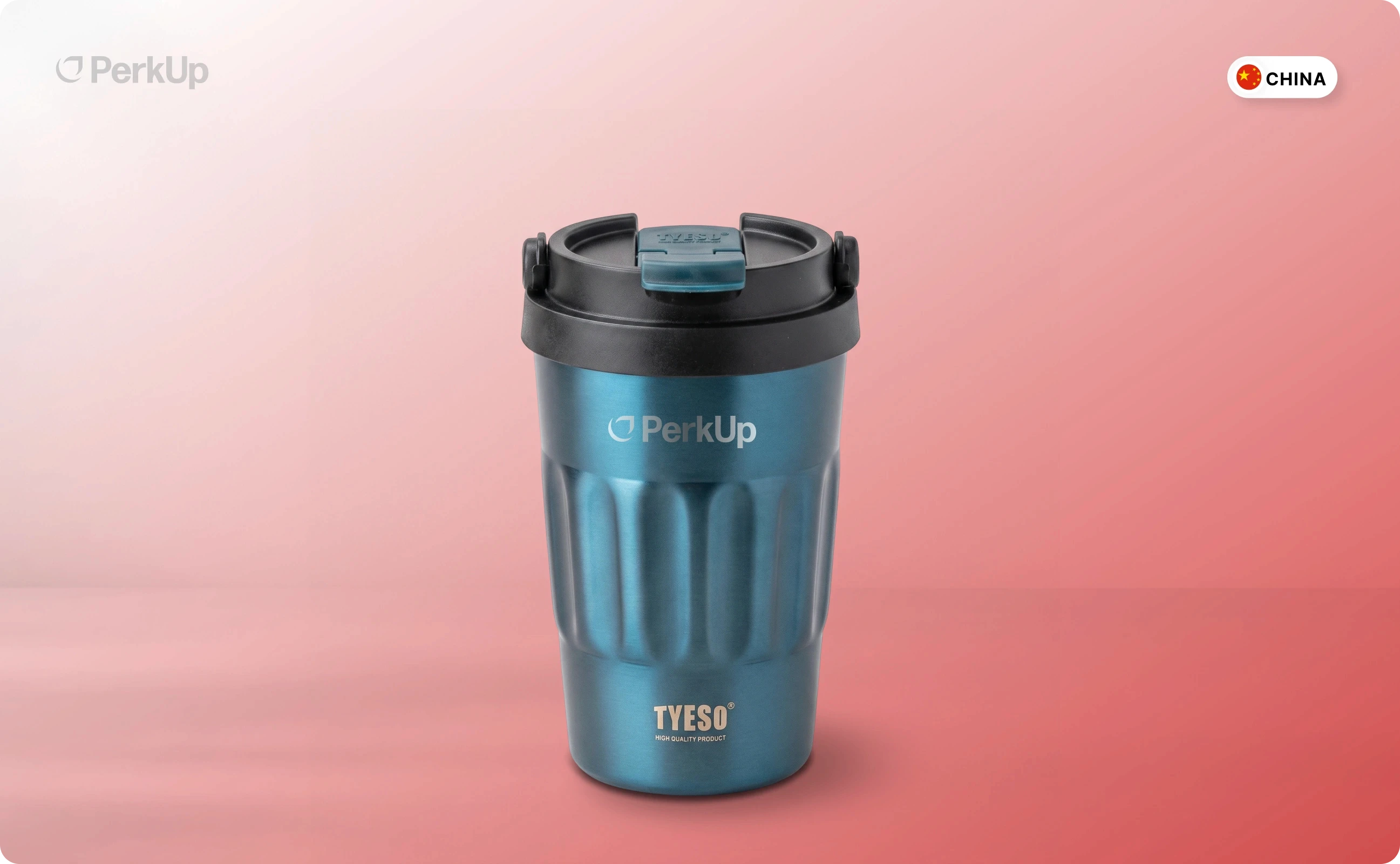
China's coffee consumption more than doubled in five years, reaching 16 cups per person in 2024, on top of an existing tea-drinking culture. That’s why a good insulated bottle or tumbler fits how a lot of professionals in China already move through the day. 

A compact umbrella that survives the rainy season
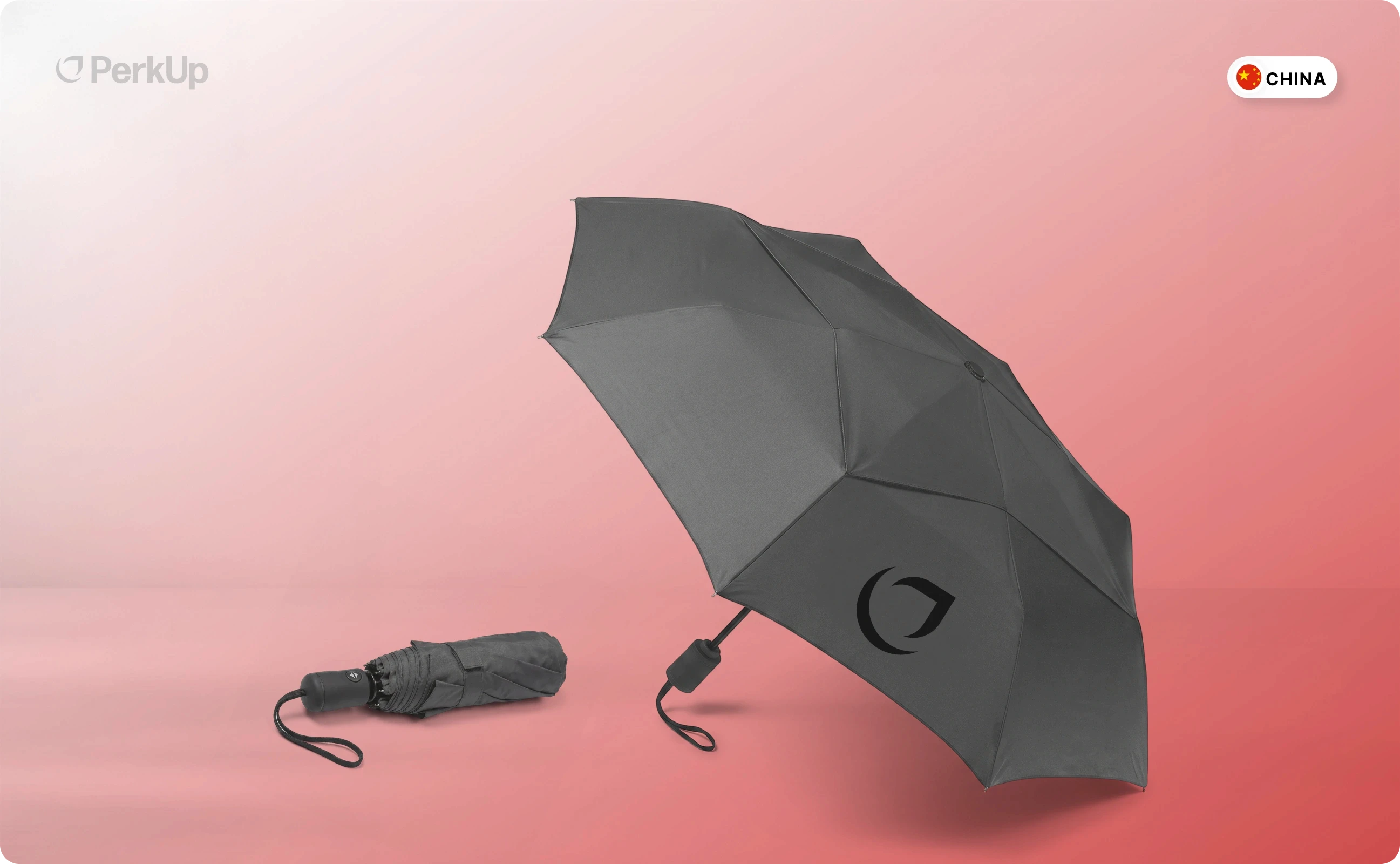
Hong Kong averages 103 rain days a year, according to the Hong Kong Observatory. And it’s not just a drizzle, too! Typically, between May and September, a sudden downpour is to be expected. A sturdy branded umbrella or a lightweight, packable rain shell is one of the swag items that your recipients in China will genuinely be happy to have.

Apparel for the climate your recipients actually live in
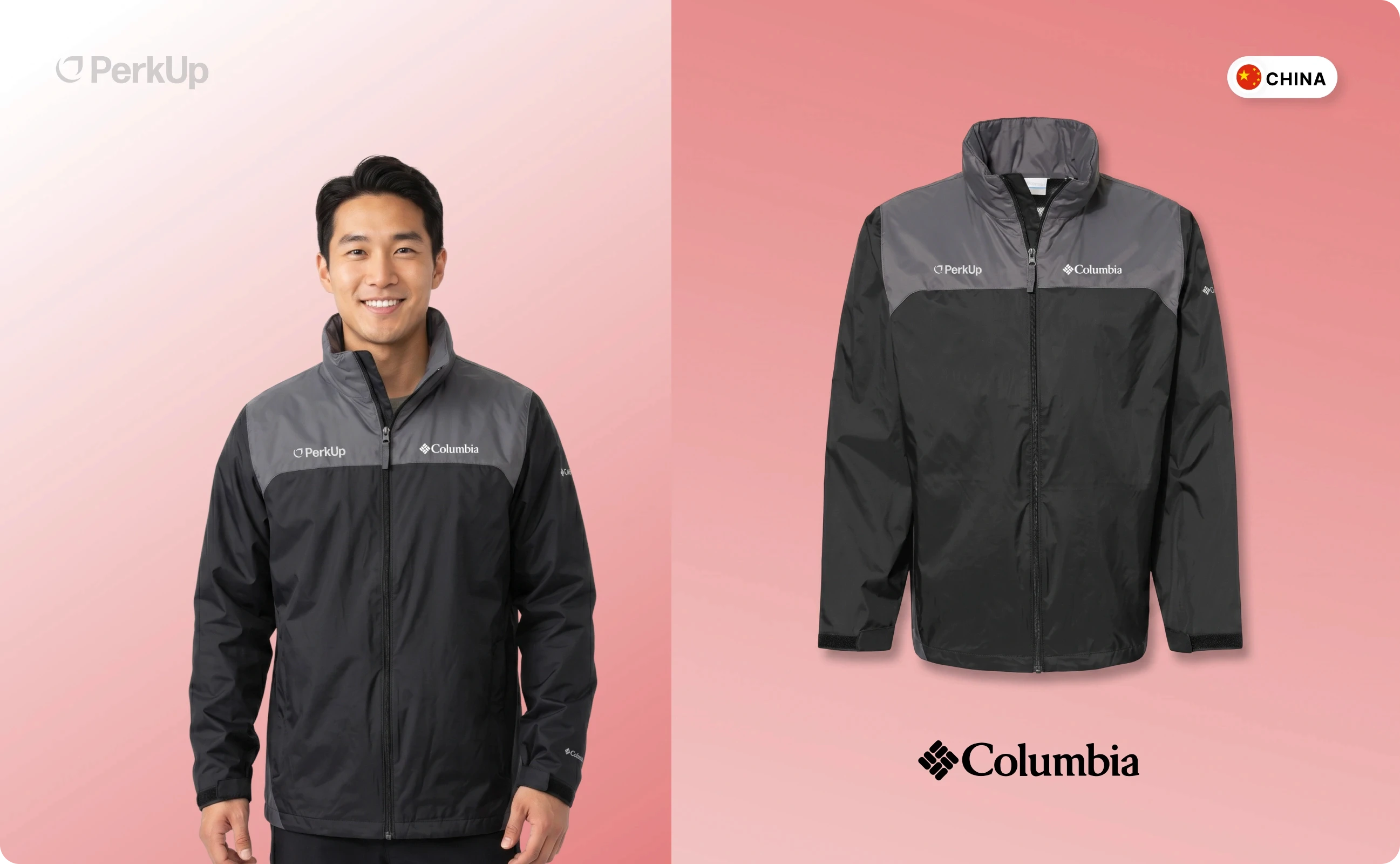
Hong Kong and southern mainland China are hot and humid from late spring through summer, so breathable tees and polos make more sense. Northern China is a different story, though, because in Beijing, the temperature drops below freezing in winter while Shanghai sits just above it, according to CEIC data. If your team is in both places, split your apparel collection.



Why route Southeast Asia swag through Hong Kong?
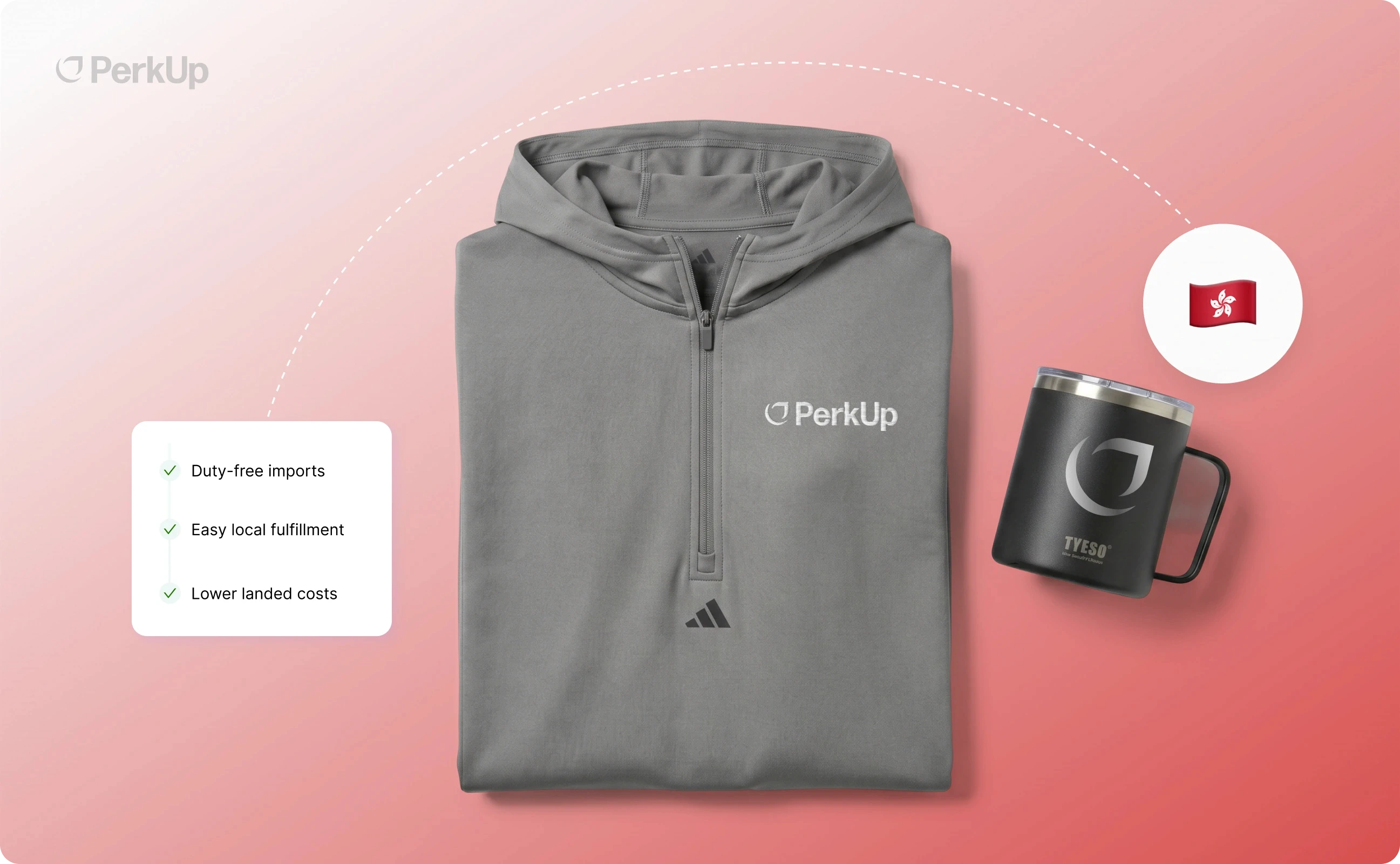
Hong Kong and Southeast Asia are often planned together because a warehouse in this region can serve multiple markets without splitting inventory by country.

  • A Hong Kong warehouse covers multiple markets - PerkUp's Hong Kong warehouse can act as a regional warehousing point for Singapore, Thailand, Bali, and other nearby countries, so you can hold inventory in one place instead of maintaining separate stock in every country.

  • Shorter routes mean fewer shipping headaches - Keeping your swag inventory in Hong Kong is easier if you have recipients in Southeast Asia. The shorter route cuts transit time and cost. Wise, for example, ships branded backpacks from Hong Kong to Singapore rather than flying them in from Europe.

Do note, however, that Mainland China is the exception. Hong Kong to Shenzhen may look like a short trip on a map, but it still crosses a customs border. Mainland recipients are better served through mainland production and fulfillment, so plan a separate swag program for China.


Dos and Don'ts for Shipping Swag to China and Hong Kong

Here are some of the tips to follow and mistakes to avoid when you’re shipping swag to China and Hong Kong.

Do

  1. Produce and warehouse inside mainland China. This removes the need for your company to act as the consignee and cuts out much of the duty, VAT, and inspection risk that comes with cross-border imports.

  2. Use Hong Kong as your APAC warehouse and fulfillment hub. With no tariffs or VAT and a strong air cargo infrastructure, a Hong Kong warehouse is a practical location for shipping to Singapore, Thailand, Bali, and other nearby countries.

  3. File your Hong Kong declaration within 14 days. Duty-free doesn’t mean paperwork-free. The filing is straightforward, and the late penalty is easy to avoid if you or your swag platform partner builds it into the process.

  4. Clear your swag design before production. Maps, borders, and territorial references can create problems at customs, so review those designs before anything goes into production.

  5. Plan around Golden Week and Spring Festival. Add extra time on both sides of these holidays. Production, warehouses, and couriers all slow down during these busy times.

Don't

  1. Don't assume you can import commercially without a local entity. Mainland China doesn’t have a non-resident importer route, so you'll need a local partner to send swag there.

  2. Don't split a bulk order into individual parcels to avoid the value cap. Customs can spot this pattern, and trying to work around the rules can create bigger problems for you.

  3. Don't treat Hong Kong inventory as mainland inventory. As we’ve already mentioned, Hong Kong and China are separate customs territories with separate rules. Moving swag from one to the other still means crossing a border.

  4. Don't default to popular US brands. They may be familiar names in the US, but the sourcing and price premium don't always make sense for teams in this region.

  5. Don't use one heavy design for both markets. A fleece that works in Beijing in January won't get much use in Hong Kong in July. If your team spans different climates, split the apparel assortment.


How PerkUp Handles Swag for China and Hong Kong Teams

Basically, PerkUp treats China and Hong Kong as two separate markets with two separate rules, because customs does too.

Produce and warehouse inside mainland China
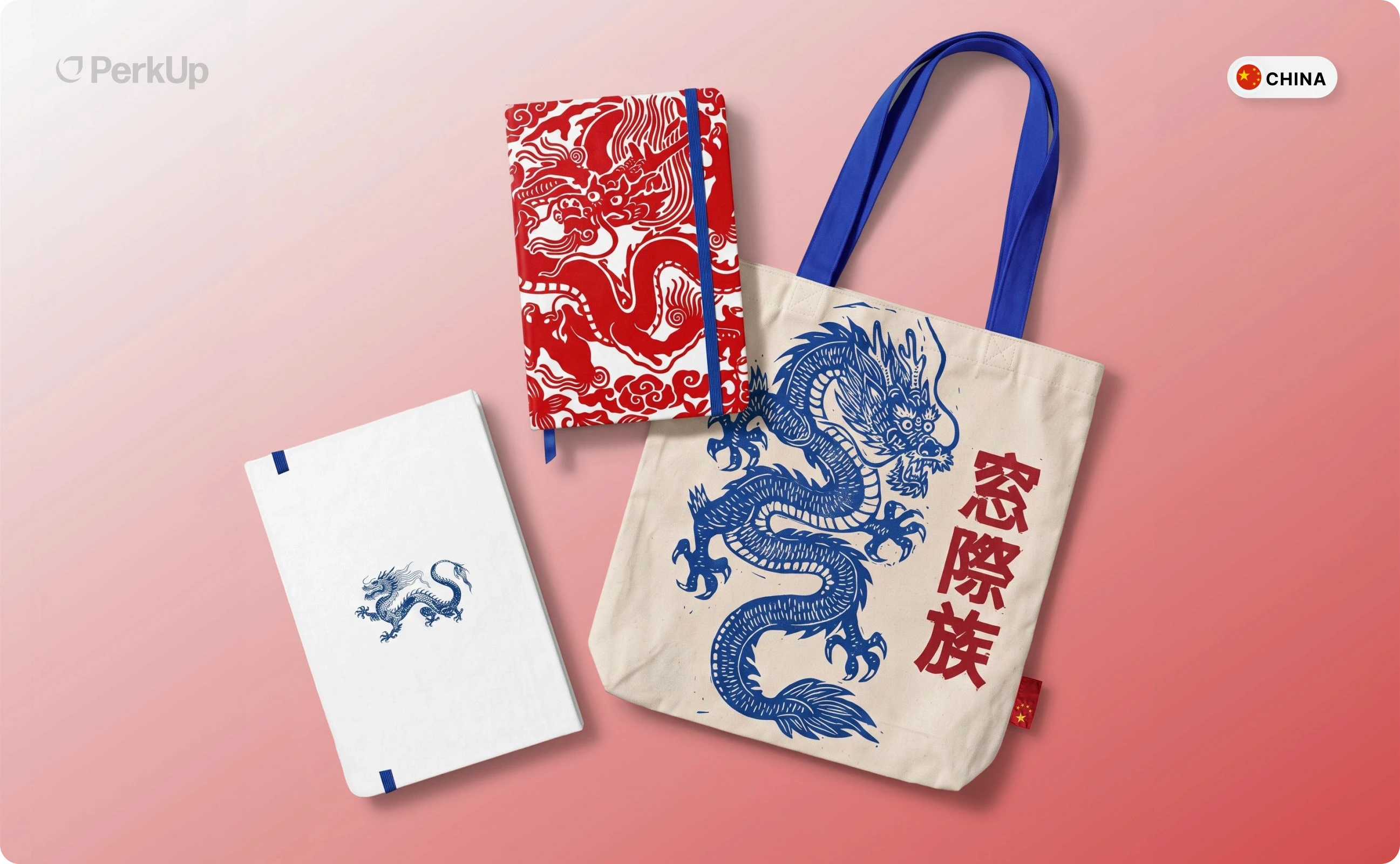
Instead of trying to import everything, PerkUp produces and warehouses swag inside China. That covers different swag categories, from apparel and drinkware to bags and stationery. What’s more is that PerkUp can do custom sourcing especially well in China. What this means is that the platform works directly with manufacturers and factories in China, so it can produce anything you want. For example, you can create a notebook or tote bag specifically around your brand, match your swag to your Pantone colors, and customize the details of your swag items. And before your swag is shipped out, a third-party QA team checks everything to make sure the quality matches what you approved. Thanks to this, your recipients get a domestic delivery without customs forms or import duties.

Use Hong Kong as a regional hub
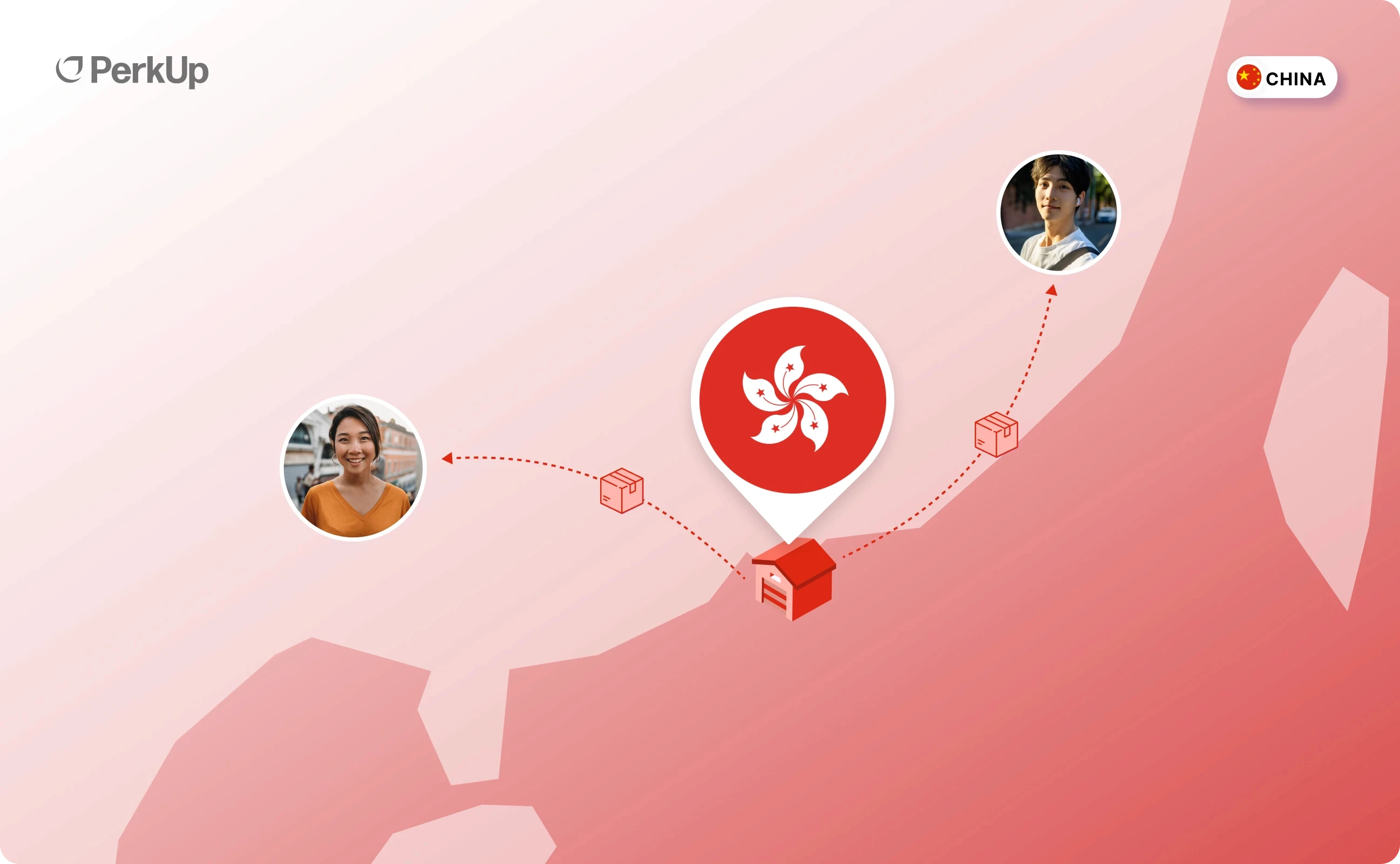
PerkUp's Hong Kong warehouse covers Hong Kong recipients directly and ships swag items into Southeast Asian countries. That means you can hold inventory in one place and serve multiple markets.

Cover customs fees when cross-border shipping is unavoidable
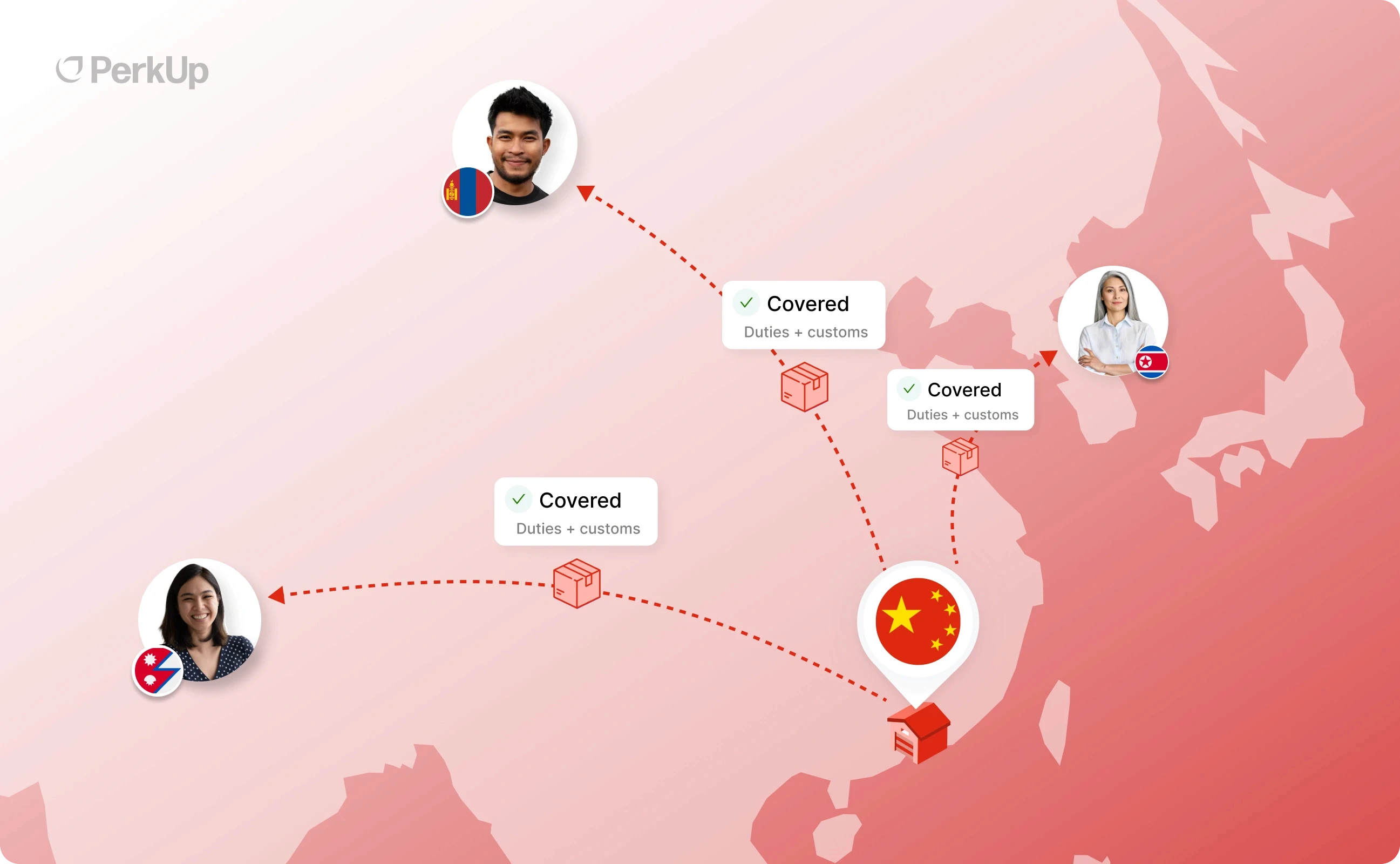
When swag does need to cross a border, PerkUp ships with customs fees covered or DDP, so duties and taxes are handled before the swag reaches the recipient. If a shipment is hit with unexpected customs charges, PerkUp reimburses them in full.



Companies That Ship Swag to China and Hong Kong with PerkUp

If you want to know how PerkUp helps companies with their China and Hong Kong swag programs, here are a few examples:

Wise
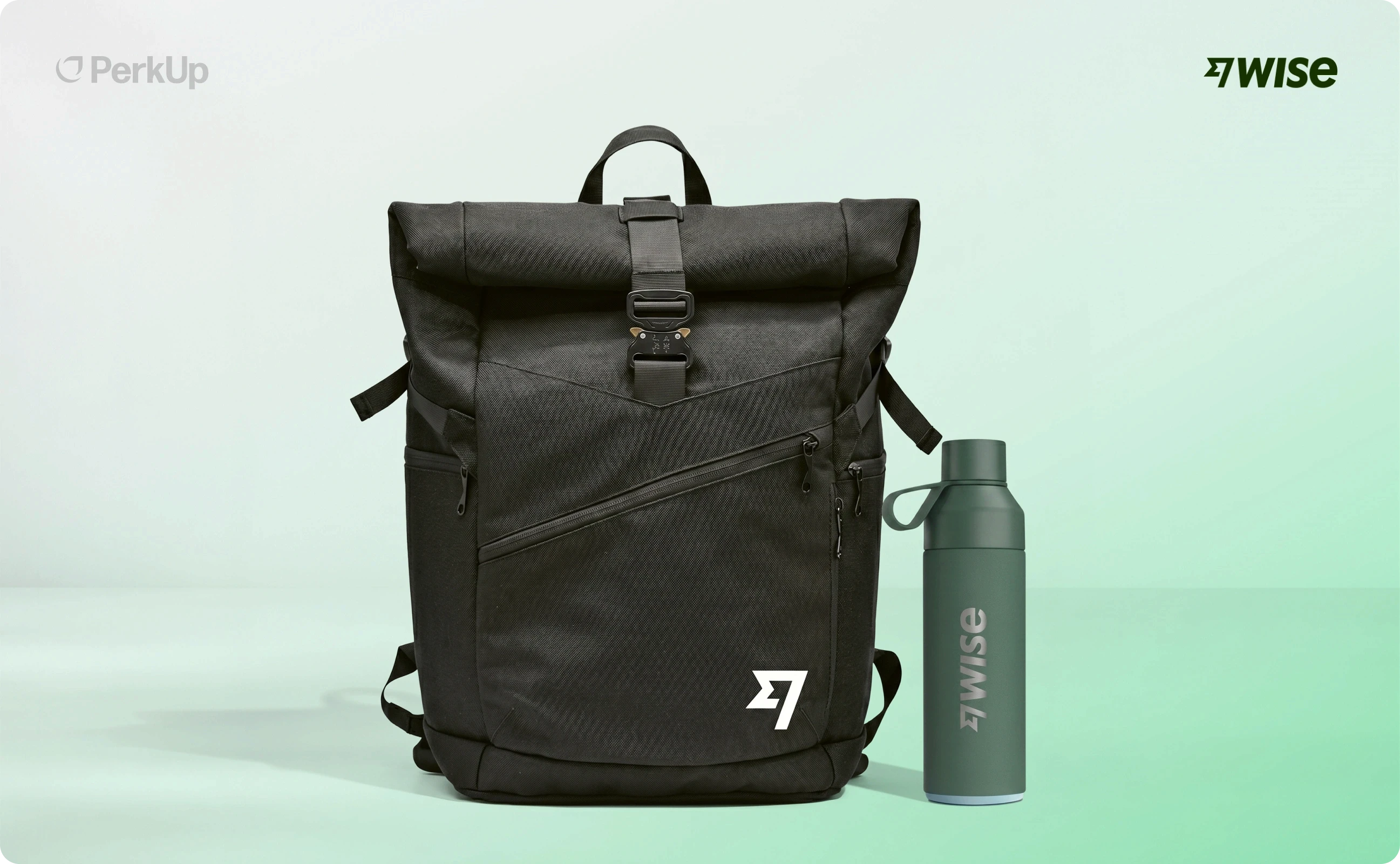
Wise needed branded backpacks and drinkware for its recipients in Hong Kong and Singapore, but shipping them from Europe added unnecessary cost and transit time. That’s why its inventory was kept in Hong Kong and shipped regionally. 

Sitemate
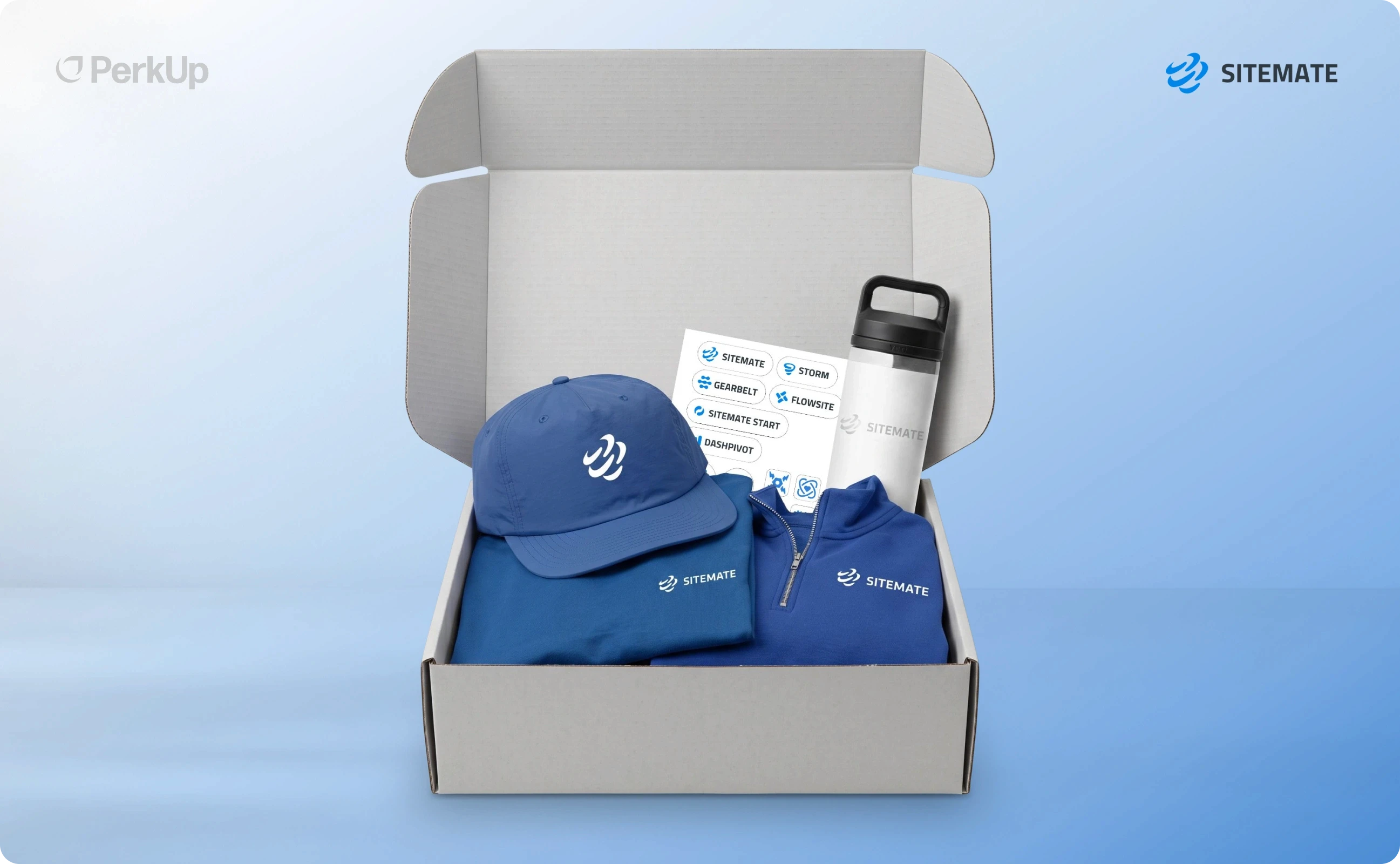
Sitemate runs a new hire kit program with roughly 300 kits going to employees across Hong Kong, the US, Europe, and Australia. Production and fulfillment are split by region, so each recipient gets their swag kit through the closest available route. The contents remain consistent, while the fulfillment path changes based on the employee's location.

Alianza
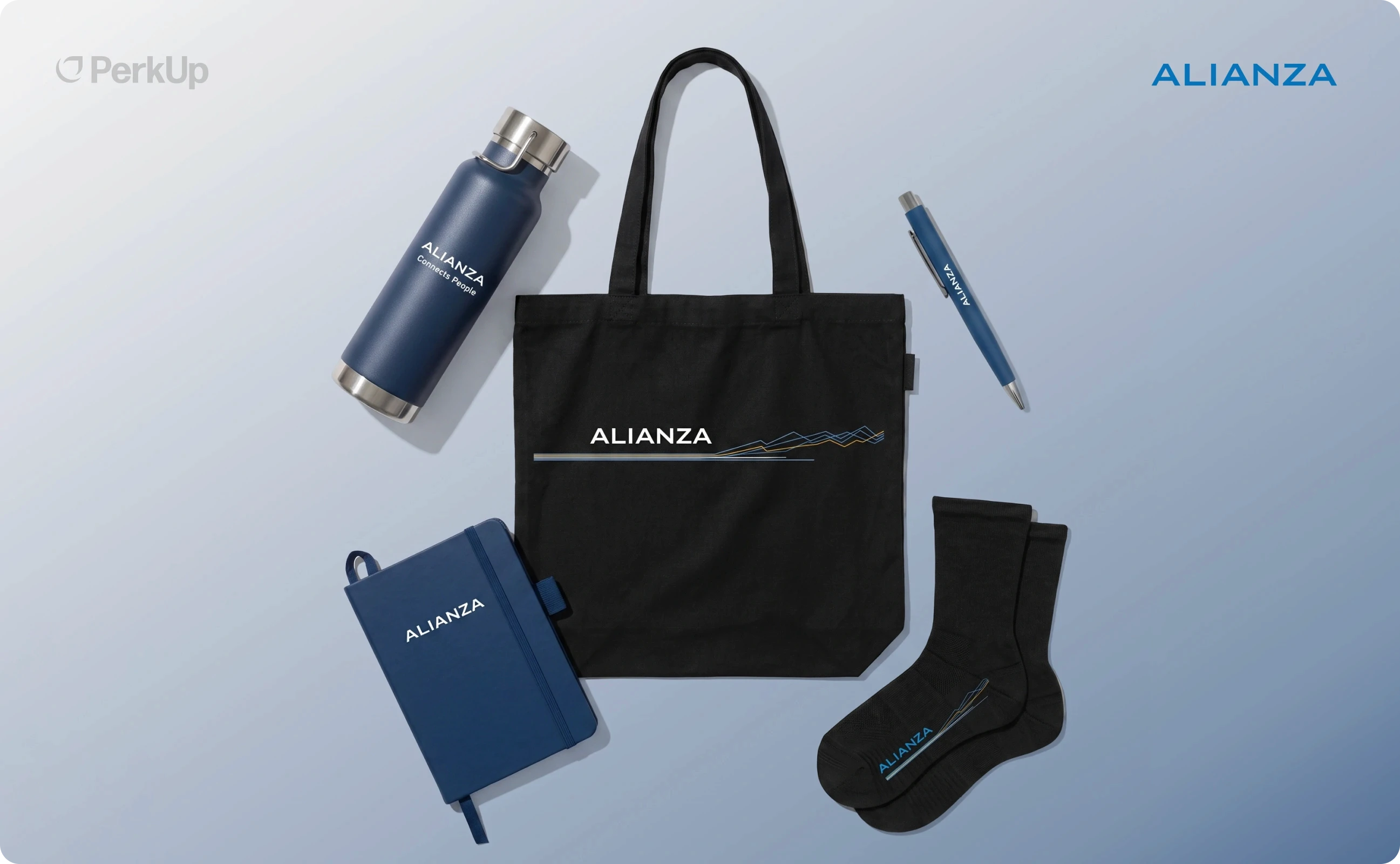
Alianza uses PerkUp's Hong Kong warehouse to support recipients across APAC alongside its programs in other regions. Instead of managing separate vendors and inventory for every market, the Alianza team can manage its global swag programs from one dashboard.


Takeaways on Shipping Swag to China and Hong Kong

The main takeaway from this guide is simple: Hong Kong is relatively straightforward, while mainland China needs more planning. Produce and warehouse locally where possible, review swag designs before anything goes into production, plan around Golden Week and Spring Festival, and keep problem items like lithium batteries and unapproved map designs out of your swag programs.

If you're planning an APAC swag program this quarter, book a quick demo with PerkUp, and we'll help you figure out what can ship, what needs to change, and what the program will actually cost before you place the order.

And if China and Hong Kong are only part of your global program, check out our guides to shipping swag to the UK and Canada for more on handling international fulfillment.

FAQs About Shipping Swag to China and Hong Kong

Can PerkUp ship swag to recipients in mainland China?

Definitely! PerkUp produces and warehouses swag inside mainland China, so your recipients there will receive domestic deliveries. This is the standard approach for the market

Does PerkUp produce swag locally in China?

Absolutely. PerkUp uses a mix of local production and imports depending on the market and product. In mainland China, local production covers common items like apparel, drinkware, bags, and stationery while avoiding the complications of importing.

Can PerkUp ship swag to Hong Kong?

Yes, PerkUp's Hong Kong facility serves local recipients and also acts as a regional hub for Southeast Asia. With no tariff on general goods, Hong Kong is one of the simpler markets to fulfill into.

How does PerkUp handle customs and duties for China and Hong Kong shipments?

The easiest way to avoid customs issues is not to cross a border in the first place. PerkUp fulfills from regional inventory whenever possible. When cross-border shipping is necessary, customs fees are covered or handled through DDP, and unexpected customs charges are reimbursed in full.

How long does it take to get swag to teams in China and Hong Kong?

Bulk swag takes about five weeks before shipping: three weeks for production, one week for kitting, and one week for approval. On Demand takes roughly three weeks. Build in extra time around Golden Week and Spring Festival, when production, warehouses, and freight can slow down. 

import { useEffect } from "react"


export default function CarouselFixer() {

useEffect(() => {

// Wait for CMS content to render

const init = () => {

// Find all horizontally scrollable containers inside CMS content

const contents = document.querySelectorAll(".framer-text, [class*='content'], [class*='Content']")


contents.forEach((content) => {

const scrollEls = content.querySelectorAll("ul, ol, div")

scrollEls.forEach((el) => {

const htmlEl = el as HTMLElement

const style = window.getComputedStyle(htmlEl)


// Target only elements that overflow horizontally (the carousel)

if (

style.overflowX === "scroll" ||

style.overflowX === "auto" ||

htmlEl.scrollWidth > htmlEl.clientWidth

) {

attachScrollBehavior(htmlEl)

}

})

})

}


const attachScrollBehavior = (el: HTMLElement) => {

// Prevent double-attaching

if (el.dataset.scrollFixed) return

el.dataset.scrollFixed = "true"


el.style.cursor = "grab"

el.style.userSelect = "none"

el.style.webkitOverflowScrolling = "touch"

el.style.scrollbarWidth = "none"


let startX = 0

let scrollStart = 0

let isDown = false

let dragged = false


const onMouseDown = (e: MouseEvent) => {

isDown = true

dragged = false

startX = e.clientX

scrollStart = el.scrollLeft

el.style.cursor = "grabbing"

}


const onMouseMove = (e: MouseEvent) => {

if (!isDown) return

const dx = e.clientX - startX

if (Math.abs(dx) > 5) dragged = true

el.scrollLeft = scrollStart - dx

}


const onMouseUp = () => {

isDown = false

el.style.cursor = "grab"

}


const onClickCapture = (e: MouseEvent) => {

if (dragged) {

e.preventDefault()

e.stopImmediatePropagation()

dragged = false

}

}


const onWheel = (e: WheelEvent) => {

if (Math.abs(e.deltaX) > 0) {

e.preventDefault()

el.scrollLeft += e.deltaX

}

}


el.addEventListener("mousedown", onMouseDown)

el.addEventListener("mousemove", onMouseMove)

el.addEventListener("mouseup", onMouseUp)

el.addEventListener("mouseleave", onMouseUp)

el.addEventListener("click", onClickCapture, true)

el.addEventListener("wheel", onWheel, { passive: false })

}


// Try immediately, then retry after delays to catch late CMS renders

init()

setTimeout(init, 500)

setTimeout(init, 1500)

}, [])


// Renders nothing — invisible helper

return null

}