Dead Stock Swag: How to Cut Waste, Emissions, and Landfill Impact

Dead Stock Swag: How to Cut Waste, Emissions, and Landfill Impact

Dead Stock Swag: How to Cut Waste, Emissions, and Landfill Impact

Company Culture

Company Culture

Company Culture

Dead Stock Swag: How to Cut Waste, Emissions, and Landfill Impact

Dead Stock Swag: How to Cut Waste, Emissions, and Landfill Impact

Dead Stock Swag: How to Cut Waste, Emissions, and Landfill Impact

20 to 30 percent of bulk swag ends up as dead stock, draining budgets and filling landfills. Here's a how to guide to build a leaner, lower-impact program in 2026.

20 to 30 percent of bulk swag ends up as dead stock, draining budgets and filling landfills. Here's a how to guide to build a leaner, lower-impact program in 2026.

20 to 30 percent of bulk swag ends up as dead stock, draining budgets and filling landfills. Here's a how to guide to build a leaner, lower-impact program in 2026.

5

5

min read

min read

Stack of boxes.
Stack of boxes.
Stack of boxes.
In this Post

Did you know that 20 to 30% of bulk swag inventory ends up as dead stock inventory, sitting in a warehouse until it’s written off or thrown out? For a company spending $75,000 a year on corporate swag, that is roughly $15,000 to $22,500 burned on items no one will ever use! 

The good news? Dead stock inventory is preventable. How? That’s what we’ll aim to answer in this blog, where we break down what dead stock is, why it keeps happening in company swag programs, and how you can cut waste, lower emissions, and still run a swag program your team will love.


What is dead stock, and why is it a sustainability problem for swag programs?

In inventory management, dead stock inventory refers to goods that a company has purchased, produced, or printed, but that have not sold or moved for an extended period, typically twelve months or longer, and are not expected to move in the future. 

The term is sometimes used interchangeably with obsolete inventory, but there is actually a distinction: obsolete inventory has specifically lost its usefulness, usually because of a rebrand, a discontinued line, or an outdated spec, while dead stock is any stock that will not move, whether or not the item itself is still technically usable. Obsolete inventory almost always becomes dead stock, but not all dead stock is obsolete.

In a corporate swag program, it tends to show up as branded tees in unpopular sizes, hoodies with an outdated brand mark, conference giveaways left over from a canceled event, or a bulk swag order sized for a hiring plan that didn't happen. 

Think of it this way: if your swag is sitting in a warehouse and no one has a plan to get it into the hands of a recipient, that swag is considered dead stock.

Even in well-run companies, 20 to 30 percent of inventory is typically considered dead or obsolete at any given time. In the context of swag inventory, that ratio often runs even higher because swag is inherently tied to trends, headcount changes, and events.

What makes swag different is the environmental aspect. Promotional items are produced at scale, usually from plastic, polyester, or blended materials that are difficult to recycle, and one study even found that 66% of promotional items are eventually thrown away. And when dead stock inventory never even makes it to a recipient, the full environmental cost (meaning materials, dyes, water, shipping emissions, and eventual disposal) gets absorbed with zero upside.



What causes dead stock in corporate swag programs?

  1. Over-ordering to chase volume discounts: Volume pricing is seductive because when you order, say, 1,000 tees at a lower per-unit cost, it feels like a win on the invoice. Until you realize 400 of them are still sitting in a warehouse 18 months later. 

  2. Sizing mismatches on apparel: This is one of the most common causes of dead stock. Predicting the size distribution of a global workforce, especially one that is still growing, is nearly impossible.

  3. Rebrands, logo updates, and mergers and acquisitions: A single logo update can instantly retire thousands of items. So can an acquisition that shifts the company's name, or a campaign-specific design whose campaign has wrapped. 

  4. Events that get canceled or postponed: Conference and event swag is the single biggest source of last-minute dead stock inventory. Attendance forecasts shift, events go virtual, venues change, and the 500 swag bags that were going to Austin are suddenly stuck in a warehouse. 


How much does dead stock actually cost your company and the planet?

So, you know what dead stock means and how it affects the sustainability aspect of a swag program. But what exactly does dead stock inventory cost you and the environment?

  1. The direct cost of unsold units

The first cost is the purchase price of your dead stock swag. To get the total cost, simply multiply the number of unsold units by their unit cost, and you have an estimate. For example, for 500 unsold polos at $20 each, that's already $10,000 of capital tied up in a warehouse. That money could have funded a higher-quality swag ordering cycle or literally anything else with a real ROI.

  1. The carrying and opportunity costs

Carrying (or warehousing) costs usually add another 20 to 30 percent to the value of a swag inventory, covering swag storage, insurance, labor, and the space that could be used for fast-moving product. To give you an example, let’s say you have a $50,000 dollar bulk swag order. If that stays under your care for over three years, your total spend can climb past $200,000 once storage, handling, and rebrand-driven obsolescence are factored in. Moreover, capital frozen in obsolete inventory is capital that cannot fund higher-quality items or better swag campaigns.

  1. The environmental and brand trust cost

Every overproduced item carries embedded emissions as it was manufactured, dyed, printed, and often shipped across oceans before landing in a warehouse. Now, if it never ships out, none of that footprint is ever redeemed through use. This means that your dead stock inventory not only impacts you but the environment as well.


How can you eliminate dead stock in your swag program?

With all of that said, eliminating dead stock inventory in company swag isn’t just about ordering less of everything. While that may be the first thing that comes to mind, the solutions can actually vary.

  1. Choose On Demand swag when it comes to size-sensitive items

The fastest way to kill dead stock inventory? Stop producing swag items before you know someone wants them. On Demand swag, sometimes called print on demand swag, does exactly that. Items are produced and shipped only when you need them, which means no leftover hoodies from a canceled event and no emissions spent on swag that will never leave the box. The per-unit cost is higher than bulk swag, but total program cost almost always drops once waste is factored in.

  1. Order bulk swag strategically by opting for sustainable options

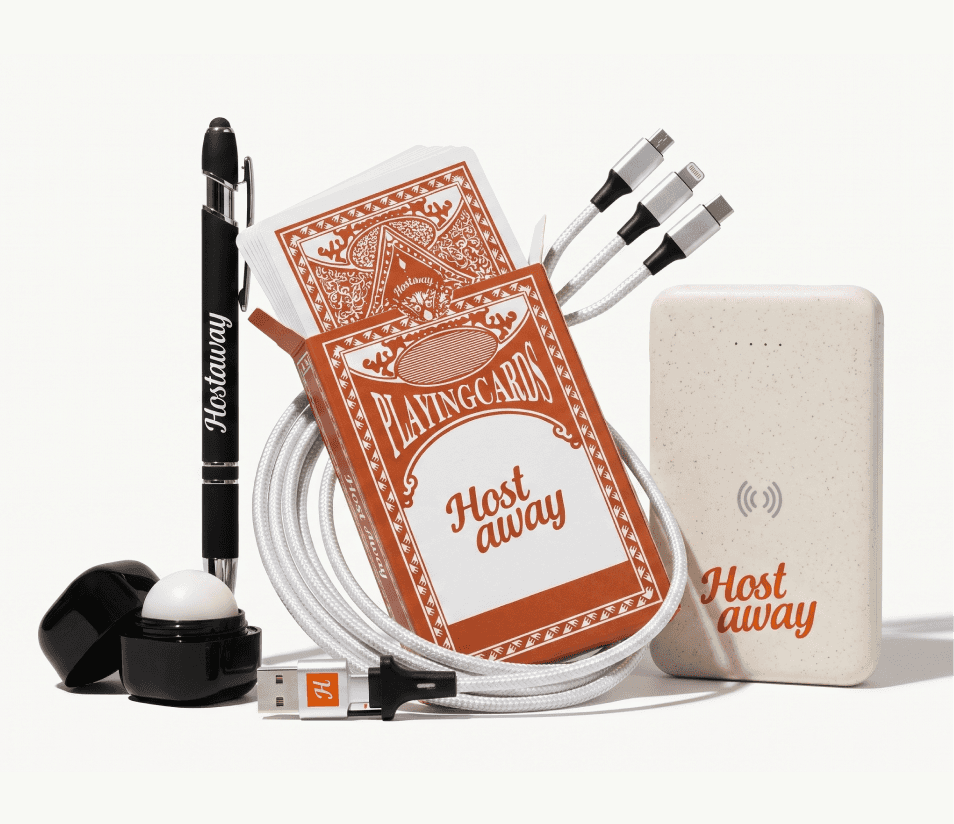
Avoiding dead stock is easy with On Demand swag, but bulk swag can also help you with this, so long as you choose it for swag items that don’t depend on size, such as drinkware, hats, notebooks, tech accessories, and tote bags. The trick is to keep the design relatively timeless, lean into sustainable swag materials like recycled polyester and organic cotton, and resist the urge to date the item with a campaign-specific tagline that will feel stale in six months.

  1. Let your recipients choose

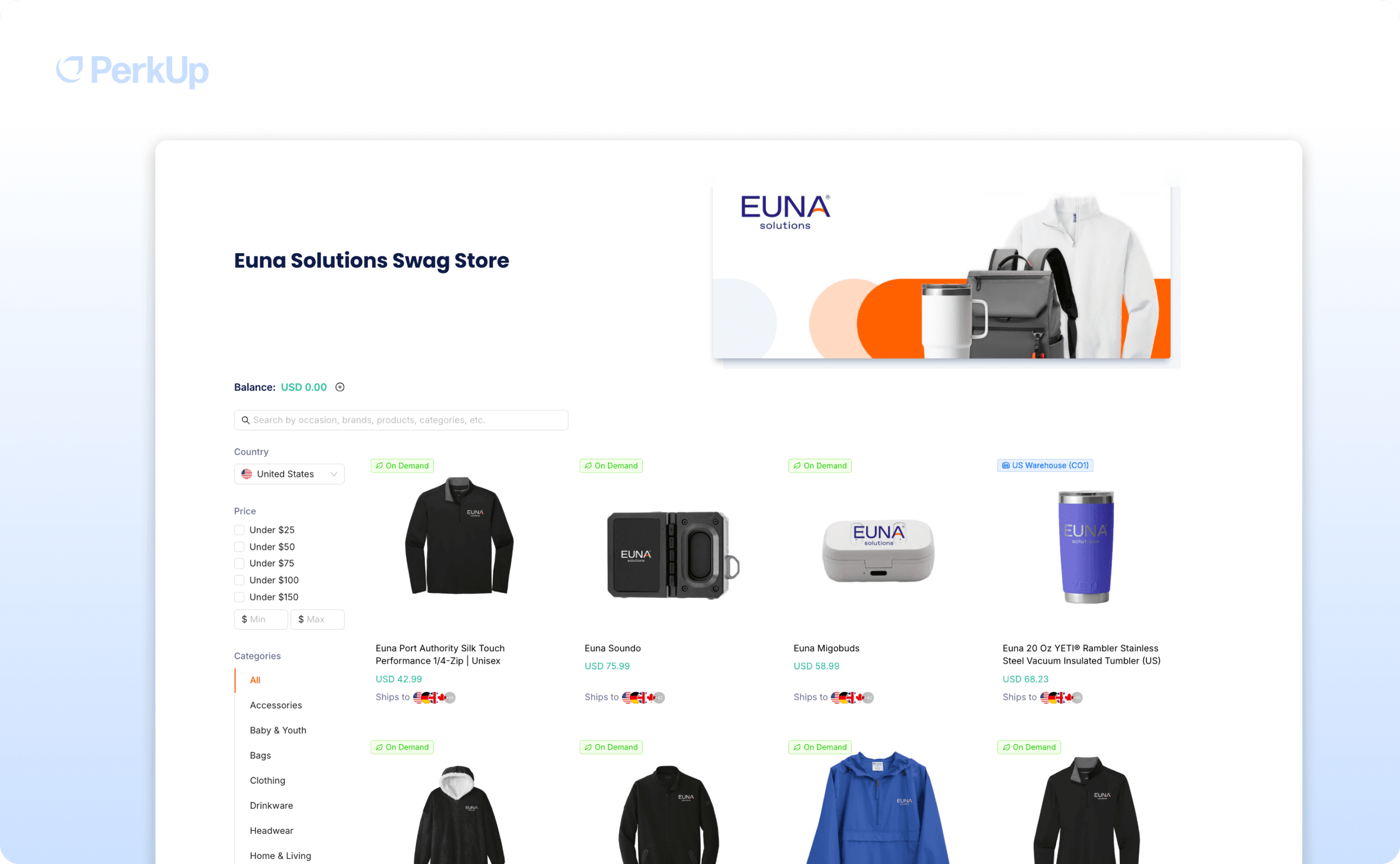
Choice is one of the most underused tools in inventory reduction. When your recipients get to pick their preferred swag from your swag store, utilization goes up, and any swag item that’s not chosen simply won’t get produced. 

  1. Centralize everything on a swag management platform

You can’t eliminate obsolete inventory you can’t see. With a swag management platform, though, you and your team can easily see current stock counts and redemption rates, as well as which SKUs are moving, which are stalled, and which are burning swag storage fees. 

  1. Audit your swag inventory regularly

Quarterly audits turn dead stock inventory from an end-of-year surprise into an ongoing operational metric. Track dead stock percentage, average age of inventory, redemption rate per item, and cost per redemption, and treat anything that hasn’t moved in two quarters as a candidate for redistribution or donation.


How does PerkUp help you eliminate dead stock and keep your swag program sustainable?

If your company operates across regions, the dead stock problem compounds. A single over-order for a US team becomes three or four over-orders once you try to extend the program to teams in Canada, the EU, the UK, and APAC. Plus, each of those shipments comes with its own carbon footprint and customs overhead. 

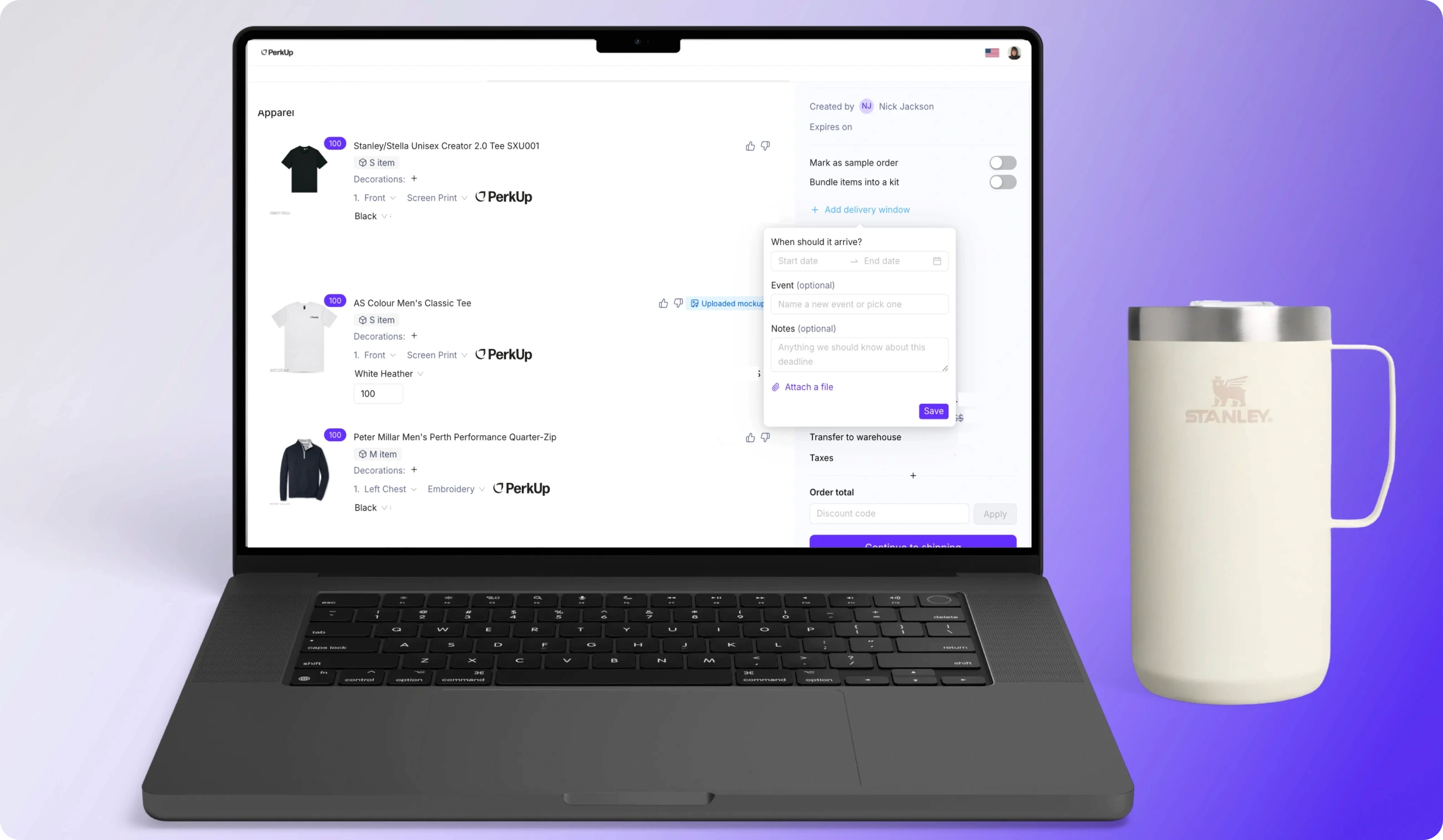
Now, with PerkUp, you don’t have to worry about over-ordering or having dead stock, as you can combine On Demand swag and bulk swag in the same storefront, which allows you to route sizing-sensitive apparel through On Demand production while keeping evergreen items like drinkware and accessories in strategic regional warehouses across the US, UK, Europe, India, and Asia Pacific. PerkUp’s local fulfillment from the warehouse closest to your recipients can also cut CO2 emissions per package by up to 95% compared to cross-border shipping.

Additionally, PerkUp pairs real-time inventory reporting with a curated catalog of sustainable swag made from recycled materials, membership in Pledge 1%, and a Stripe Climate partnership. 

Overall, with a reliable and global swag management platform like PerkUp, you can see exactly what is sitting in your swag storage, catch obsolete items before they age into write-offs, and know that the items you send out are sourced and shipped with waste reduction included.


Key Takeaways on Dead Stock Swag

Dead stock inventory is a sustainability issue, a brand-trust issue, and a signal that the program is out of sync with how swag is actually used. The fix is not to stop sending swag, but to choose to lean on On Demand swag where it makes sense, order bulk swag with discipline, and give recipients a say in what they actually get. 

Ready to see what a lower-waste swag program looks like in practice? Book a PerkUp demo, and we'll walk through how to build one for your team.


Frequently Asked Questions about Dead Stock Swag

Can we mix On Demand swag and bulk swag in the same program?

Yes, and it’s actually the best defense against dead stock inventory. Most teams run evergreen items like drinkware and hats as bulk swag for speed and unit cost, and route apparel and sizing-sensitive items through On Demand swag so nothing gets produced until someone actually claims it. PerkUp supports both in the same storefront, so your recipients see one unified experience.

What happens to the warehoused swag inventory if our branding changes?

This is one of the most common sources of obsolete inventory. The best safeguard is to keep the bulk of your swag inventory light, evergreen, and weighted toward On Demand swag so a rebrand doesn’t cause dead stock. For existing inventory, options like donation, upcycling, and textile recycling let you retire the old branding responsibly instead of sending it to a landfill.

How do warehousing fees work, and can they make dead stock more expensive?

Most platforms charge per-unit swag storage fees based on item size, billed monthly against what was in the warehouse at the start of that month. That structure makes it painfully clear when bulk swag isn’t moving, because every month of non-movement is another line item on an invoice. 

Can we source sustainable swag without losing quality?

Yes! The catalog for sustainable swag has grown significantly, with recycled polyester apparel, organic cotton tees, reclaimed aluminum drinkware, and refillable notebook options from brands that recipients recognize. PerkUp's curated catalog includes sustainably sourced items alongside branded names, so you’re not trading brand appeal for environmental credentials.

Did you know that 20 to 30% of bulk swag inventory ends up as dead stock inventory, sitting in a warehouse until it’s written off or thrown out? For a company spending $75,000 a year on corporate swag, that is roughly $15,000 to $22,500 burned on items no one will ever use! 

The good news? Dead stock inventory is preventable. How? That’s what we’ll aim to answer in this blog, where we break down what dead stock is, why it keeps happening in company swag programs, and how you can cut waste, lower emissions, and still run a swag program your team will love.


What is dead stock, and why is it a sustainability problem for swag programs?

In inventory management, dead stock inventory refers to goods that a company has purchased, produced, or printed, but that have not sold or moved for an extended period, typically twelve months or longer, and are not expected to move in the future. 

The term is sometimes used interchangeably with obsolete inventory, but there is actually a distinction: obsolete inventory has specifically lost its usefulness, usually because of a rebrand, a discontinued line, or an outdated spec, while dead stock is any stock that will not move, whether or not the item itself is still technically usable. Obsolete inventory almost always becomes dead stock, but not all dead stock is obsolete.

In a corporate swag program, it tends to show up as branded tees in unpopular sizes, hoodies with an outdated brand mark, conference giveaways left over from a canceled event, or a bulk swag order sized for a hiring plan that didn't happen. 

Think of it this way: if your swag is sitting in a warehouse and no one has a plan to get it into the hands of a recipient, that swag is considered dead stock.

Even in well-run companies, 20 to 30 percent of inventory is typically considered dead or obsolete at any given time. In the context of swag inventory, that ratio often runs even higher because swag is inherently tied to trends, headcount changes, and events.

What makes swag different is the environmental aspect. Promotional items are produced at scale, usually from plastic, polyester, or blended materials that are difficult to recycle, and one study even found that 66% of promotional items are eventually thrown away. And when dead stock inventory never even makes it to a recipient, the full environmental cost (meaning materials, dyes, water, shipping emissions, and eventual disposal) gets absorbed with zero upside.


What causes dead stock in corporate swag programs?

  1. Over-ordering to chase volume discounts: Volume pricing is seductive because when you order, say, 1,000 tees at a lower per-unit cost, it feels like a win on the invoice. Until you realize 400 of them are still sitting in a warehouse 18 months later. 

  2. Sizing mismatches on apparel: This is one of the most common causes of dead stock. Predicting the size distribution of a global workforce, especially one that is still growing, is nearly impossible.

  3. Rebrands, logo updates, and mergers and acquisitions: A single logo update can instantly retire thousands of items. So can an acquisition that shifts the company's name, or a campaign-specific design whose campaign has wrapped. 

  4. Events that get canceled or postponed: Conference and event swag is the single biggest source of last-minute dead stock inventory. Attendance forecasts shift, events go virtual, venues change, and the 500 swag bags that were going to Austin are suddenly stuck in a warehouse. 


How much does dead stock actually cost your company and the planet?

So, you know what dead stock means and how it affects the sustainability aspect of a swag program. But what exactly does dead stock inventory cost you and the environment?

  1. The direct cost of unsold units

The first cost is the purchase price of your dead stock swag. To get the total cost, simply multiply the number of unsold units by their unit cost, and you have an estimate. For example, for 500 unsold polos at $20 each, that's already $10,000 of capital tied up in a warehouse. That money could have funded a higher-quality swag ordering cycle or literally anything else with a real ROI.

  1. The carrying and opportunity costs

Carrying (or warehousing) costs usually add another 20 to 30 percent to the value of a swag inventory, covering swag storage, insurance, labor, and the space that could be used for fast-moving product. To give you an example, let’s say you have a $50,000 dollar bulk swag order. If that stays under your care for over three years, your total spend can climb past $200,000 once storage, handling, and rebrand-driven obsolescence are factored in. Moreover, capital frozen in obsolete inventory is capital that cannot fund higher-quality items or better swag campaigns.

  1. The environmental and brand trust cost

Every overproduced item carries embedded emissions as it was manufactured, dyed, printed, and often shipped across oceans before landing in a warehouse. Now, if it never ships out, none of that footprint is ever redeemed through use. This means that your dead stock inventory not only impacts you but the environment as well.


How can you eliminate dead stock in your swag program?

With all of that said, eliminating dead stock inventory in company swag isn’t just about ordering less of everything. While that may be the first thing that comes to mind, the solutions can actually vary.

  1. Choose On Demand swag when it comes to size-sensitive items

The fastest way to kill dead stock inventory? Stop producing swag items before you know someone wants them. On Demand swag, sometimes called print on demand swag, does exactly that. Items are produced and shipped only when you need them, which means no leftover hoodies from a canceled event and no emissions spent on swag that will never leave the box. The per-unit cost is higher than bulk swag, but total program cost almost always drops once waste is factored in.

  1. Order bulk swag strategically by opting for sustainable options

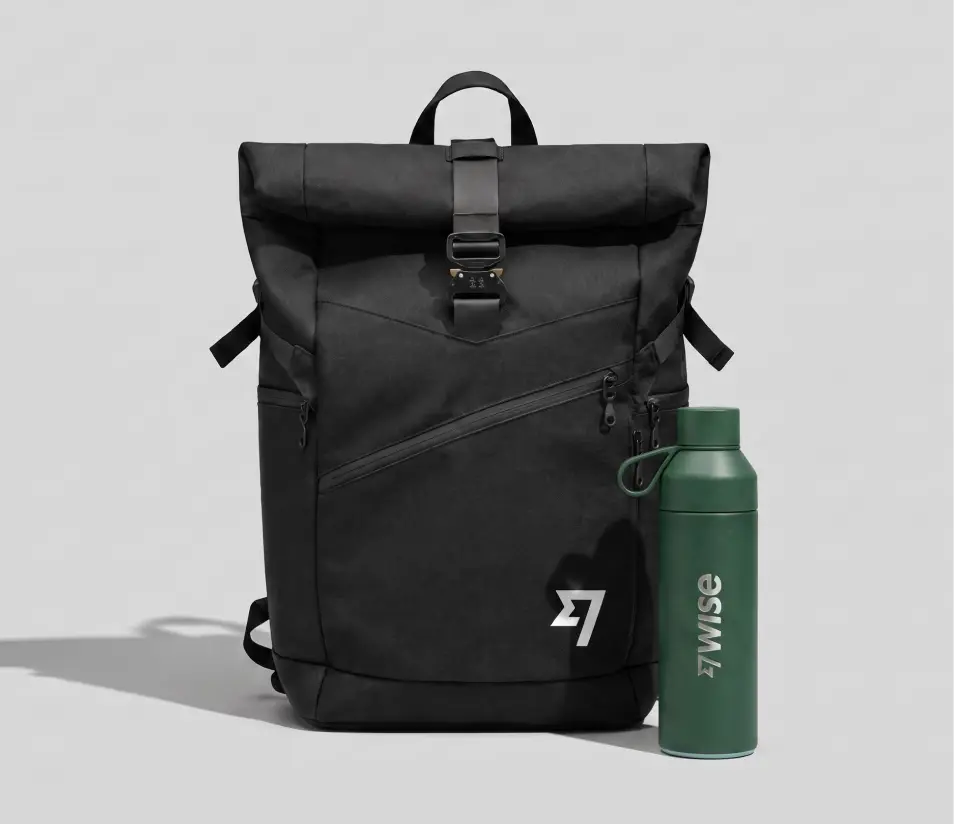
Avoiding dead stock is easy with On Demand swag, but bulk swag can also help you with this, so long as you choose it for swag items that don’t depend on size, such as drinkware, hats, notebooks, tech accessories, and tote bags. The trick is to keep the design relatively timeless, lean into sustainable swag materials like recycled polyester and organic cotton, and resist the urge to date the item with a campaign-specific tagline that will feel stale in six months.

  1. Let your recipients choose

Choice is one of the most underused tools in inventory reduction. When your recipients get to pick their preferred swag from your swag store, utilization goes up, and any swag item that’s not chosen simply won’t get produced. 

  1. Centralize everything on a swag management platform

You can’t eliminate obsolete inventory you can’t see. With a swag management platform, though, you and your team can easily see current stock counts and redemption rates, as well as which SKUs are moving, which are stalled, and which are burning swag storage fees. 

  1. Audit your swag inventory regularly

Quarterly audits turn dead stock inventory from an end-of-year surprise into an ongoing operational metric. Track dead stock percentage, average age of inventory, redemption rate per item, and cost per redemption, and treat anything that hasn’t moved in two quarters as a candidate for redistribution or donation.


How does PerkUp help you eliminate dead stock and keep your swag program sustainable?

If your company operates across regions, the dead stock problem compounds. A single over-order for a US team becomes three or four over-orders once you try to extend the program to teams in Canada, the EU, the UK, and APAC. Plus, each of those shipments comes with its own carbon footprint and customs overhead. 

Now, with PerkUp, you don’t have to worry about over-ordering or having dead stock, as you can combine On Demand swag and bulk swag in the same storefront, which allows you to route sizing-sensitive apparel through On Demand production while keeping evergreen items like drinkware and accessories in strategic regional warehouses across the US, UK, Europe, India, and Asia Pacific. PerkUp’s local fulfillment from the warehouse closest to your recipients can also cut CO2 emissions per package by up to 95% compared to cross-border shipping.

Additionally, PerkUp pairs real-time inventory reporting with a curated catalog of sustainable swag made from recycled materials, membership in Pledge 1%, and a Stripe Climate partnership. 

Overall, with a reliable and global swag management platform like PerkUp, you can see exactly what is sitting in your swag storage, catch obsolete items before they age into write-offs, and know that the items you send out are sourced and shipped with waste reduction included.


Key Takeaways on Dead Stock Swag

Dead stock inventory is a sustainability issue, a brand-trust issue, and a signal that the program is out of sync with how swag is actually used. The fix is not to stop sending swag, but to choose to lean on On Demand swag where it makes sense, order bulk swag with discipline, and give recipients a say in what they actually get. 

Ready to see what a lower-waste swag program looks like in practice? Book a PerkUp demo, and we'll walk through how to build one for your team.


Frequently Asked Questions about Dead Stock Swag

Can we mix On Demand swag and bulk swag in the same program?

Yes, and it’s actually the best defense against dead stock inventory. Most teams run evergreen items like drinkware and hats as bulk swag for speed and unit cost, and route apparel and sizing-sensitive items through On Demand swag so nothing gets produced until someone actually claims it. PerkUp supports both in the same storefront, so your recipients see one unified experience.

What happens to the warehoused swag inventory if our branding changes?

This is one of the most common sources of obsolete inventory. The best safeguard is to keep the bulk of your swag inventory light, evergreen, and weighted toward On Demand swag so a rebrand doesn’t cause dead stock. For existing inventory, options like donation, upcycling, and textile recycling let you retire the old branding responsibly instead of sending it to a landfill.

How do warehousing fees work, and can they make dead stock more expensive?

Most platforms charge per-unit swag storage fees based on item size, billed monthly against what was in the warehouse at the start of that month. That structure makes it painfully clear when bulk swag isn’t moving, because every month of non-movement is another line item on an invoice. 

Can we source sustainable swag without losing quality?

Yes! The catalog for sustainable swag has grown significantly, with recycled polyester apparel, organic cotton tees, reclaimed aluminum drinkware, and refillable notebook options from brands that recipients recognize. PerkUp's curated catalog includes sustainably sourced items alongside branded names, so you’re not trading brand appeal for environmental credentials.

Did you know that 20 to 30% of bulk swag inventory ends up as dead stock inventory, sitting in a warehouse until it’s written off or thrown out? For a company spending $75,000 a year on corporate swag, that is roughly $15,000 to $22,500 burned on items no one will ever use! 

The good news? Dead stock inventory is preventable. How? That’s what we’ll aim to answer in this blog, where we break down what dead stock is, why it keeps happening in company swag programs, and how you can cut waste, lower emissions, and still run a swag program your team will love.


What is dead stock, and why is it a sustainability problem for swag programs?

In inventory management, dead stock inventory refers to goods that a company has purchased, produced, or printed, but that have not sold or moved for an extended period, typically twelve months or longer, and are not expected to move in the future. 

The term is sometimes used interchangeably with obsolete inventory, but there is actually a distinction: obsolete inventory has specifically lost its usefulness, usually because of a rebrand, a discontinued line, or an outdated spec, while dead stock is any stock that will not move, whether or not the item itself is still technically usable. Obsolete inventory almost always becomes dead stock, but not all dead stock is obsolete.

In a corporate swag program, it tends to show up as branded tees in unpopular sizes, hoodies with an outdated brand mark, conference giveaways left over from a canceled event, or a bulk swag order sized for a hiring plan that didn't happen. 

Think of it this way: if your swag is sitting in a warehouse and no one has a plan to get it into the hands of a recipient, that swag is considered dead stock.

Even in well-run companies, 20 to 30 percent of inventory is typically considered dead or obsolete at any given time. In the context of swag inventory, that ratio often runs even higher because swag is inherently tied to trends, headcount changes, and events.

What makes swag different is the environmental aspect. Promotional items are produced at scale, usually from plastic, polyester, or blended materials that are difficult to recycle, and one study even found that 66% of promotional items are eventually thrown away. And when dead stock inventory never even makes it to a recipient, the full environmental cost (meaning materials, dyes, water, shipping emissions, and eventual disposal) gets absorbed with zero upside.


What causes dead stock in corporate swag programs?

  1. Over-ordering to chase volume discounts: Volume pricing is seductive because when you order, say, 1,000 tees at a lower per-unit cost, it feels like a win on the invoice. Until you realize 400 of them are still sitting in a warehouse 18 months later. 

  2. Sizing mismatches on apparel: This is one of the most common causes of dead stock. Predicting the size distribution of a global workforce, especially one that is still growing, is nearly impossible.

  3. Rebrands, logo updates, and mergers and acquisitions: A single logo update can instantly retire thousands of items. So can an acquisition that shifts the company's name, or a campaign-specific design whose campaign has wrapped. 

  4. Events that get canceled or postponed: Conference and event swag is the single biggest source of last-minute dead stock inventory. Attendance forecasts shift, events go virtual, venues change, and the 500 swag bags that were going to Austin are suddenly stuck in a warehouse. 


How much does dead stock actually cost your company and the planet?

So, you know what dead stock means and how it affects the sustainability aspect of a swag program. But what exactly does dead stock inventory cost you and the environment?

  1. The direct cost of unsold units

The first cost is the purchase price of your dead stock swag. To get the total cost, simply multiply the number of unsold units by their unit cost, and you have an estimate. For example, for 500 unsold polos at $20 each, that's already $10,000 of capital tied up in a warehouse. That money could have funded a higher-quality swag ordering cycle or literally anything else with a real ROI.

  1. The carrying and opportunity costs

Carrying (or warehousing) costs usually add another 20 to 30 percent to the value of a swag inventory, covering swag storage, insurance, labor, and the space that could be used for fast-moving product. To give you an example, let’s say you have a $50,000 dollar bulk swag order. If that stays under your care for over three years, your total spend can climb past $200,000 once storage, handling, and rebrand-driven obsolescence are factored in. Moreover, capital frozen in obsolete inventory is capital that cannot fund higher-quality items or better swag campaigns.

  1. The environmental and brand trust cost

Every overproduced item carries embedded emissions as it was manufactured, dyed, printed, and often shipped across oceans before landing in a warehouse. Now, if it never ships out, none of that footprint is ever redeemed through use. This means that your dead stock inventory not only impacts you but the environment as well.


How can you eliminate dead stock in your swag program?

With all of that said, eliminating dead stock inventory in company swag isn’t just about ordering less of everything. While that may be the first thing that comes to mind, the solutions can actually vary.

  1. Choose On Demand swag when it comes to size-sensitive items

The fastest way to kill dead stock inventory? Stop producing swag items before you know someone wants them. On Demand swag, sometimes called print on demand swag, does exactly that. Items are produced and shipped only when you need them, which means no leftover hoodies from a canceled event and no emissions spent on swag that will never leave the box. The per-unit cost is higher than bulk swag, but total program cost almost always drops once waste is factored in.

  1. Order bulk swag strategically by opting for sustainable options
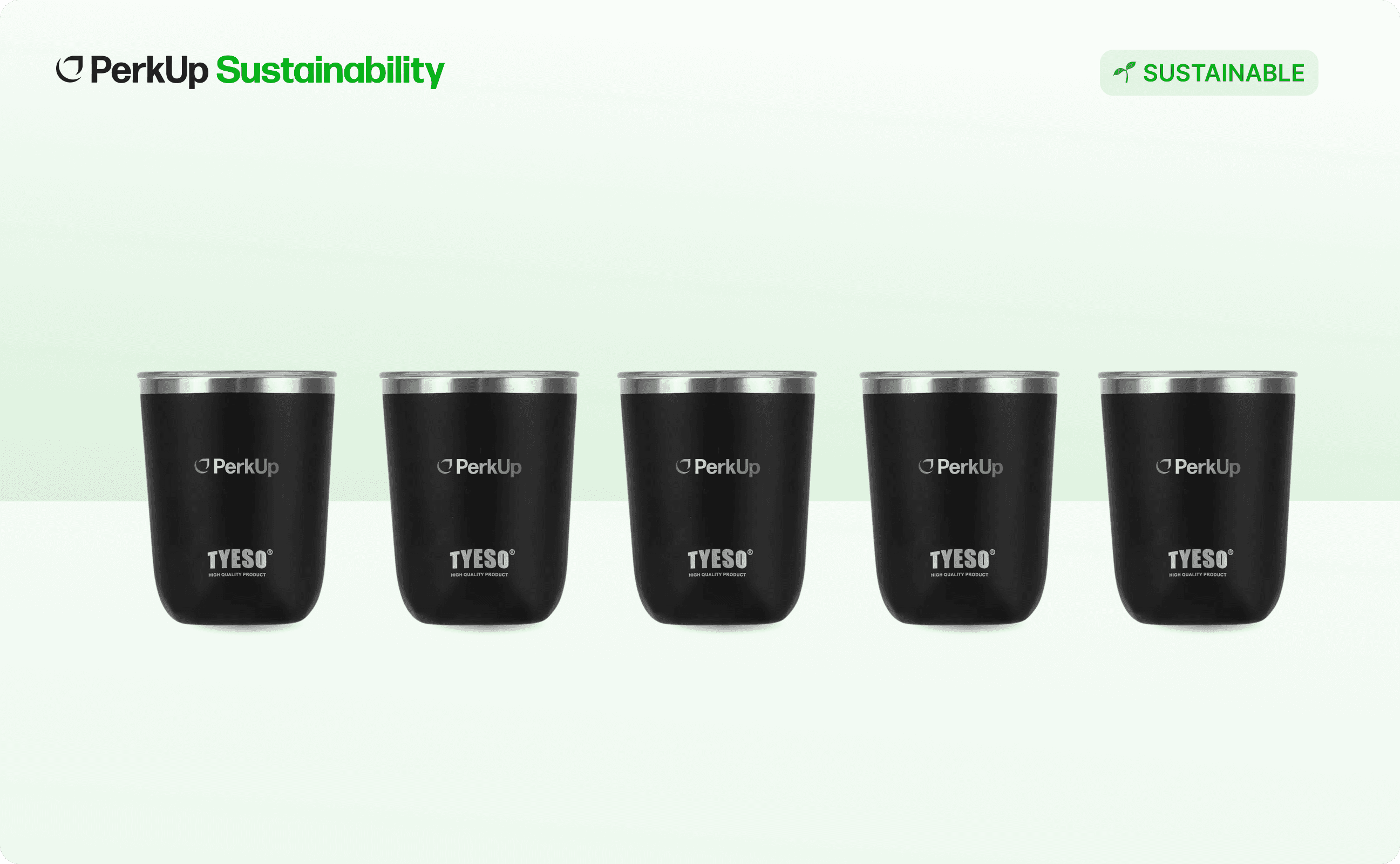
Avoiding dead stock is easy with On Demand swag, but bulk swag can also help you with this, so long as you choose it for swag items that don’t depend on size, such as drinkware, hats, notebooks, tech accessories, and tote bags. The trick is to keep the design relatively timeless, lean into sustainable swag materials like recycled polyester and organic cotton, and resist the urge to date the item with a campaign-specific tagline that will feel stale in six months.

  1. Let your recipients choose

Choice is one of the most underused tools in inventory reduction. When your recipients get to pick their preferred swag from your swag store, utilization goes up, and any swag item that’s not chosen simply won’t get produced. 

  1. Centralize everything on a swag management platform
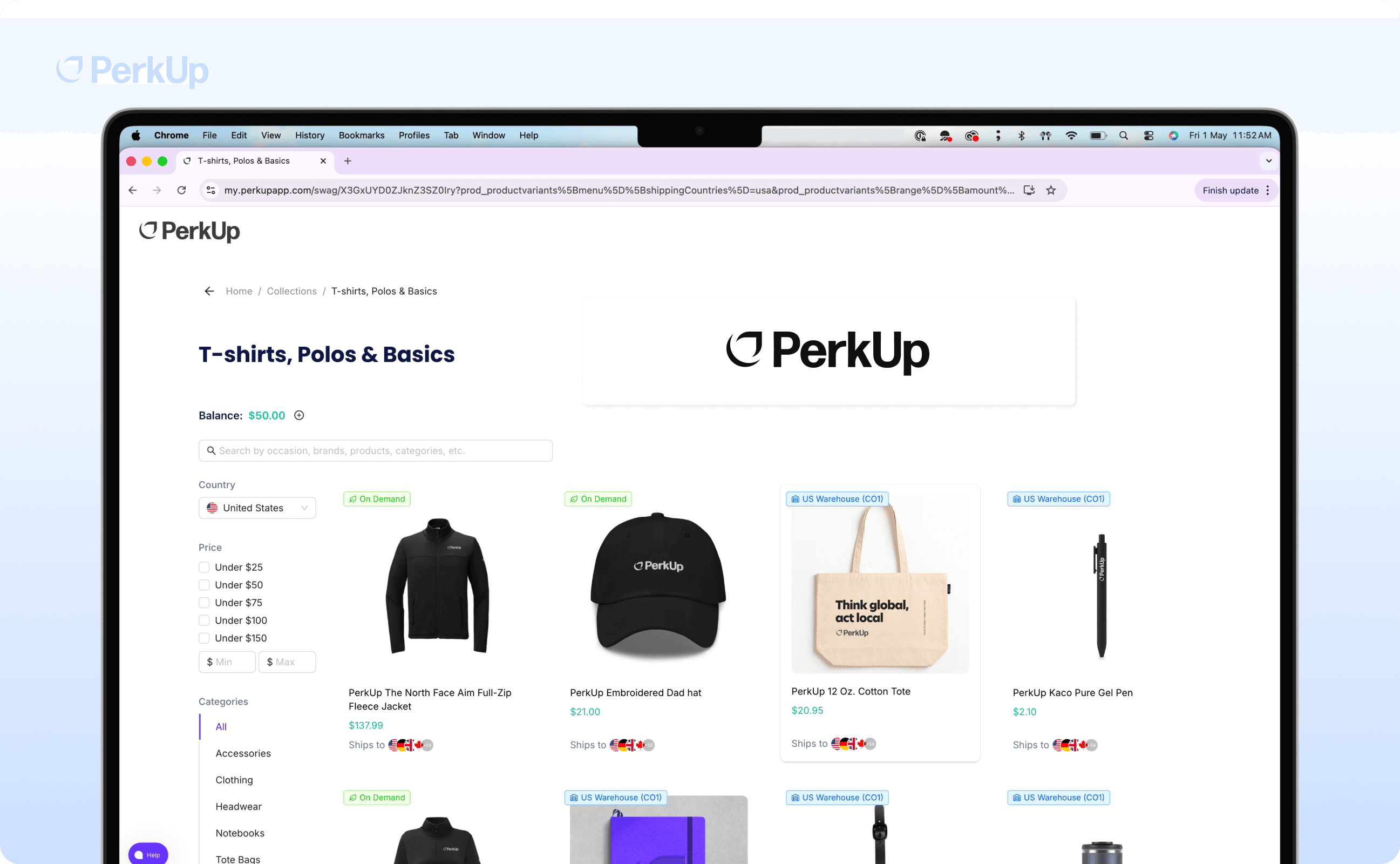
You can’t eliminate obsolete inventory you can’t see. With a swag management platform, though, you and your team can easily see current stock counts and redemption rates, as well as which SKUs are moving, which are stalled, and which are burning swag storage fees. 

  1. Audit your swag inventory regularly

Quarterly audits turn dead stock inventory from an end-of-year surprise into an ongoing operational metric. Track dead stock percentage, average age of inventory, redemption rate per item, and cost per redemption, and treat anything that hasn’t moved in two quarters as a candidate for redistribution or donation.


How does PerkUp help you eliminate dead stock and keep your swag program sustainable?
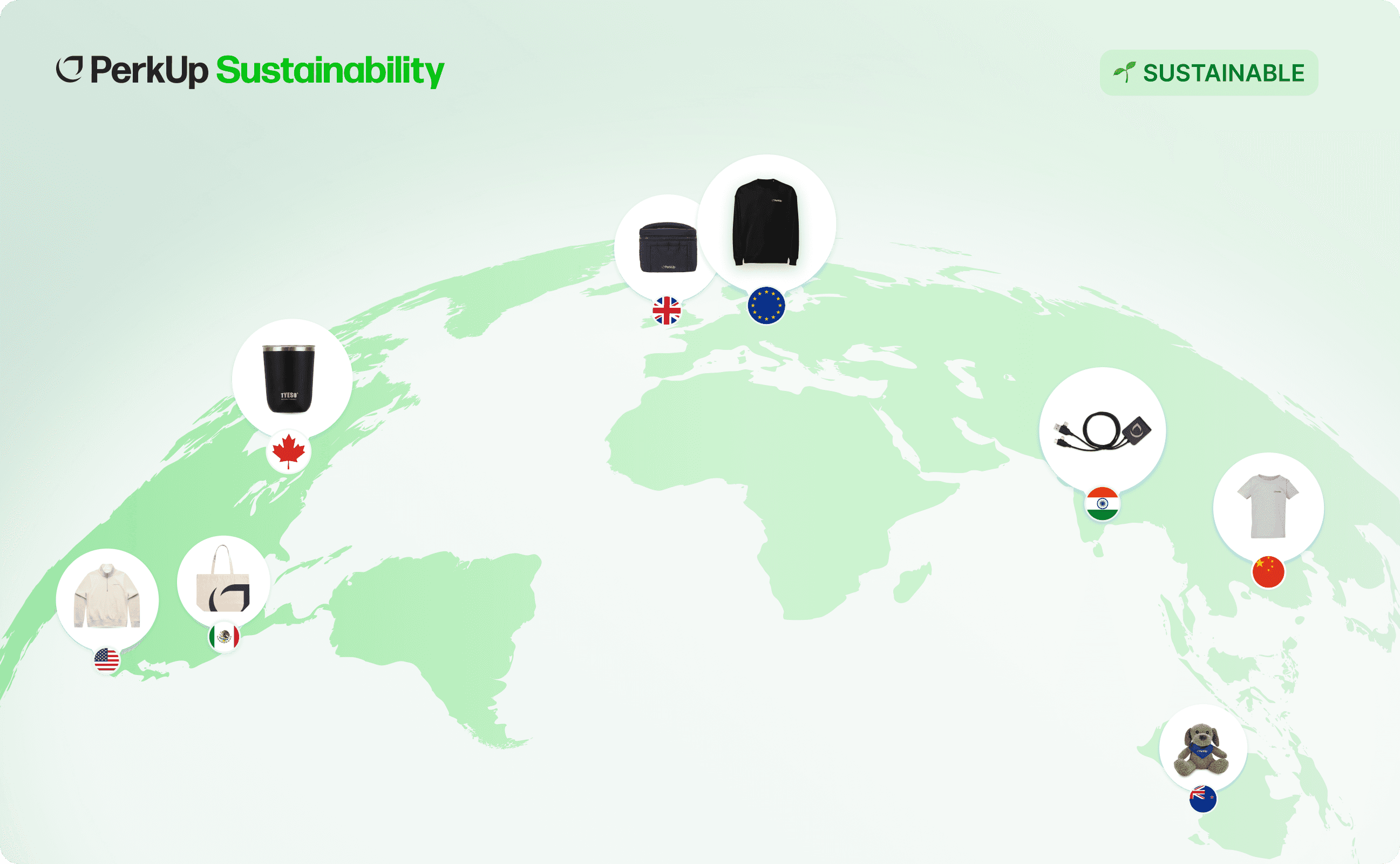
If your company operates across regions, the dead stock problem compounds. A single over-order for a US team becomes three or four over-orders once you try to extend the program to teams in Canada, the EU, the UK, and APAC. Plus, each of those shipments comes with its own carbon footprint and customs overhead. 

Now, with PerkUp, you don’t have to worry about over-ordering or having dead stock, as you can combine On Demand swag and bulk swag in the same storefront, which allows you to route sizing-sensitive apparel through On Demand production while keeping evergreen items like drinkware and accessories in strategic regional warehouses across the US, UK, Europe, India, and Asia Pacific. PerkUp’s local fulfillment from the warehouse closest to your recipients can also cut CO2 emissions per package by up to 95% compared to cross-border shipping.

Additionally, PerkUp pairs real-time inventory reporting with a curated catalog of sustainable swag made from recycled materials, membership in Pledge 1%, and a Stripe Climate partnership. 

Overall, with a reliable and global swag management platform like PerkUp, you can see exactly what is sitting in your swag storage, catch obsolete items before they age into write-offs, and know that the items you send out are sourced and shipped with waste reduction included.


Key Takeaways on Dead Stock Swag

Dead stock inventory is a sustainability issue, a brand-trust issue, and a signal that the program is out of sync with how swag is actually used. The fix is not to stop sending swag, but to choose to lean on On Demand swag where it makes sense, order bulk swag with discipline, and give recipients a say in what they actually get. 

Ready to see what a lower-waste swag program looks like in practice? Book a PerkUp demo, and we'll walk through how to build one for your team.


Frequently Asked Questions about Dead Stock Swag

Can we mix On Demand swag and bulk swag in the same program?

Yes, and it’s actually the best defense against dead stock inventory. Most teams run evergreen items like drinkware and hats as bulk swag for speed and unit cost, and route apparel and sizing-sensitive items through On Demand swag so nothing gets produced until someone actually claims it. PerkUp supports both in the same storefront, so your recipients see one unified experience.

What happens to the warehoused swag inventory if our branding changes?

This is one of the most common sources of obsolete inventory. The best safeguard is to keep the bulk of your swag inventory light, evergreen, and weighted toward On Demand swag so a rebrand doesn’t cause dead stock. For existing inventory, options like donation, upcycling, and textile recycling let you retire the old branding responsibly instead of sending it to a landfill.

How do warehousing fees work, and can they make dead stock more expensive?

Most platforms charge per-unit swag storage fees based on item size, billed monthly against what was in the warehouse at the start of that month. That structure makes it painfully clear when bulk swag isn’t moving, because every month of non-movement is another line item on an invoice. 

Can we source sustainable swag without losing quality?

Yes! The catalog for sustainable swag has grown significantly, with recycled polyester apparel, organic cotton tees, reclaimed aluminum drinkware, and refillable notebook options from brands that recipients recognize. PerkUp's curated catalog includes sustainably sourced items alongside branded names, so you’re not trading brand appeal for environmental credentials.

import { useEffect } from "react"


export default function CarouselFixer() {

useEffect(() => {

// Wait for CMS content to render

const init = () => {

// Find all horizontally scrollable containers inside CMS content

const contents = document.querySelectorAll(".framer-text, [class*='content'], [class*='Content']")


contents.forEach((content) => {

const scrollEls = content.querySelectorAll("ul, ol, div")

scrollEls.forEach((el) => {

const htmlEl = el as HTMLElement

const style = window.getComputedStyle(htmlEl)


// Target only elements that overflow horizontally (the carousel)

if (

style.overflowX === "scroll" ||

style.overflowX === "auto" ||

htmlEl.scrollWidth > htmlEl.clientWidth

) {

attachScrollBehavior(htmlEl)

}

})

})

}


const attachScrollBehavior = (el: HTMLElement) => {

// Prevent double-attaching

if (el.dataset.scrollFixed) return

el.dataset.scrollFixed = "true"


el.style.cursor = "grab"

el.style.userSelect = "none"

el.style.webkitOverflowScrolling = "touch"

el.style.scrollbarWidth = "none"


let startX = 0

let scrollStart = 0

let isDown = false

let dragged = false


const onMouseDown = (e: MouseEvent) => {

isDown = true

dragged = false

startX = e.clientX

scrollStart = el.scrollLeft

el.style.cursor = "grabbing"

}


const onMouseMove = (e: MouseEvent) => {

if (!isDown) return

const dx = e.clientX - startX

if (Math.abs(dx) > 5) dragged = true

el.scrollLeft = scrollStart - dx

}


const onMouseUp = () => {

isDown = false

el.style.cursor = "grab"

}


const onClickCapture = (e: MouseEvent) => {

if (dragged) {

e.preventDefault()

e.stopImmediatePropagation()

dragged = false

}

}


const onWheel = (e: WheelEvent) => {

if (Math.abs(e.deltaX) > 0) {

e.preventDefault()

el.scrollLeft += e.deltaX

}

}


el.addEventListener("mousedown", onMouseDown)

el.addEventListener("mousemove", onMouseMove)

el.addEventListener("mouseup", onMouseUp)

el.addEventListener("mouseleave", onMouseUp)

el.addEventListener("click", onClickCapture, true)

el.addEventListener("wheel", onWheel, { passive: false })

}


// Try immediately, then retry after delays to catch late CMS renders

init()

setTimeout(init, 500)

setTimeout(init, 1500)

}, [])


// Renders nothing — invisible helper

return null

}